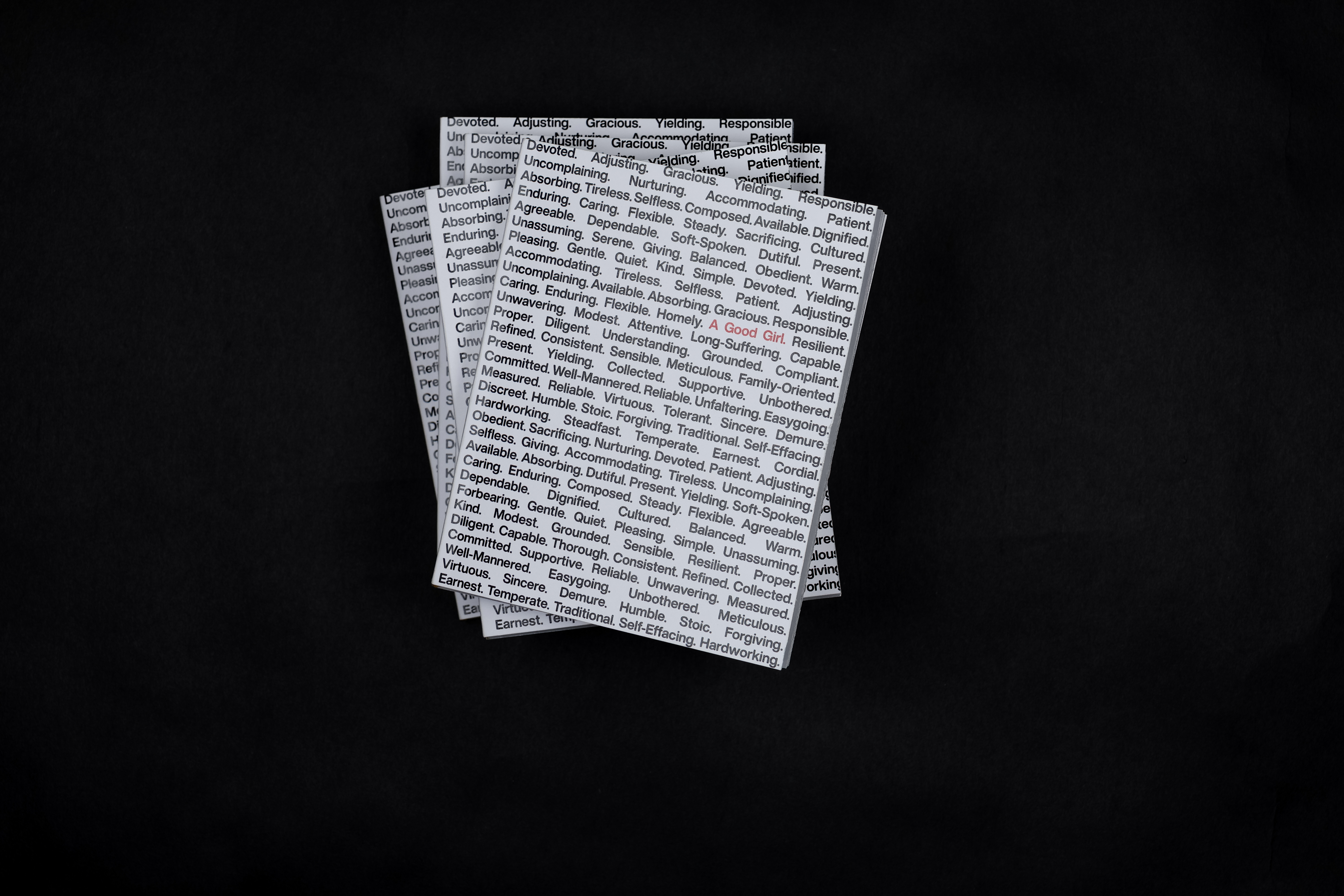
A Good Girl
Aadhya Jain
Domestic labor — cooking, cleaning, caregiving, emotional sustenance — has long been framed as an expression of love rather than recognized as work. A Good Girl examines how the renaming of women's labor as affection functions as a systemic mechanism of erasure: one that extracts attention, time, and creative capacity from women while rendering the extraction invisible, and naturalizing it as devotion.
Drawing on Silvia Federici's analysis of unwaged reproductive labor, Audre Lorde's theorization of anger as political knowledge, and social reproduction theory, alongside close readings of contemporary Indian cinema (Mrs., Lapataa Ladies, Juice), this inquiry traces how cultural production normalizes domestic servitude, and what it looks like when women begin to refuse it. The thesis is equally rooted in personal observation: in watching my mother's stillness be interrupted, her attention endlessly claimed, her labor praised as swiftness and love while she herself was never fully seen.
The thesis argues that containment is not accidental but structural, designed into language, gesture, and daily routine, and that naming it is the first act of reclamation.
The body of work includes Rupture, a custom typeface whose letterforms borrow from cracked glass to embody the quiet violence of emotional containment; a series of prints mapping the emotional arc from suffocation to communion using the pressure cooker as central motif; Interrupted Legacies, a film of the my mother performing her daily kitchen routine, in which fleeting color appears and dissolves to visualize the creative potential stolen by care work; a printed publication exploring erasure and visibility through collage and domestic imagery; and A Manifesto for Defiance, imagining what becomes possible when women reclaim their time.
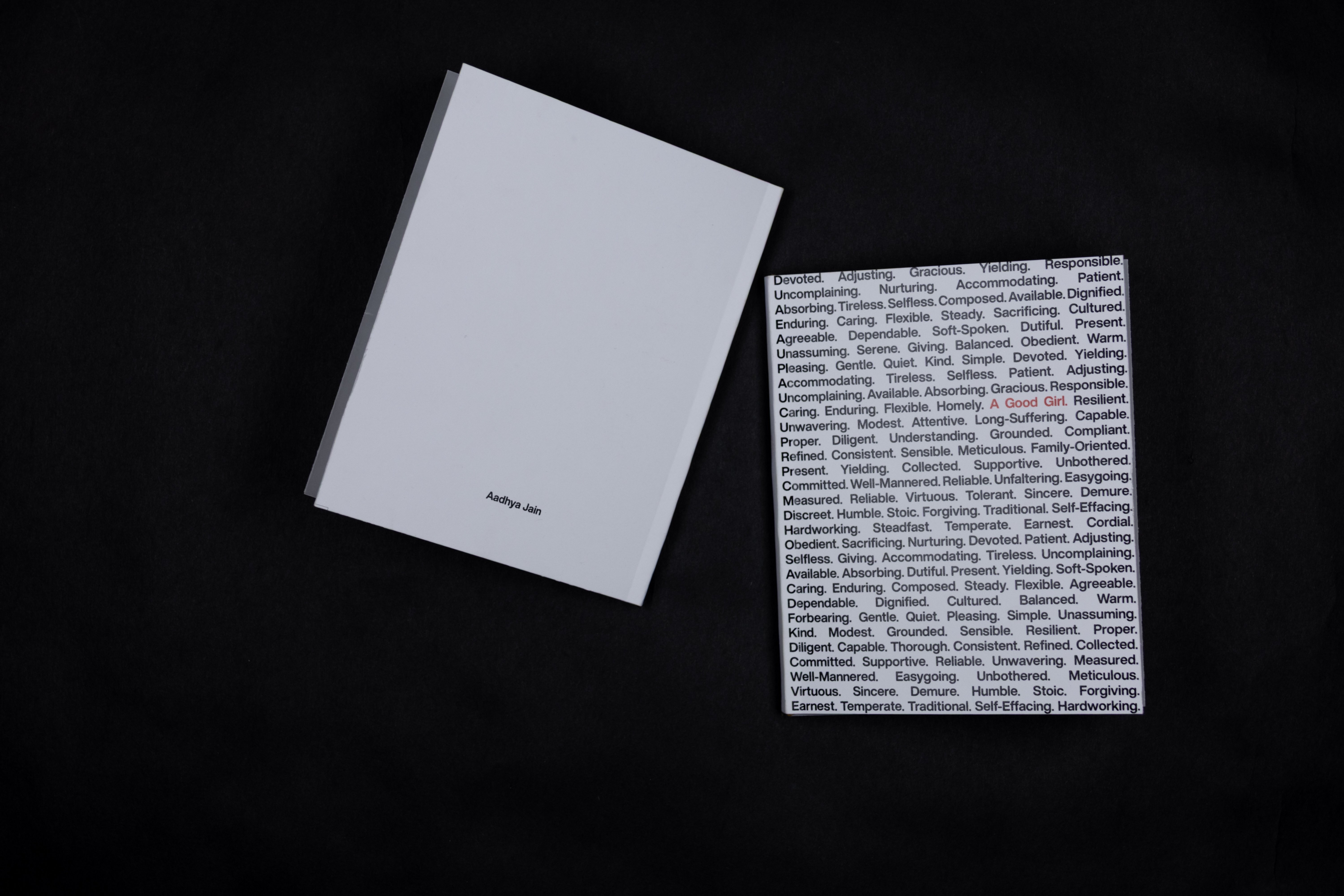
A Good Girl
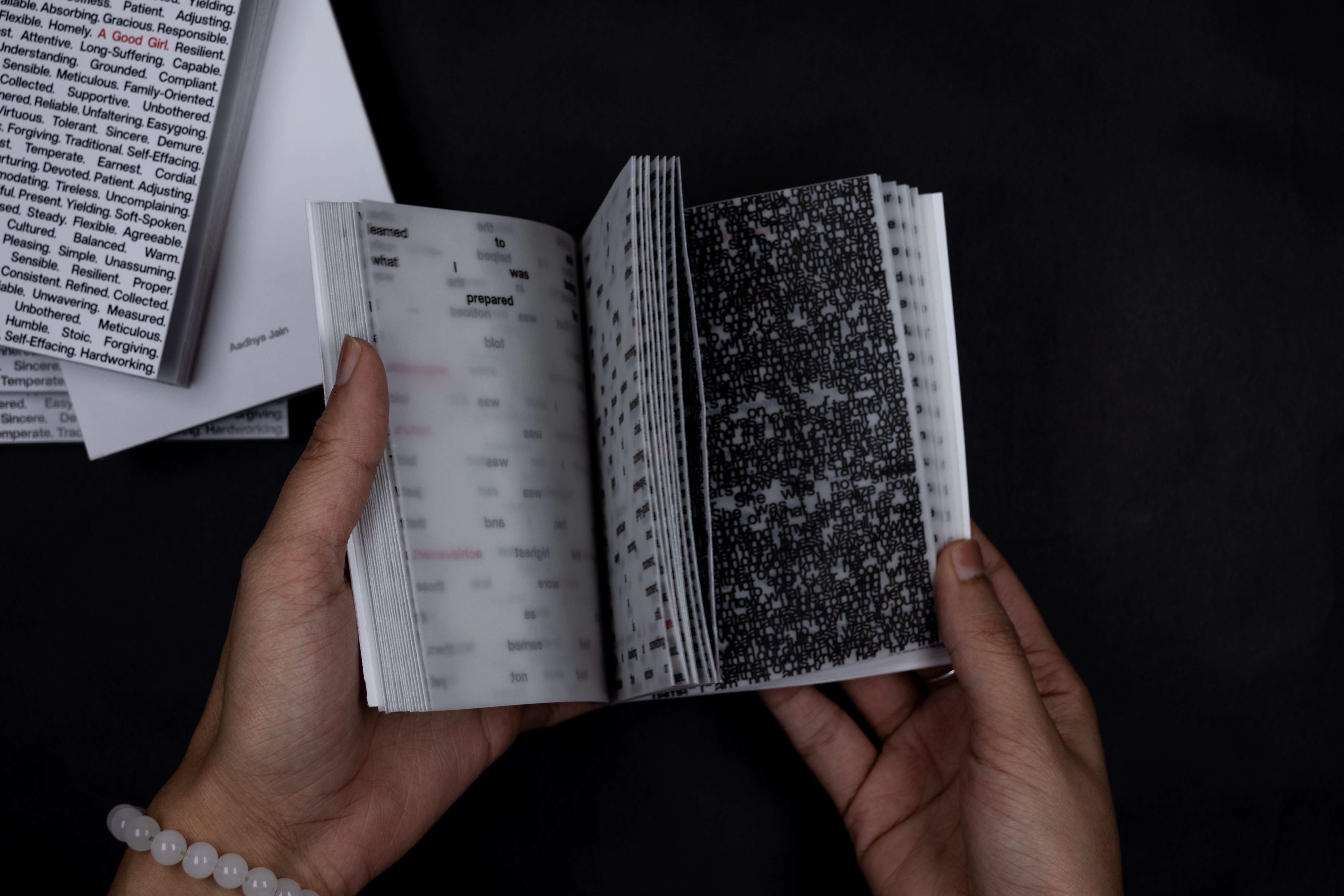
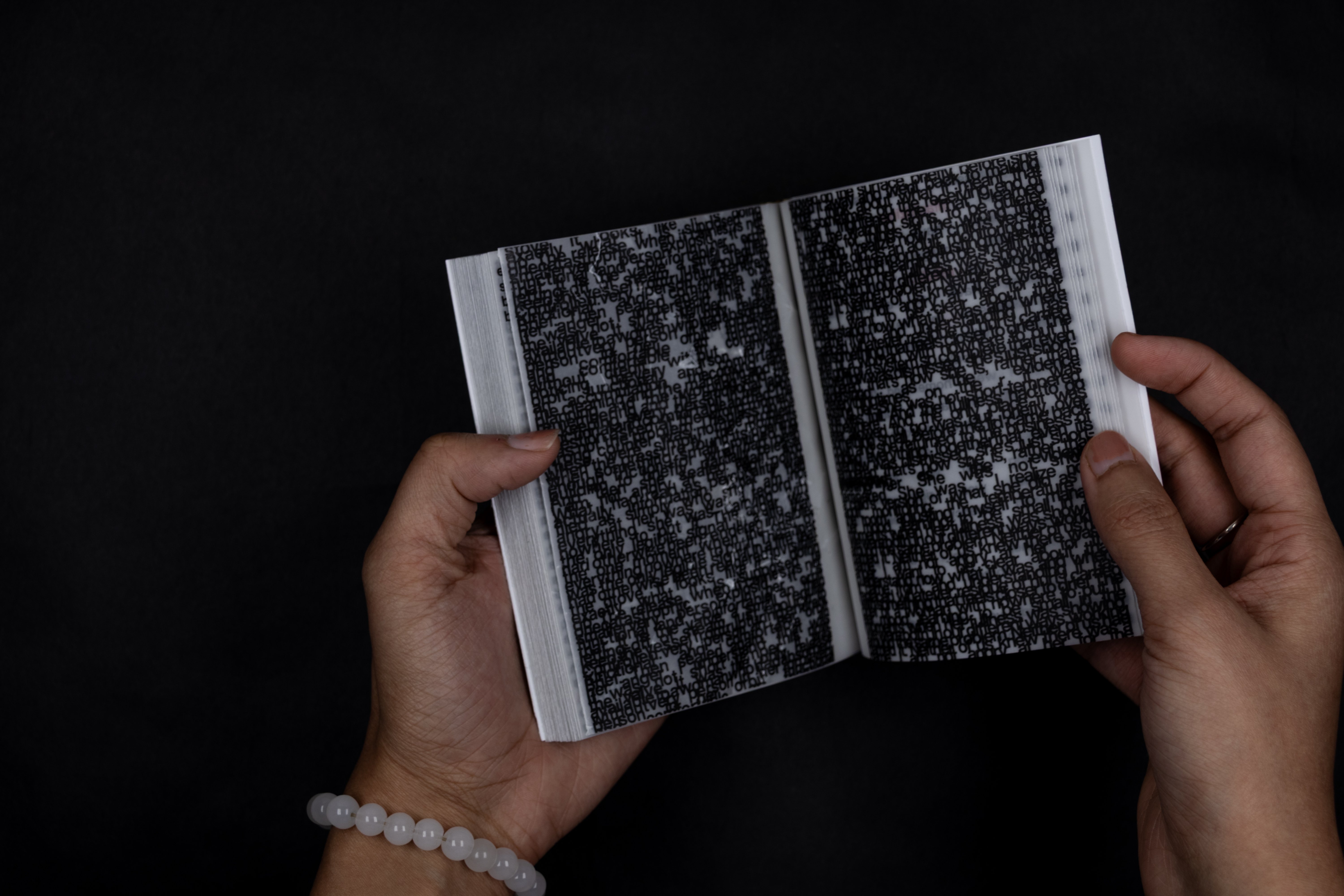
A book about the labor that gets called love.A Good Girl
As the book progresses, the pages grow heavier. Transparent vellum gives way to dense, unreadable black. The text does not disappear. It accumulates until it cannot be held.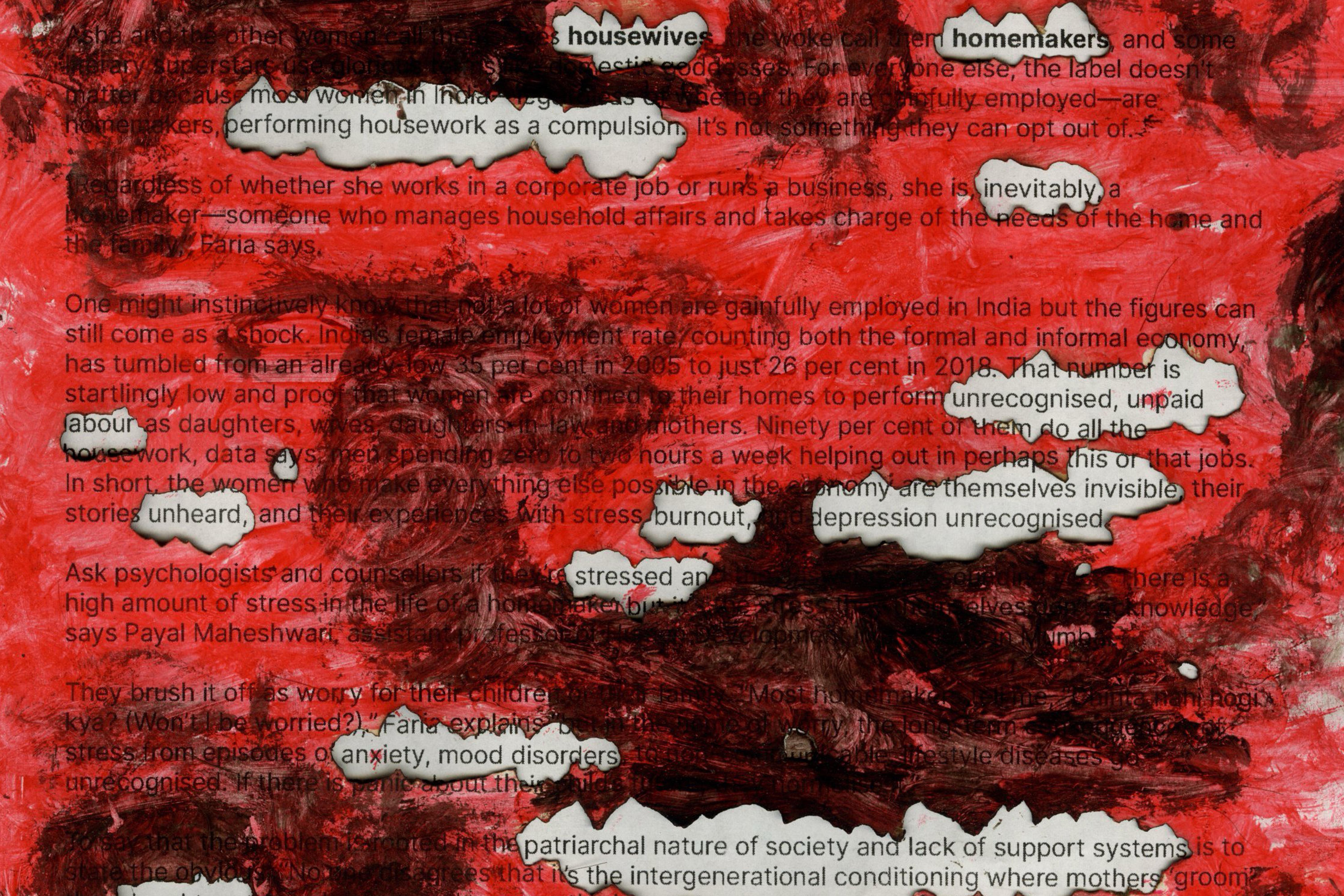
What Gets Erased
An article about Indian homemakers, painted over in red. What surfaces through is not random. It is what survived.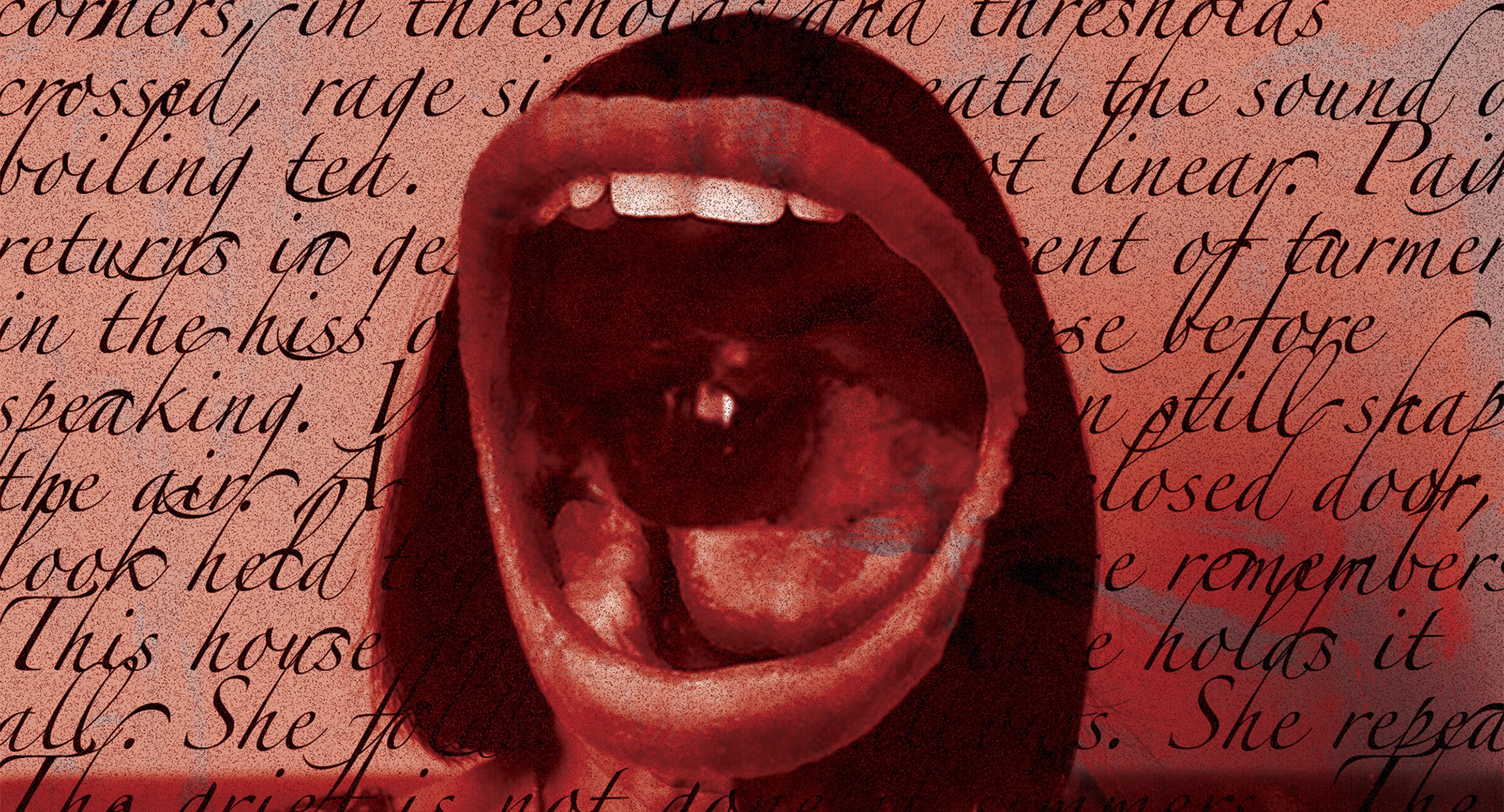
She Repeats
Rage sitting directly underneath the language of duty and devotion.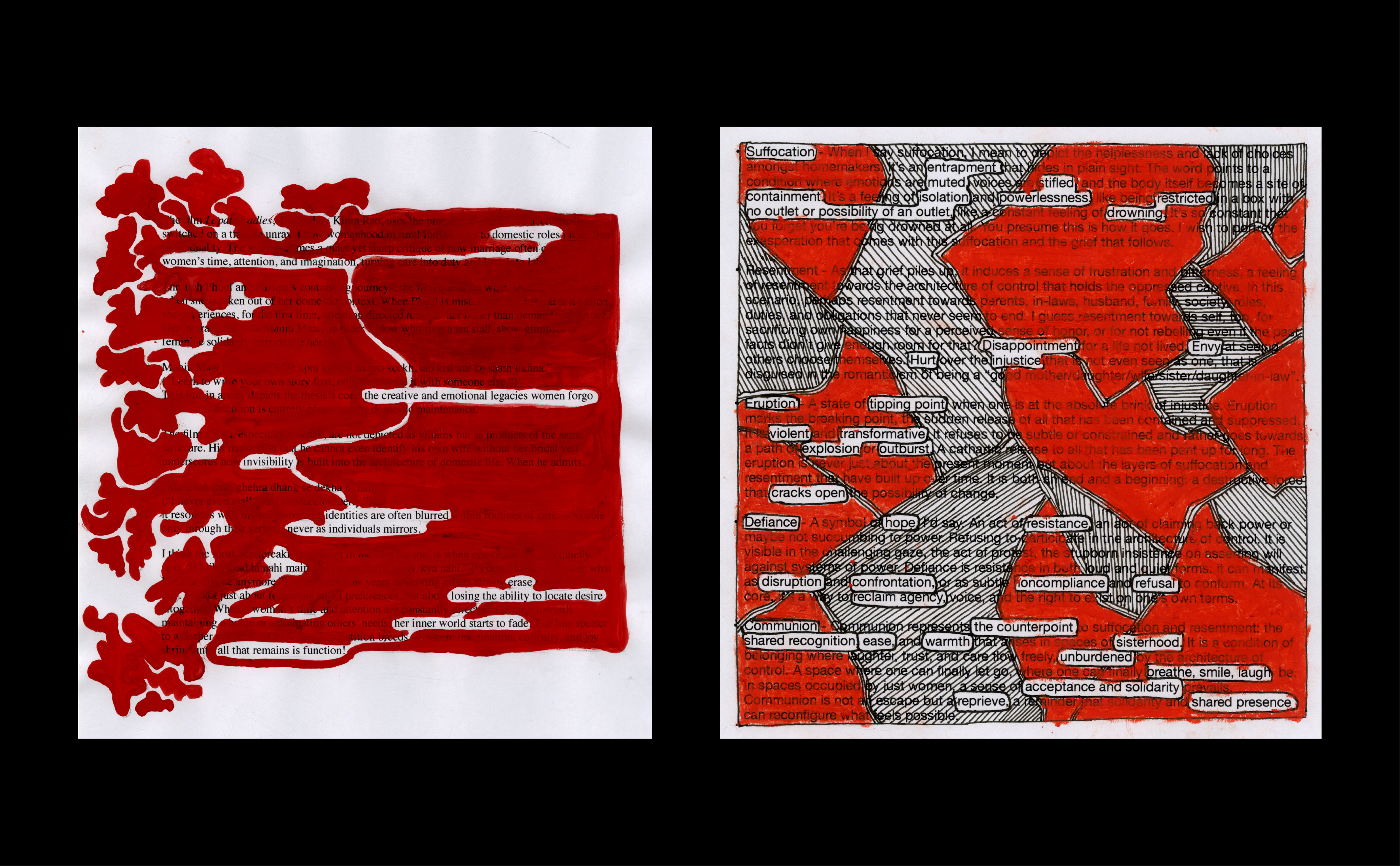
The Architecture of Routine
Two text works exploring how emotion lives inside routine. The left uses structured, map-like marks — feelings folded and bordered, contained within the architecture of daily life. The right dissolves into something more organic, marks leaking and losing form, mirroring how a homemaker's inner world gets absorbed into the roles she performs until only fragments remain.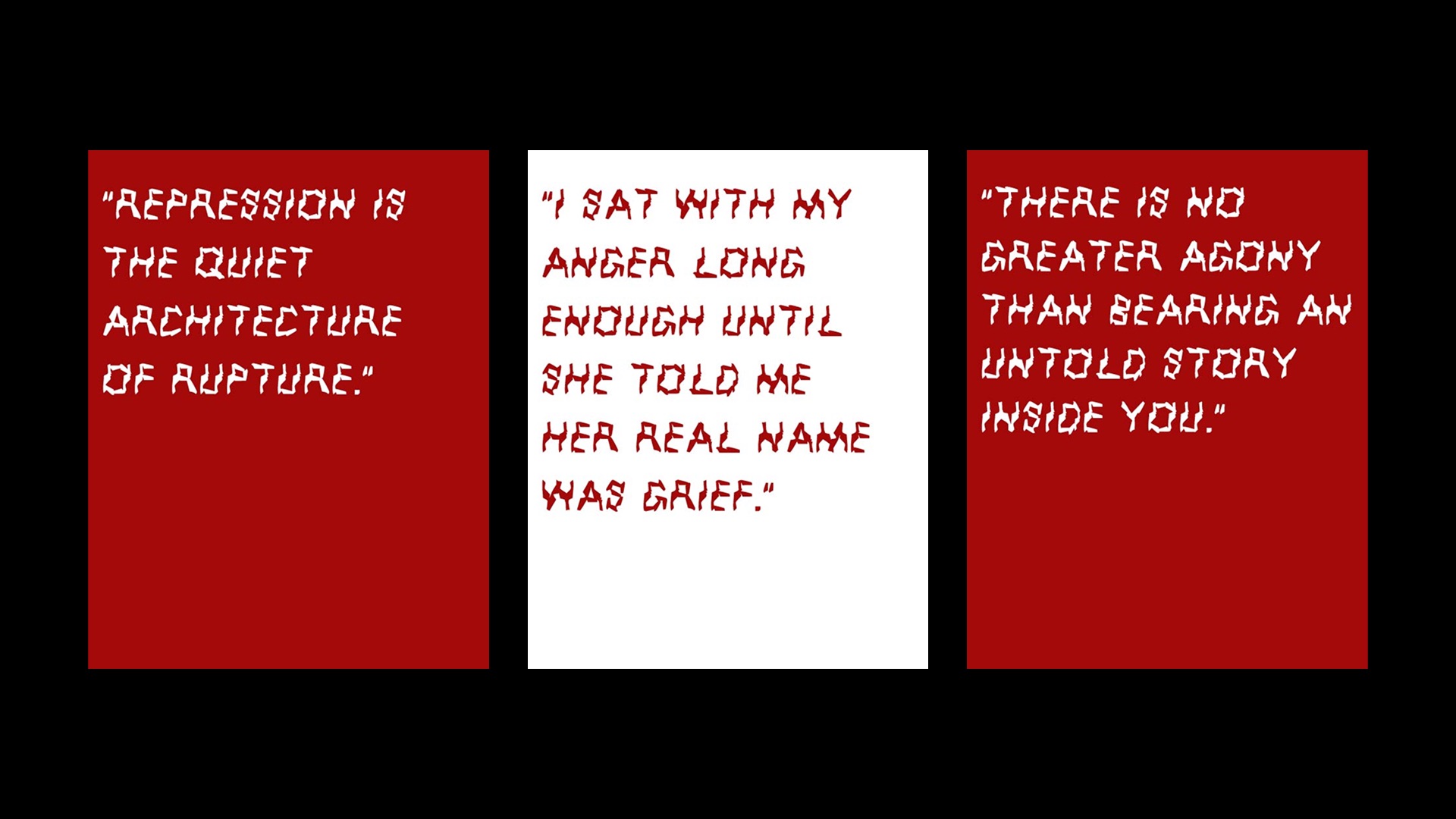
Rupture
Rupture is a typeface built from breaking. Each letterform draws from the geometry of cracked glass, where fracture lines become the structure itself. The type does not describe containment and collapse. It is made of it.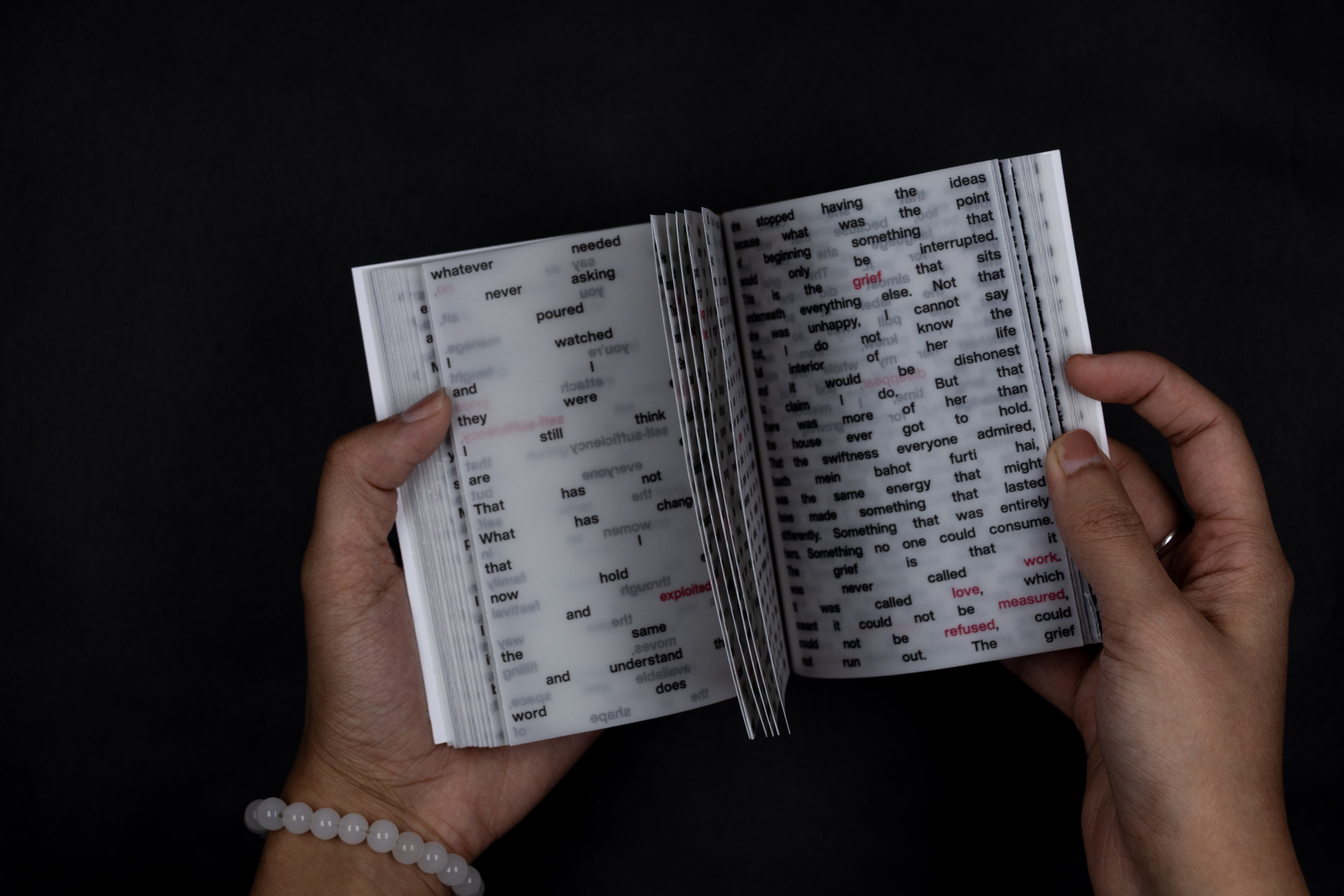
A Good Girl
A Good Girl
A Good Girl