Against Forgetting
Chloe Lewis
Digital media offers vast and instantaneous access to information. But the digital realm is cavernous, and traversing its tunnels has hidden risks. Each space one enters on the internet may enclose them in an echo chamber; it promises endless access and information, but infinity is severed by bias-enforcing algorithms and advertised content. Its idealized ‘spaceless’ archival format is imperfect, too, as online archives are subject to censorship, alteration and deletion. Fragmented and fleeting information dominates the realm; to quote art critic Hans Ulrich Obrist, “Data does not necessarily mean more memory — as the late Eric Hobsbawm told me: amnesia could very well be embedded in the digital age. We need a protest against forgetting.”
Print media, alternatively, is enduring. It may be institutionally banned, censored, or burned but once acquired, it cannot simply escape its library. It demands physical attention, time, and thoughtful archival upkeep; it is unliving, but its sensitive physicality might remind us of our own. Print is biologically superior—reading print improves memory retention, and paper is optically preferable to screens—and it offers unrealized social potential in our fractured digital age.
This thesis examines the ways in which various communications mediums are designed, and how the media’s design affects delivery and reception. By analyzing historical precedent and reframing it through a modern lens, it imagines print media’s potential benefit for social movements and societal wellbeing in the digital age.
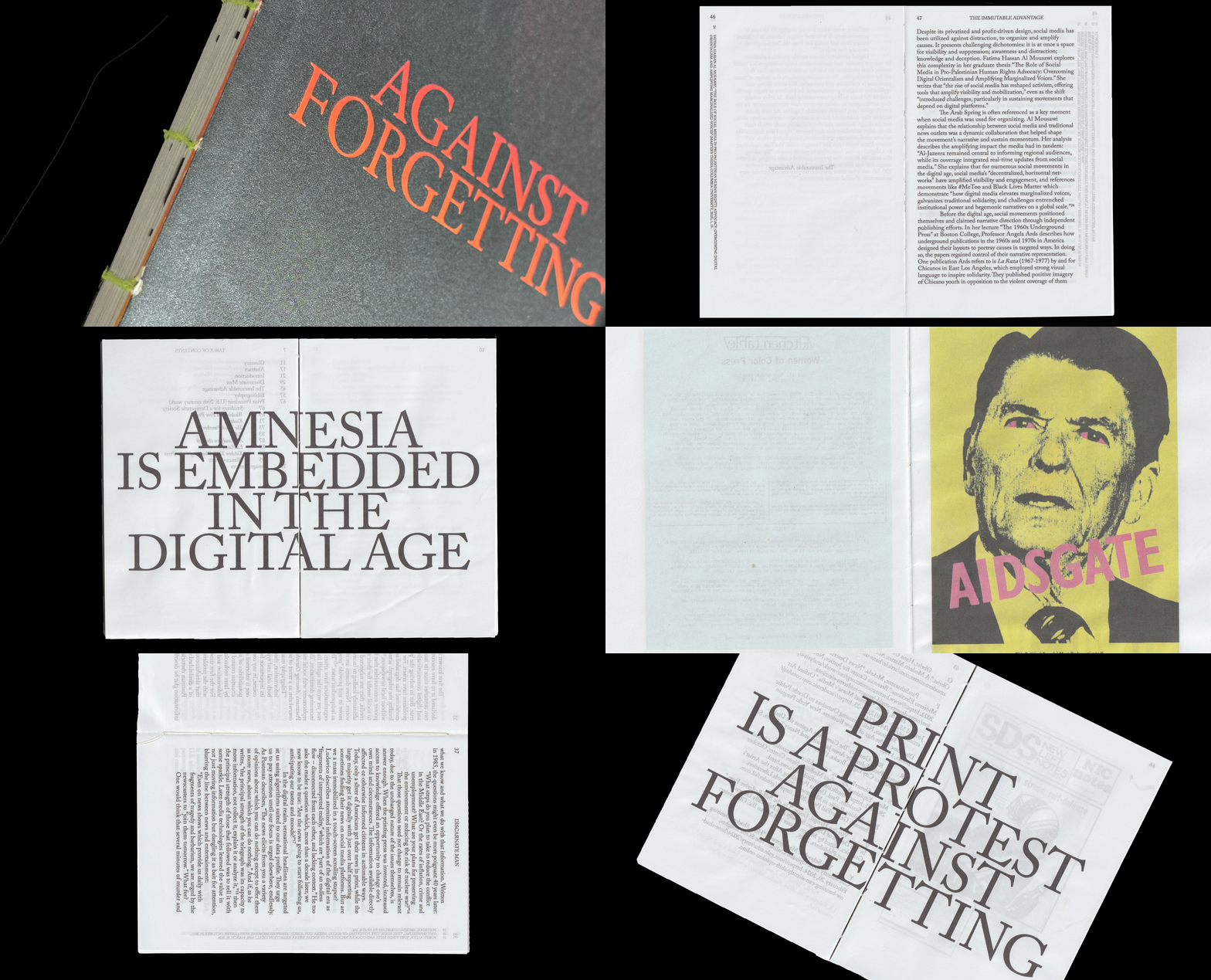
Against Forgetting (book)
Mediums in Conversation
These lines of text paraphrase and pull from a 250 page facsimile that features writings on journalism, print media, digital media, and publishing. The transience and chaos of the looping text elucidates the unstable nature of digital media, in contrast to the static book from which the text comes.Print Spaces
Print exists in space two dimensionally within the confines of a page, and three dimensionally in multifarious forms. It also fosters conceptual space between people, building community and social networks through exchange and discussion. This book explores print spaces through found text and image.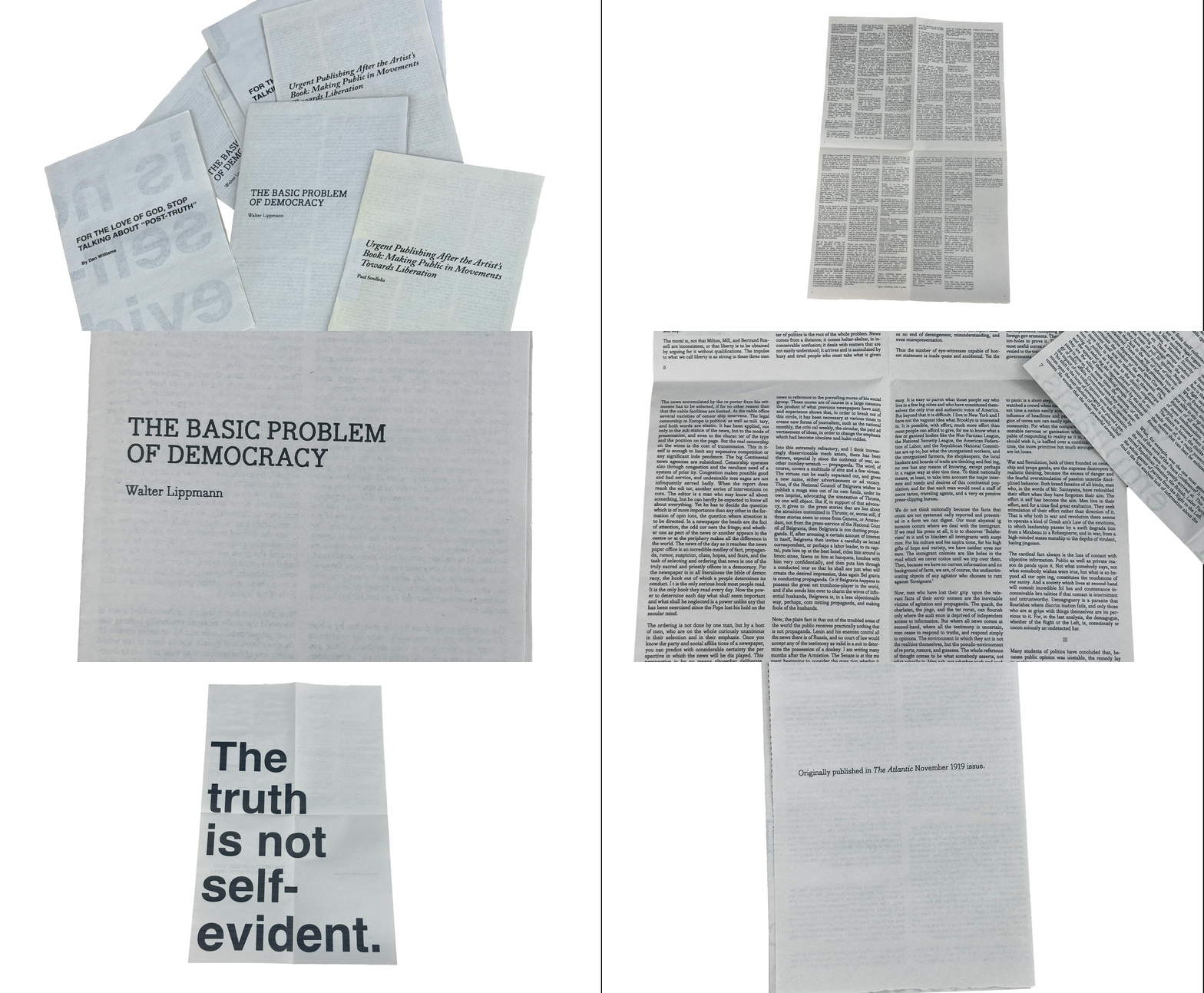
Open source essays reformatted to fit on one or two sheets of newsprint for easy distribution. The idea of re-publishing previously published essays (with attribution) comes from the underground press syndicates, which were mutually beneficial information networks. The focus is not on personal success or sales but ‘spreading the word.’
This simple “breaking news” animation repeated on a loop, imitating a typical news broadcast banner on an apparently broken or glitched screen, causing the text to fracture. The fractured text represents the nature of the legacy news media, which is, in ways, a broken system.
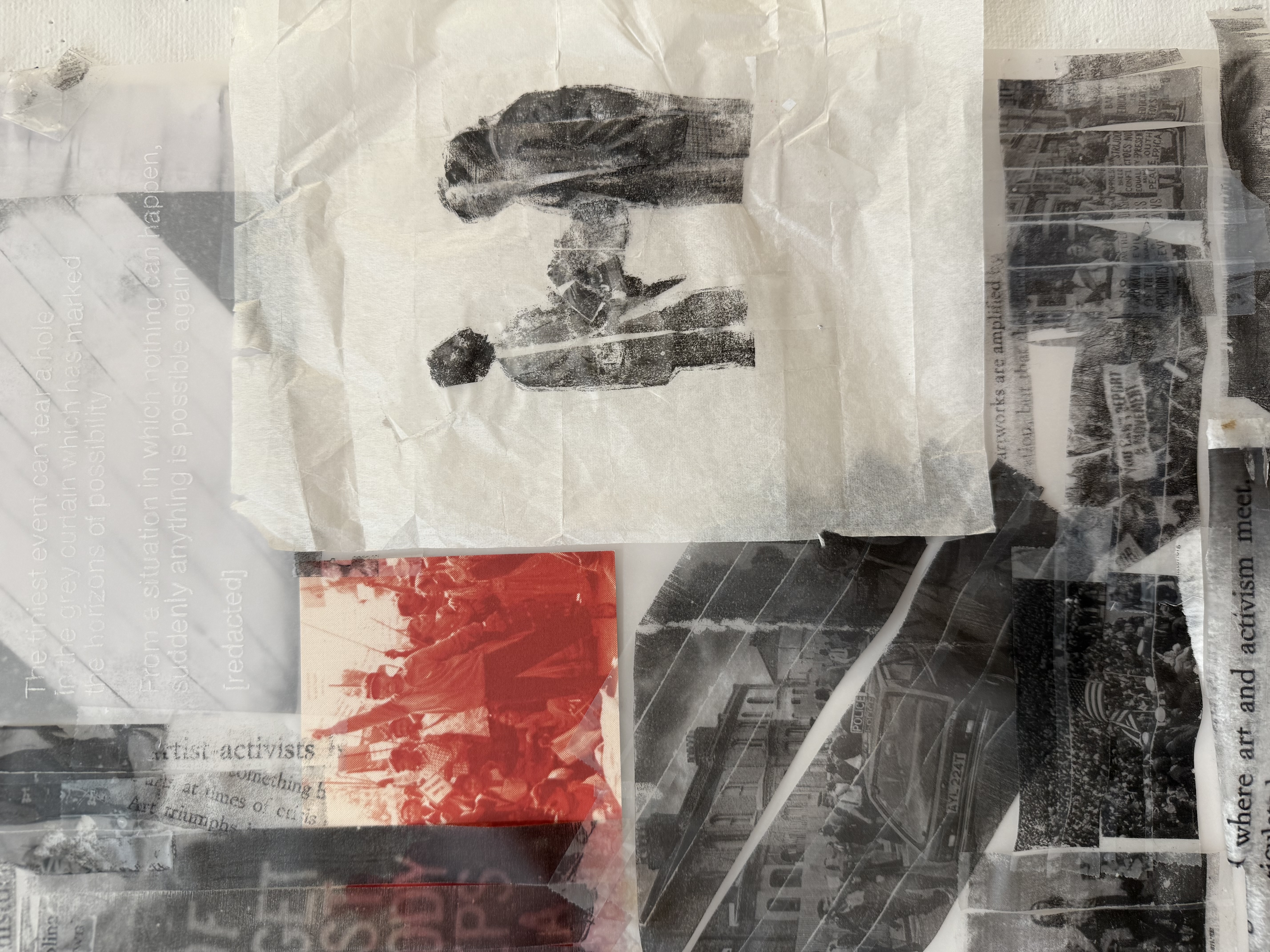
Segment from a collaged poster from thesis research, from which a fragmented image of people exchanging The Black Panther newspaper emerged and became the key visual motif in my thesis.