Other Rhythms We Forget: An ongoing study of moss, time, and quiet persistence
Erin (Chia-Yu) Ho
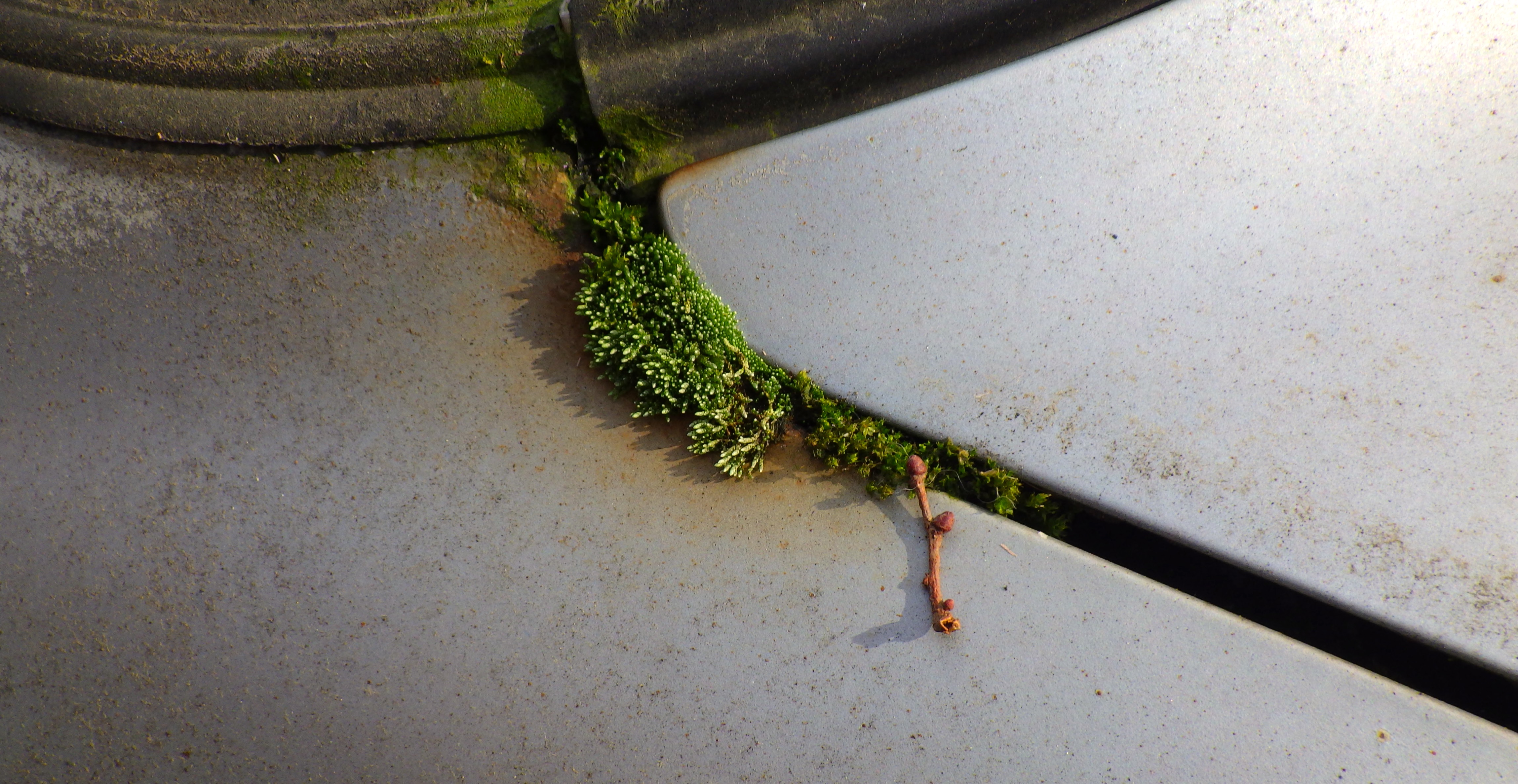
Urban design often assumes predictability and control, yet cities are continually reshaped by non-human temporalities such as moisture, growth, decay, and shifting light. This thesis explores how overlooked urban ecologies, especially moss, might help us perceive time differently within the city. Through observation, speculative writing, photography, taxonomy-building, and material experimentation, I develop “noticing” as both a research method and a practice of attunement. Works including Conversation with Moss and Ode to Moss frame stains, dampness, uneven aging, and moss in cracks not as defects, but as evidence of ongoing coexistence between human infrastructures and non-human rhythms.
Urban Moss Encounters
This thesis begins with a simple question: what happens when we slow down enough to notice the non-human temporalities already shaping the city? Moss, moisture, decay, and shifting light become ways of rethinking urban time, control, and coexistence.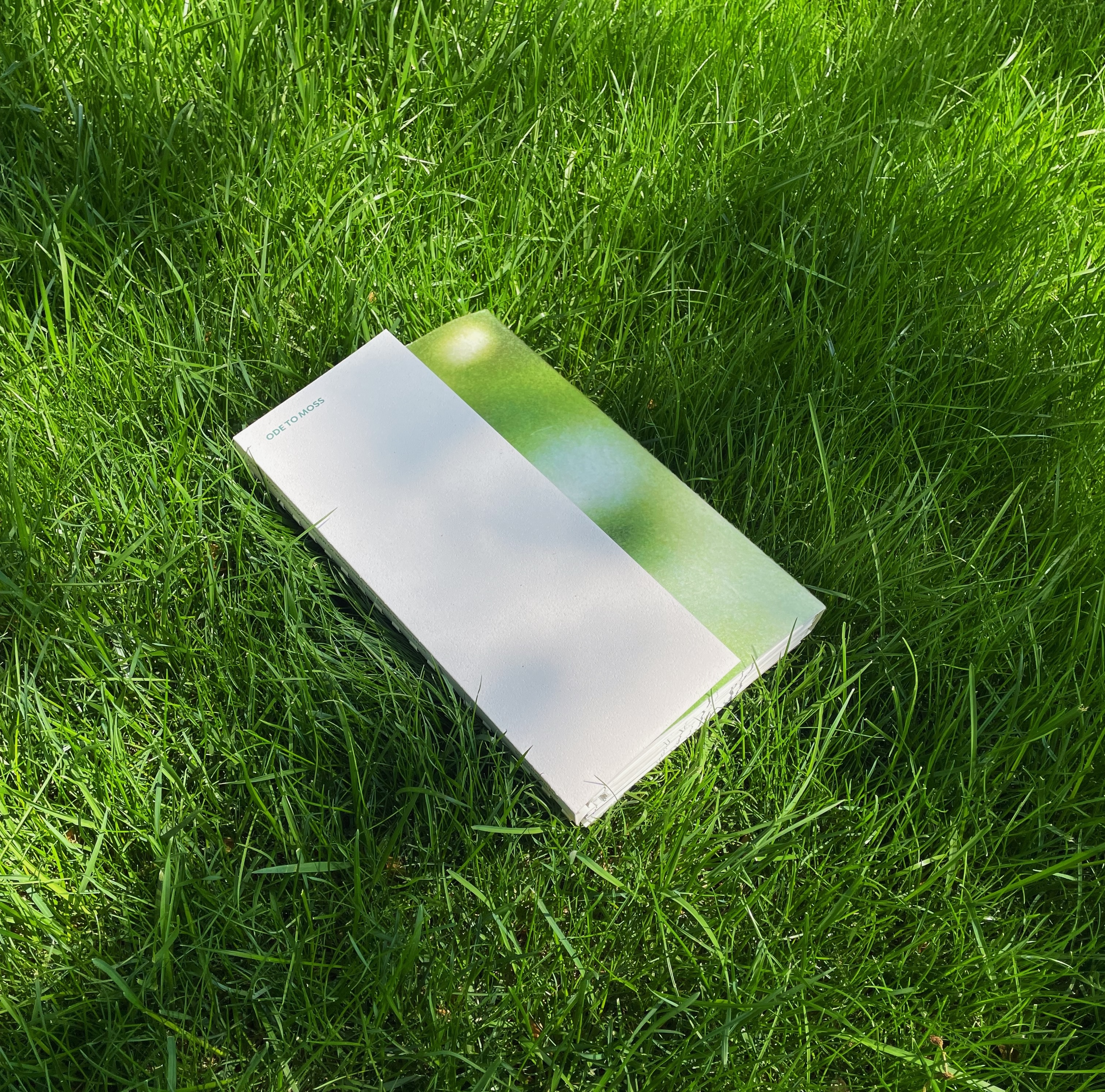
Ode to Moss
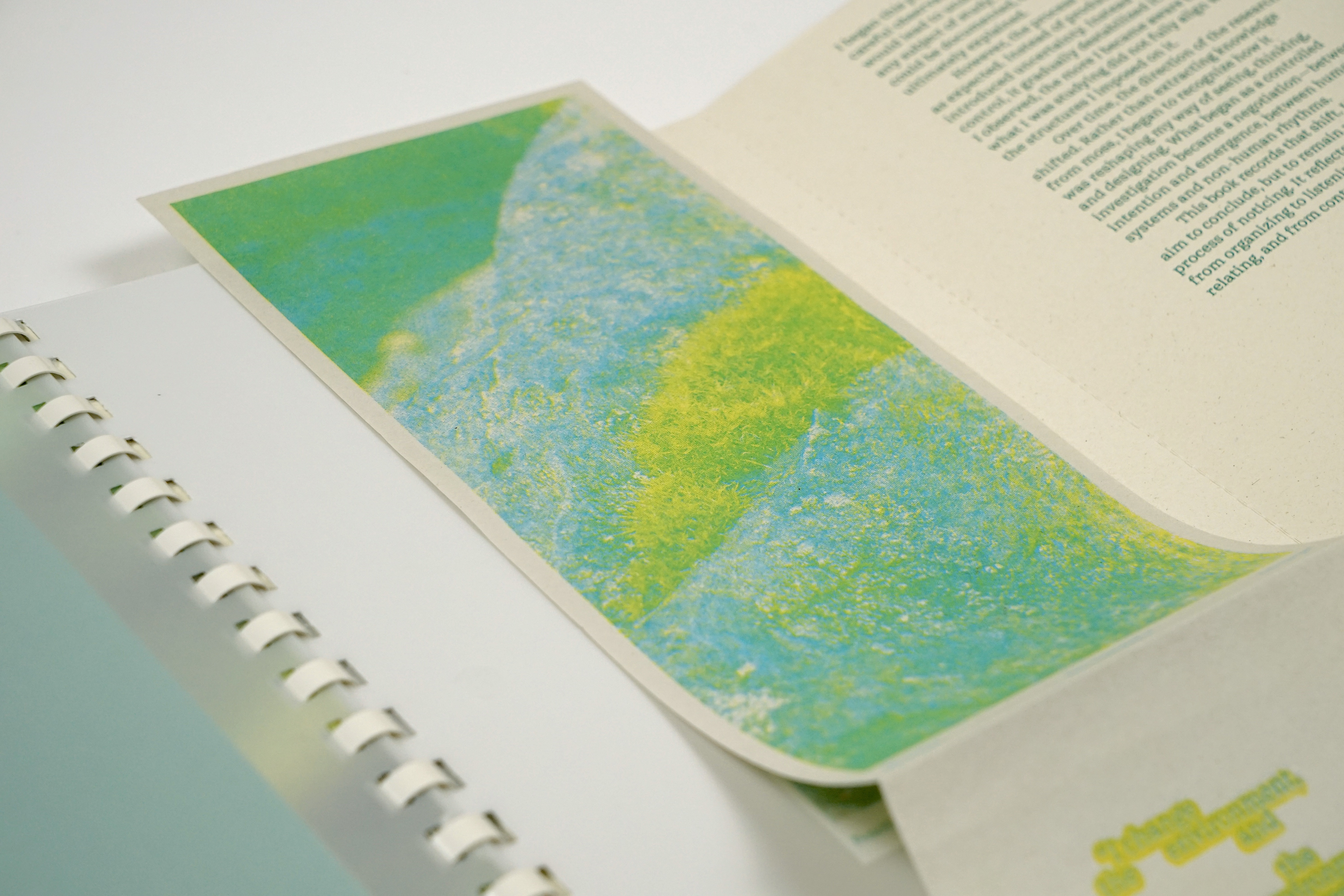
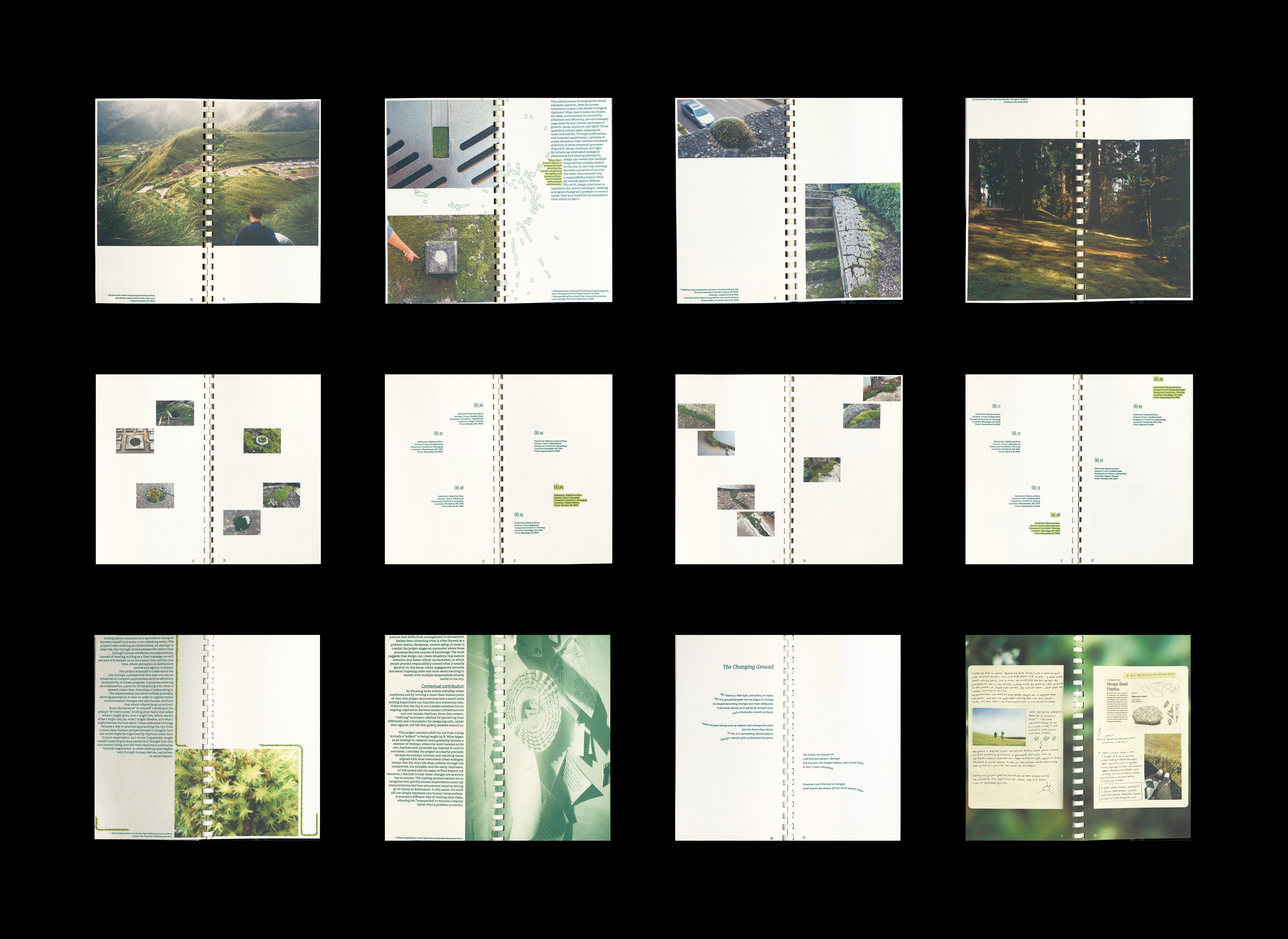
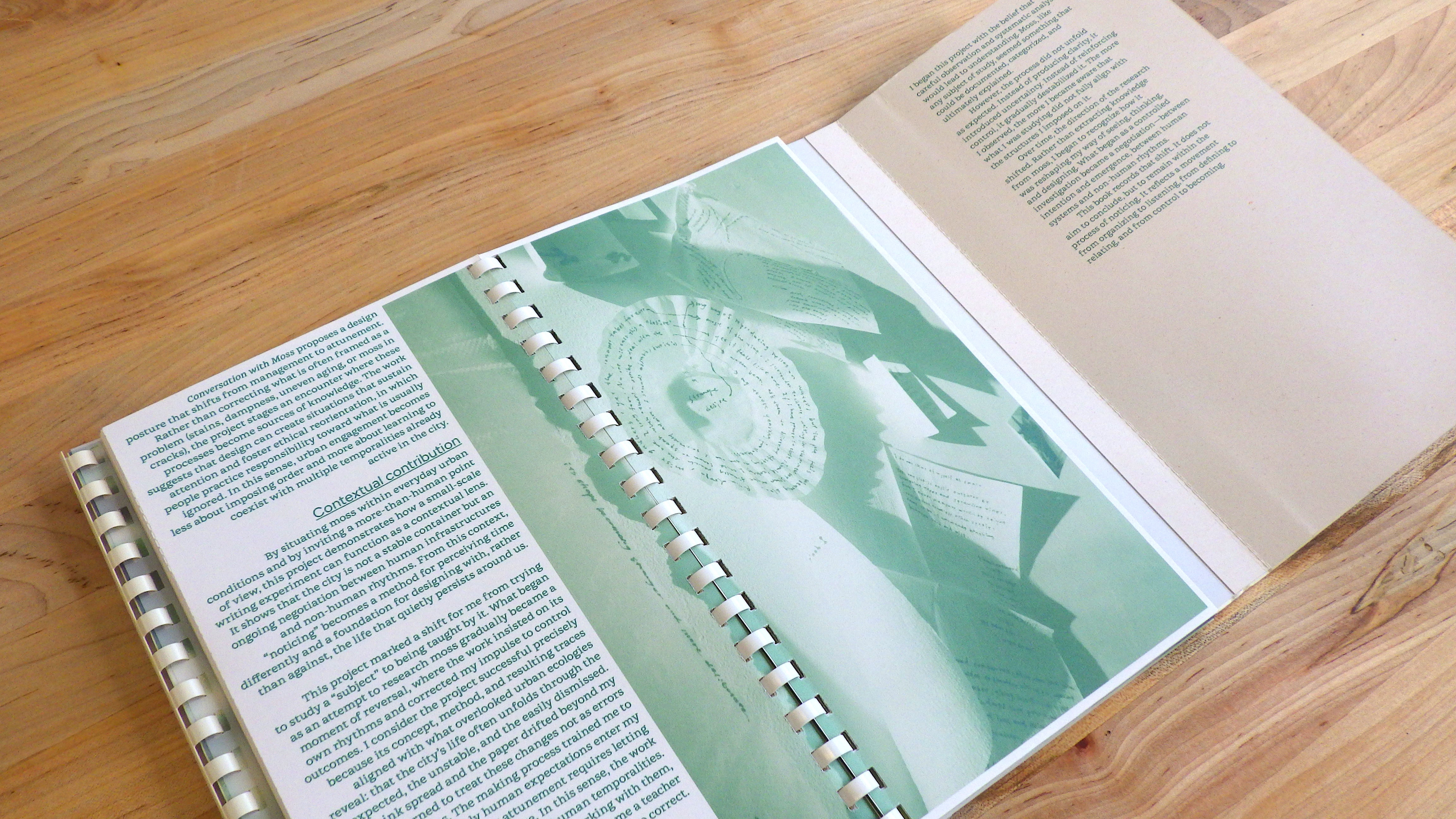
Ode to Moss gathers the thesis’s observations, experiments, photographs, and speculative writings into an open-ended publication. More than a final outcome, the book functions as part of the research itself, inviting slow reading, close attention, and an experience of time shaped through fragile materials and nonlinear structure.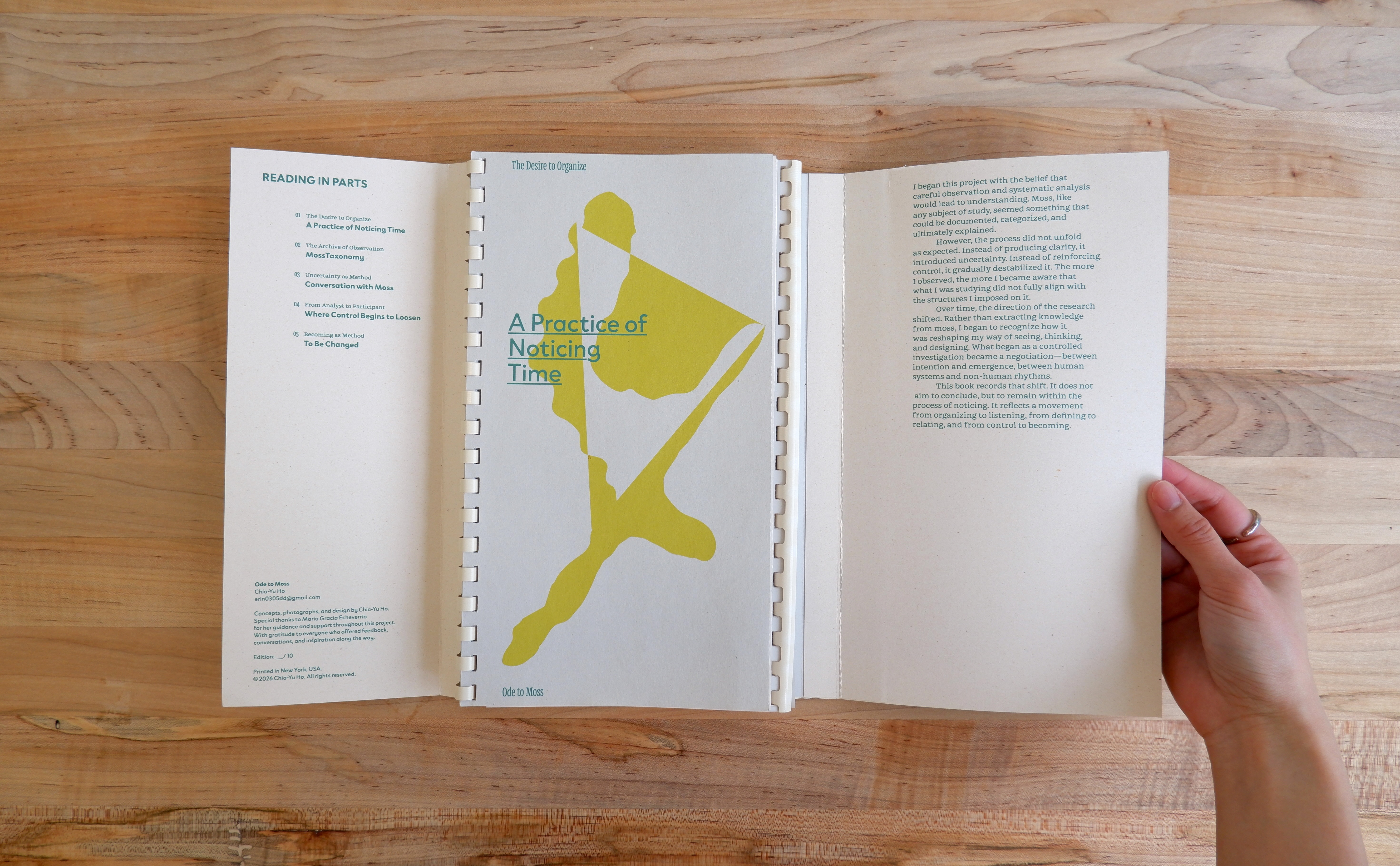
A Nonlinear Reading Structure
With two spines and a split structure, Ode to Moss resists a single reading path. Readers can enter from different points, move at different rhythms, and experience the project in nonlinear ways. The form mirrors the thesis itself, questioning fixed ideas of sequence, progress, and how time is meant to be read.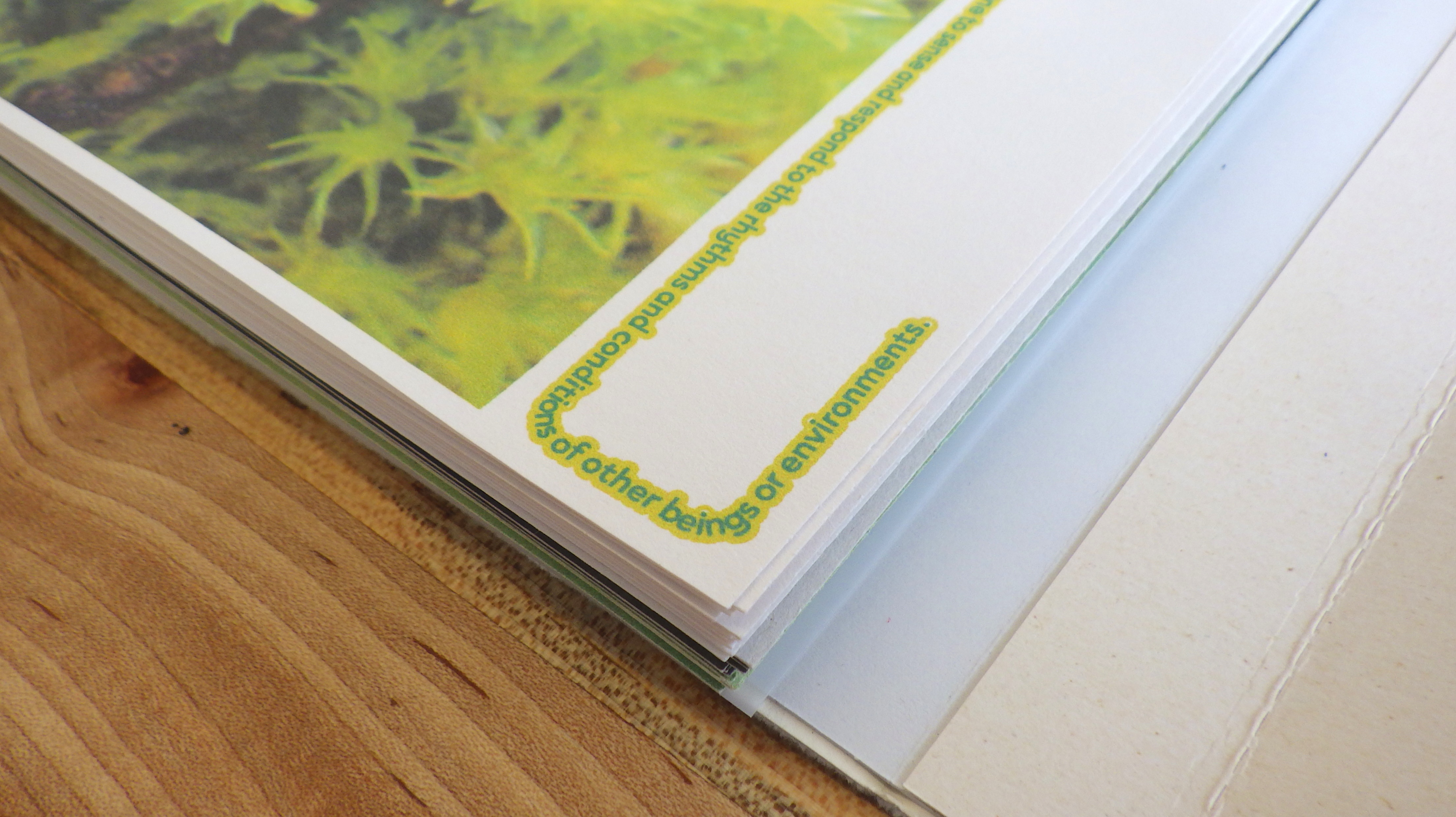
Footnotes in Bloom
Rather than remaining fixed and orderly, the book’s footnotes emerge in changing forms throughout each chapter, growing into margins, corners, and unexpected spaces. Inspired by moss’s irregular presence, these moments let the publication’s structure feel less controlled, allowing ecological rhythms to quietly enter the reading experience.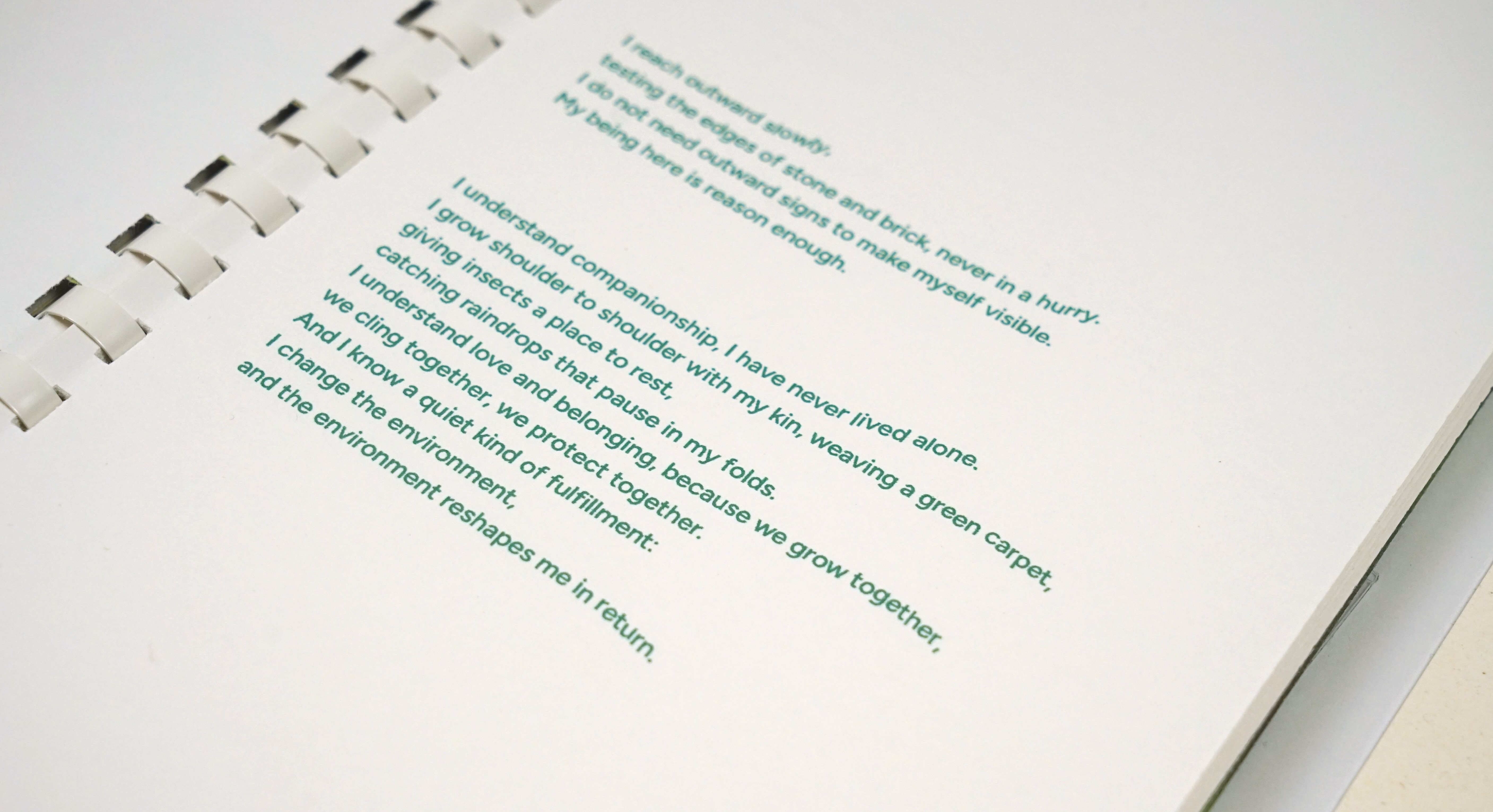
Conversation with Moss
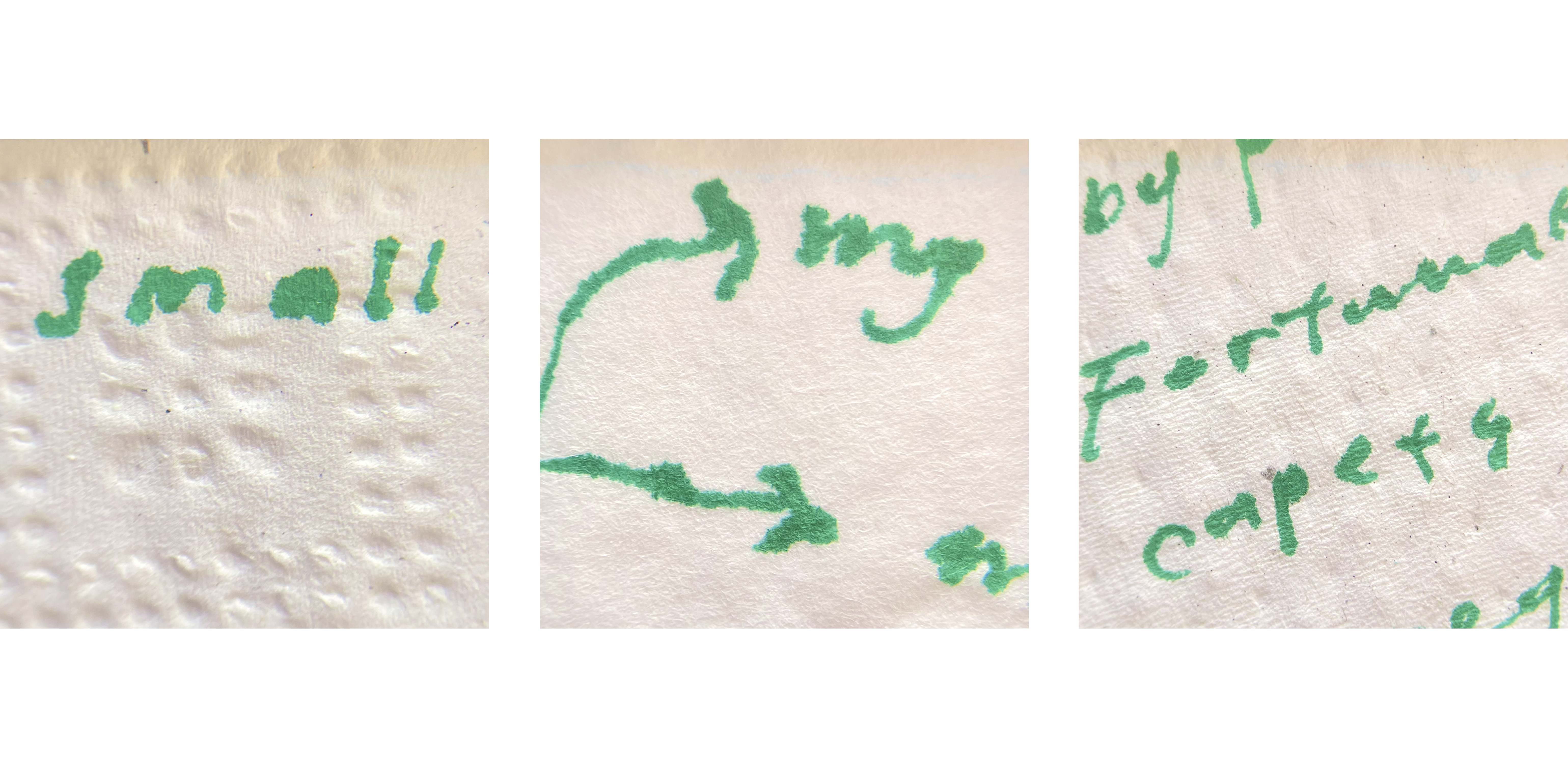
Using speculative prompts beginning with “If I were moss…,” I developed a series of handwritten conversations exploring adaptation, survival, curiosity, and coexistence from a non-human perspective.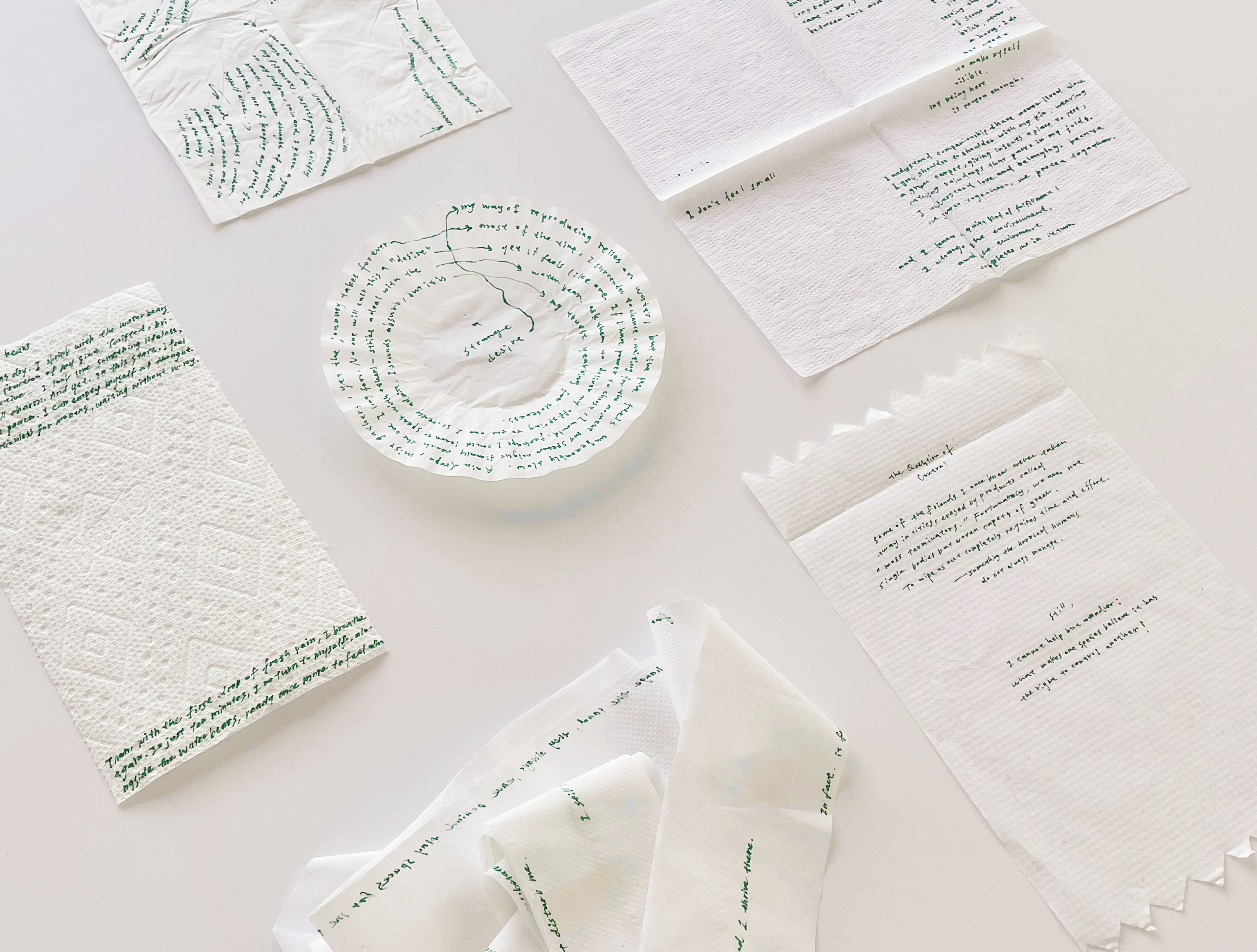
Temporal Materials
Texts were hand-transcribed onto absorbent materials such as tissues, napkins, and fragile papers that react to moisture, pressure, and time. Ink drift, deformation, and uneven aging were treated not as errors, but as records of temporal change.