Communications Design
Huixin (Nora) Wang
Glossary of Nostalgia interrogates why ordinary objects—a toy, a snack wrapper, a lantern—carry emotional weight beyond their material form, and how authentic memory can be distinguished from nostalgia manufactured by corporations. Structured as an auto-ethnographic A-to-Z archive, the book catalogs twenty-six objects through third-person description alongside personal reflection and cultural analysis. Growing up amid mass media, global branding, and early digital culture, the author examines how identity forms at the intersection of consumerism and lived experience. Moving from the intensely personal outward to the local, Chinese, and global, the project uses graphic design as a forensic tool to expose the friction between fabricated retro narratives and real memory.
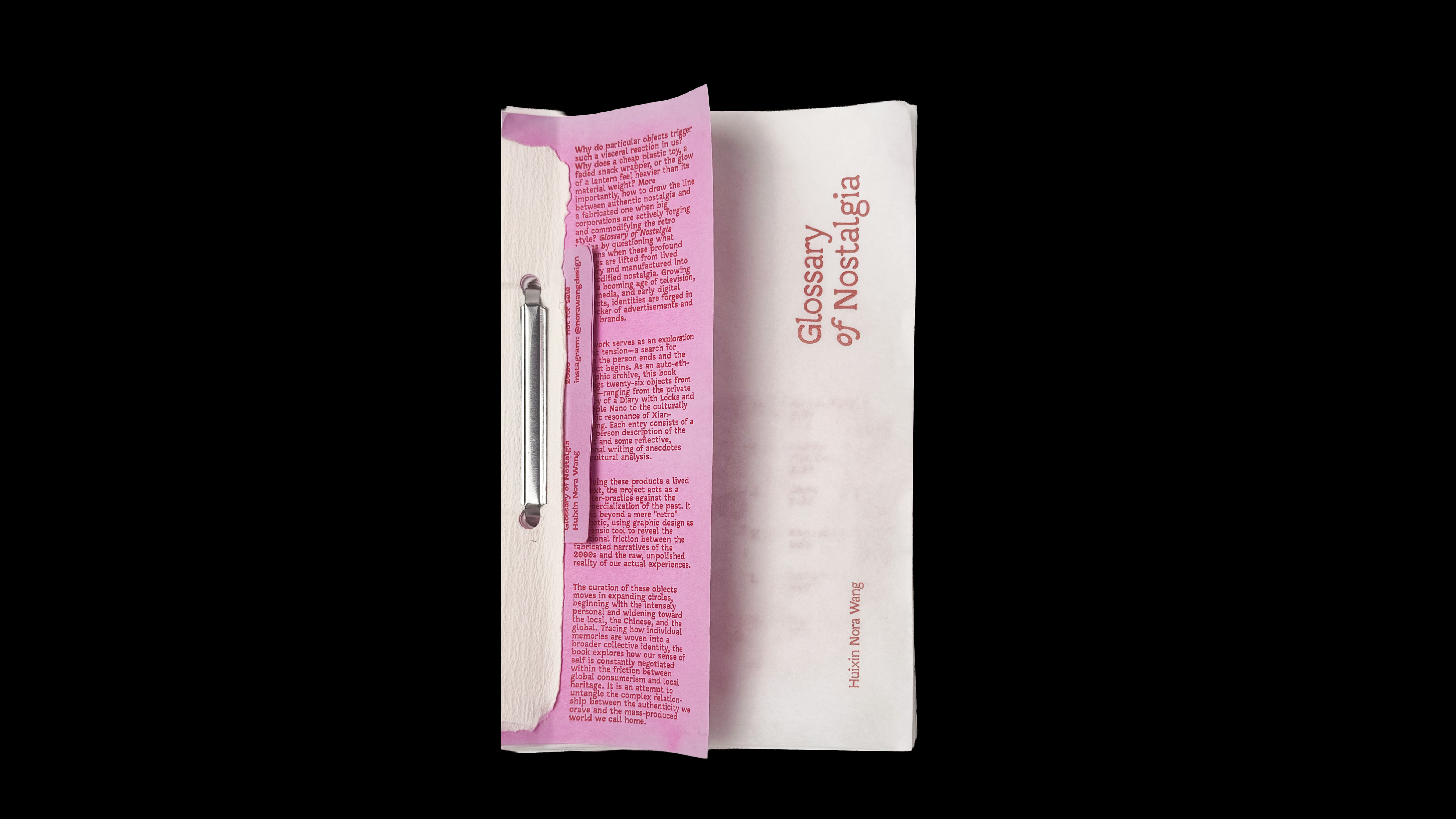
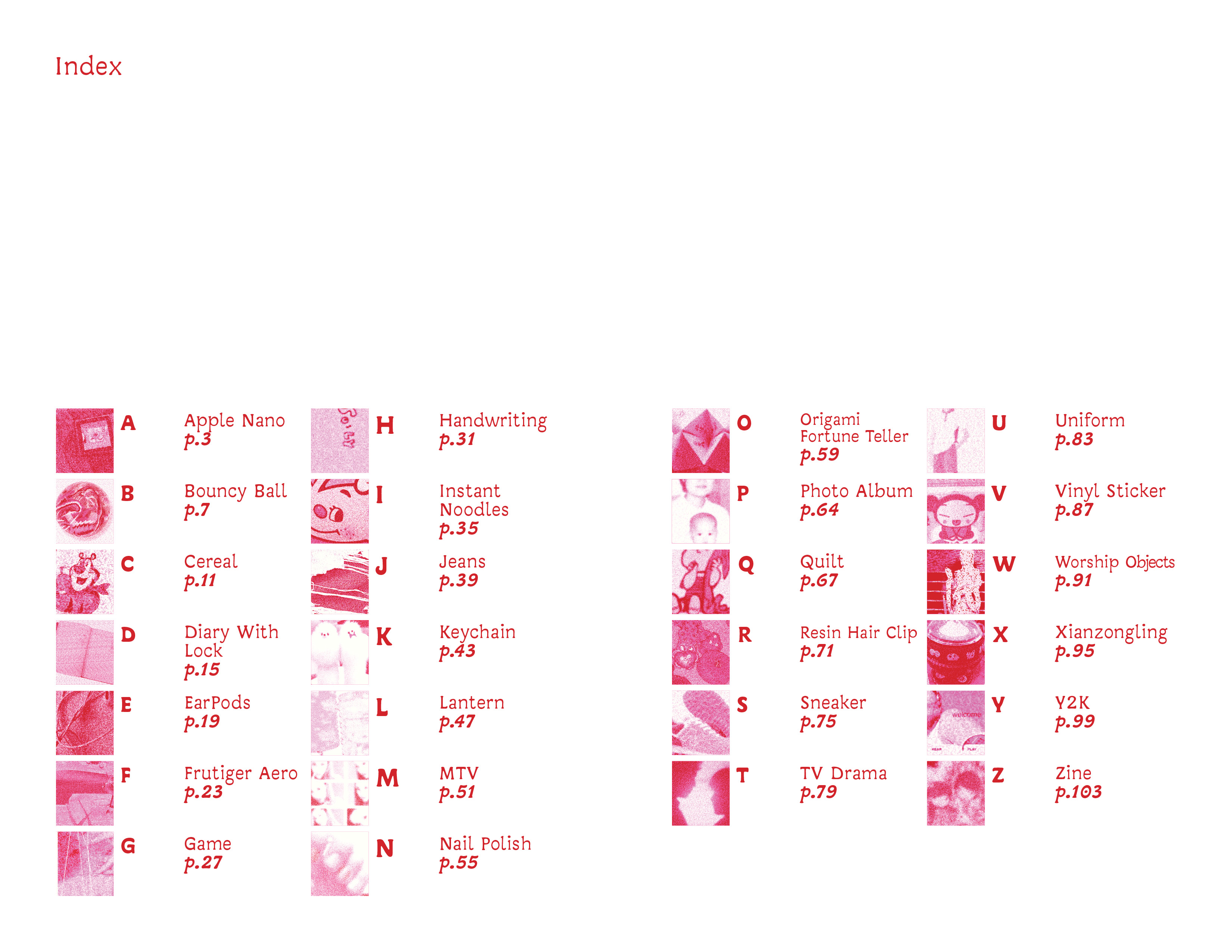
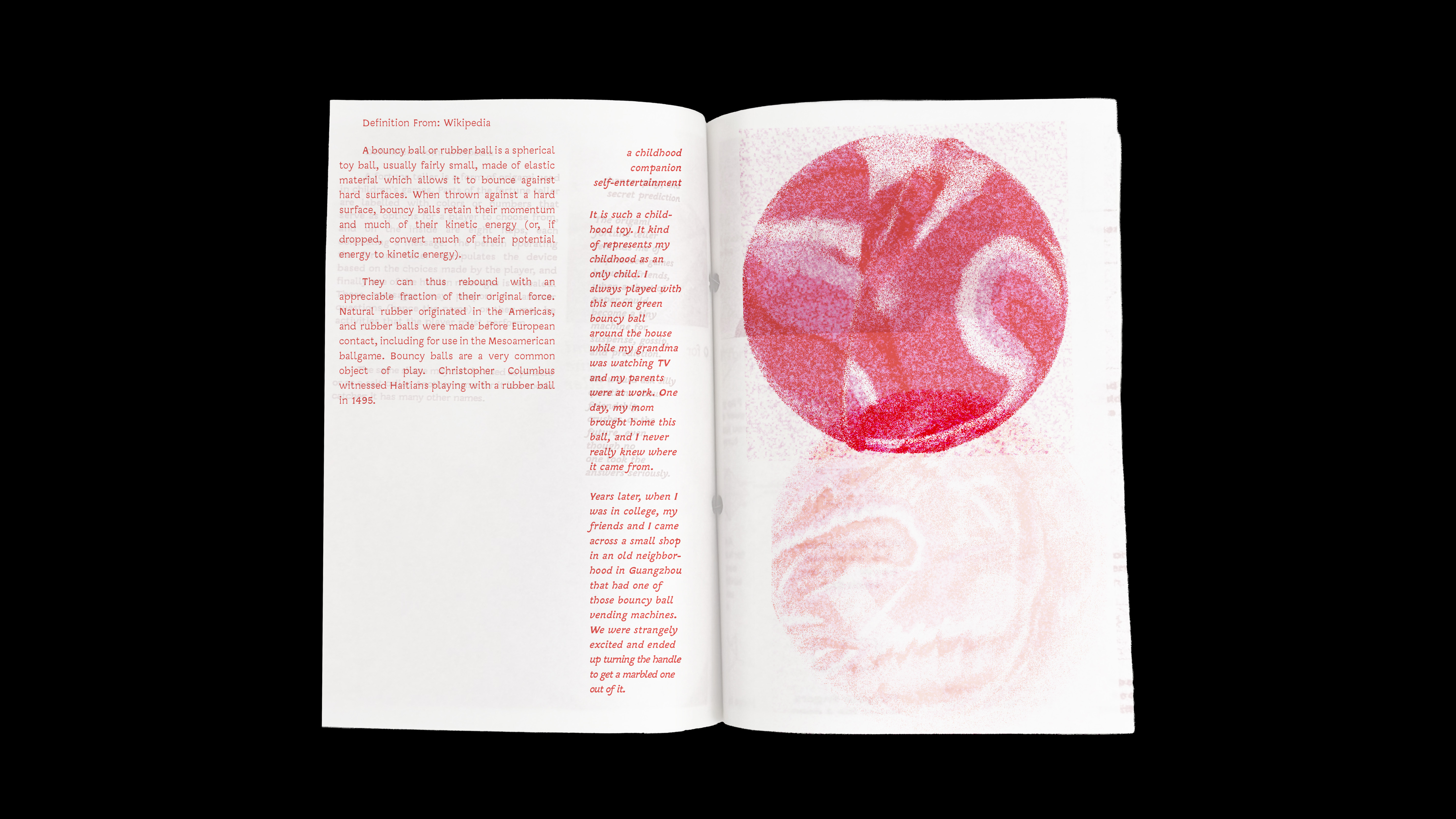
Each object is presented through two voices. One is a conventional, third-person definition. The other is a personal reflection that includes anecdotes and cultural analysis. By placing these side by side, the project gives these objects a lived context. It serves as a counterpractice to the commercialization of the past.
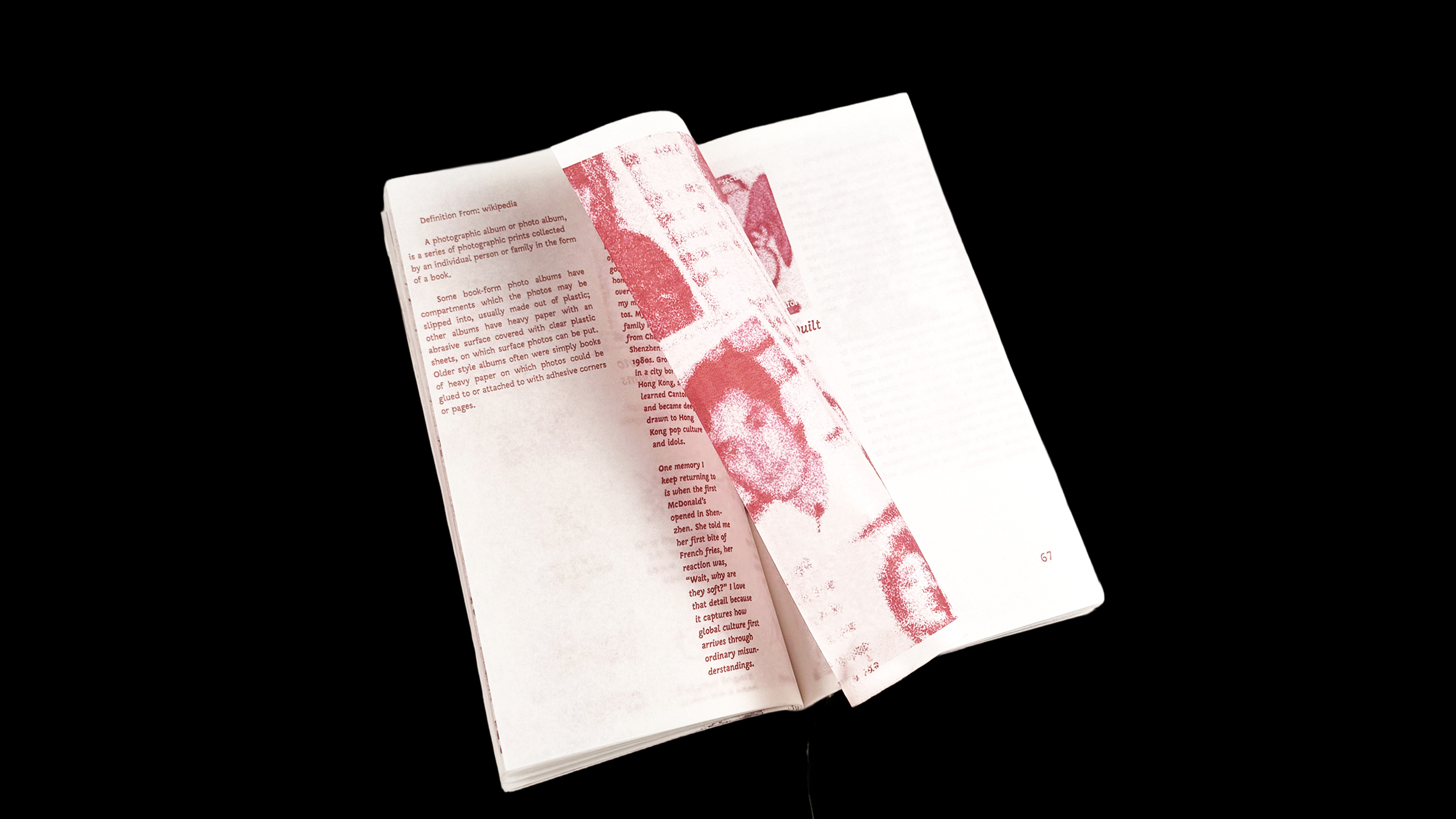
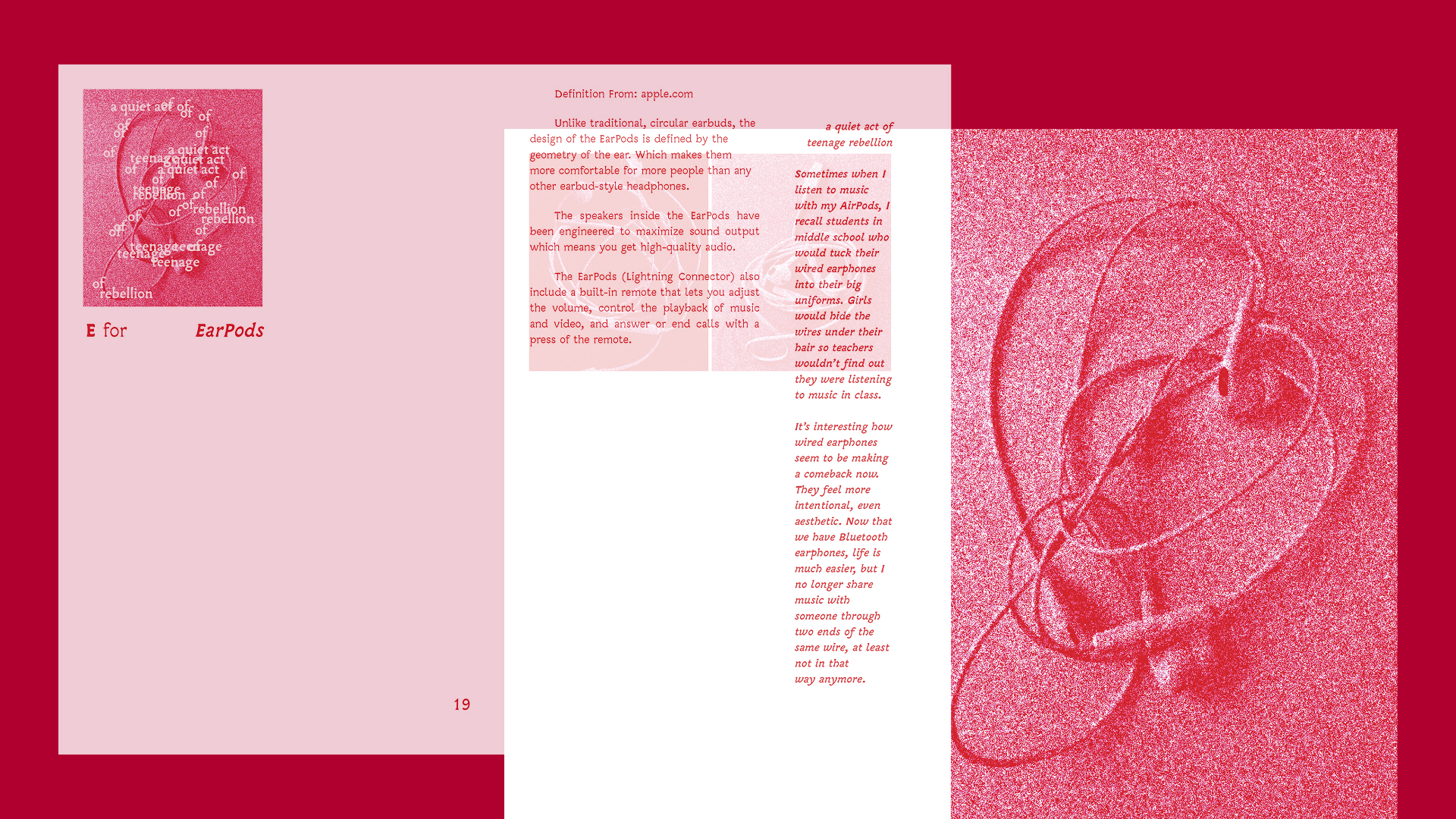
The project traces how individual memories are woven into a broader collective identity. It examines how who we are is shaped by the tension between global consumer culture and local heritage.
Ultimately, Glossary of Nostalgia asks why these nostalgic objects feel both comforting and uncomfortable—why we are drawn to them, yet also aware that they may not fully belong to us anymore.