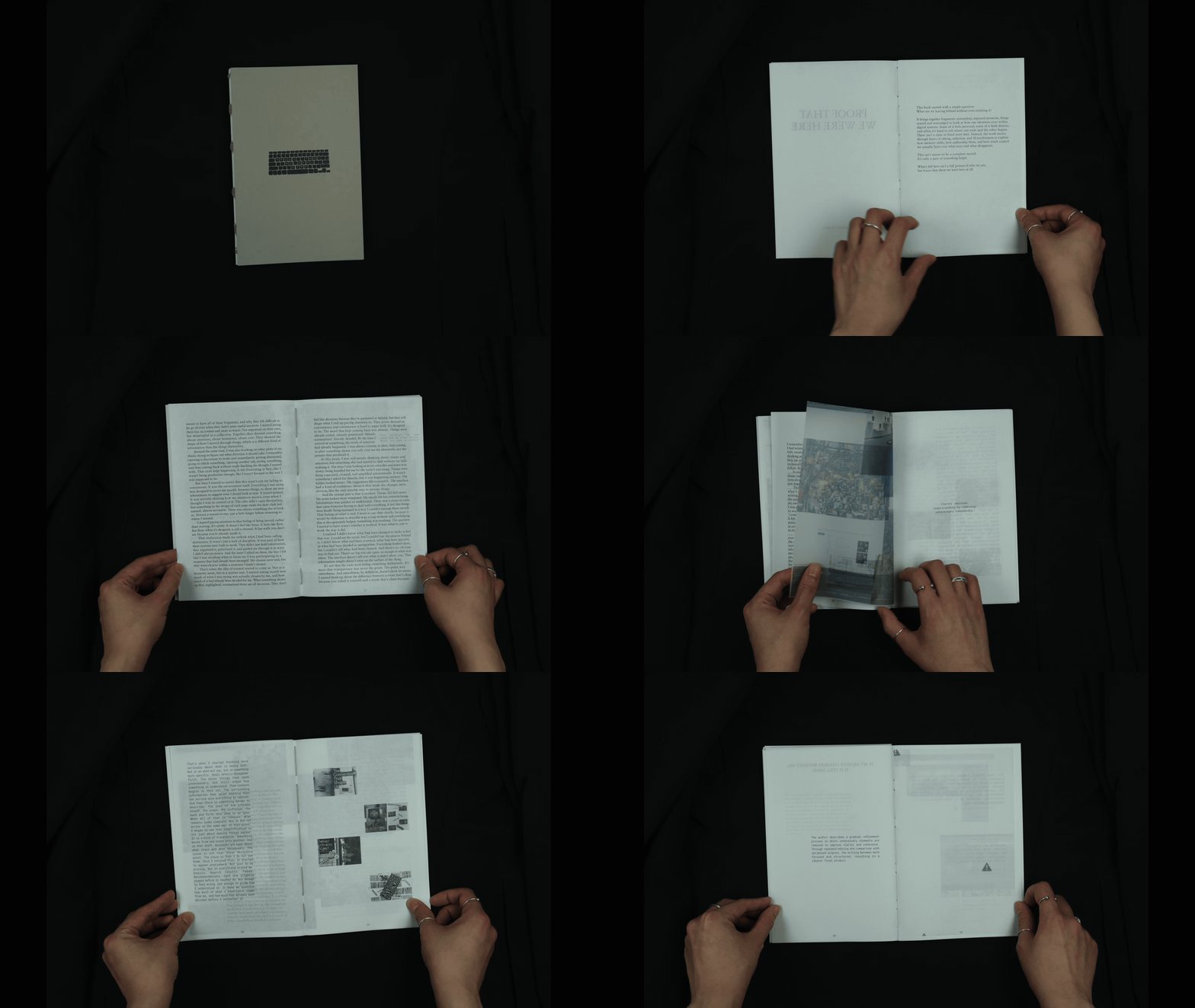
Proof that we were here
Khushi Gupta
This thesis begins with something familiar: the mess of digital life. Screenshots we keep, notes we never finish, tabs we don’t close. Instead of treating this clutter as a problem, this research sees it as meaningful, evidence that we were paying attention, thinking, and feeling.
But the tools are, at the same time, advancing and getting better at cleaning this mess for us. Now, interfaces filter, summarize, and sometimes decide as well, about what matters before we can even take a look. This feels quicker, softer, and calmer. Most importantly, it feels like it is helping. Nevertheless, there is a question: if everything is becoming cleaner, what is disappearing?
This project uses research and design experiments to examine how these systems affect attention, memory, and control. It finds that we lose context when information is simplified.
That is when traces are cleaned, we lose memory, and we lose the sense of agency when decisions are made for us. Often, these losses feel harmless and offer relief.
This thesis is not against automation or simplification. Instead, it is against the visibility of those processes because when we are unable to see what has been removed, we fail to decide if it even mattered.
If we’re never privy to what’s being taken away from us, then how do we know what we’re losing?