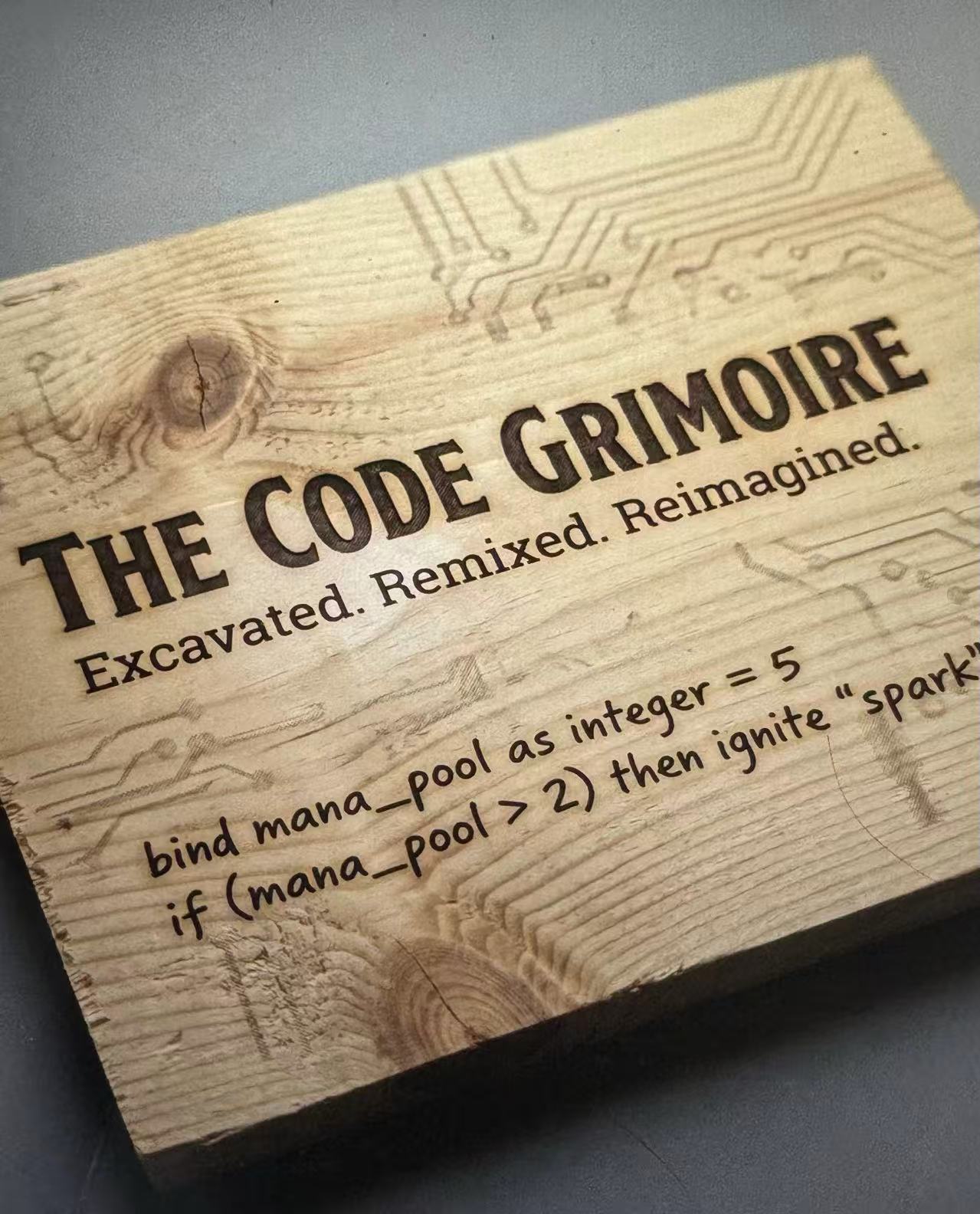
The Code Grimoire
Letian Zhang
This project documents the excavation of a fictional PCB-codedex from an otherworldly source. The artifact is presented through an anthropological exhibition framework rather than conventional reading. Within its pages, a professor frames "code as magic" to teach beginners. The researcher provides annotated fieldwork, bridging computational logic and magical practice as a speculative archaeology of programming knowledge.
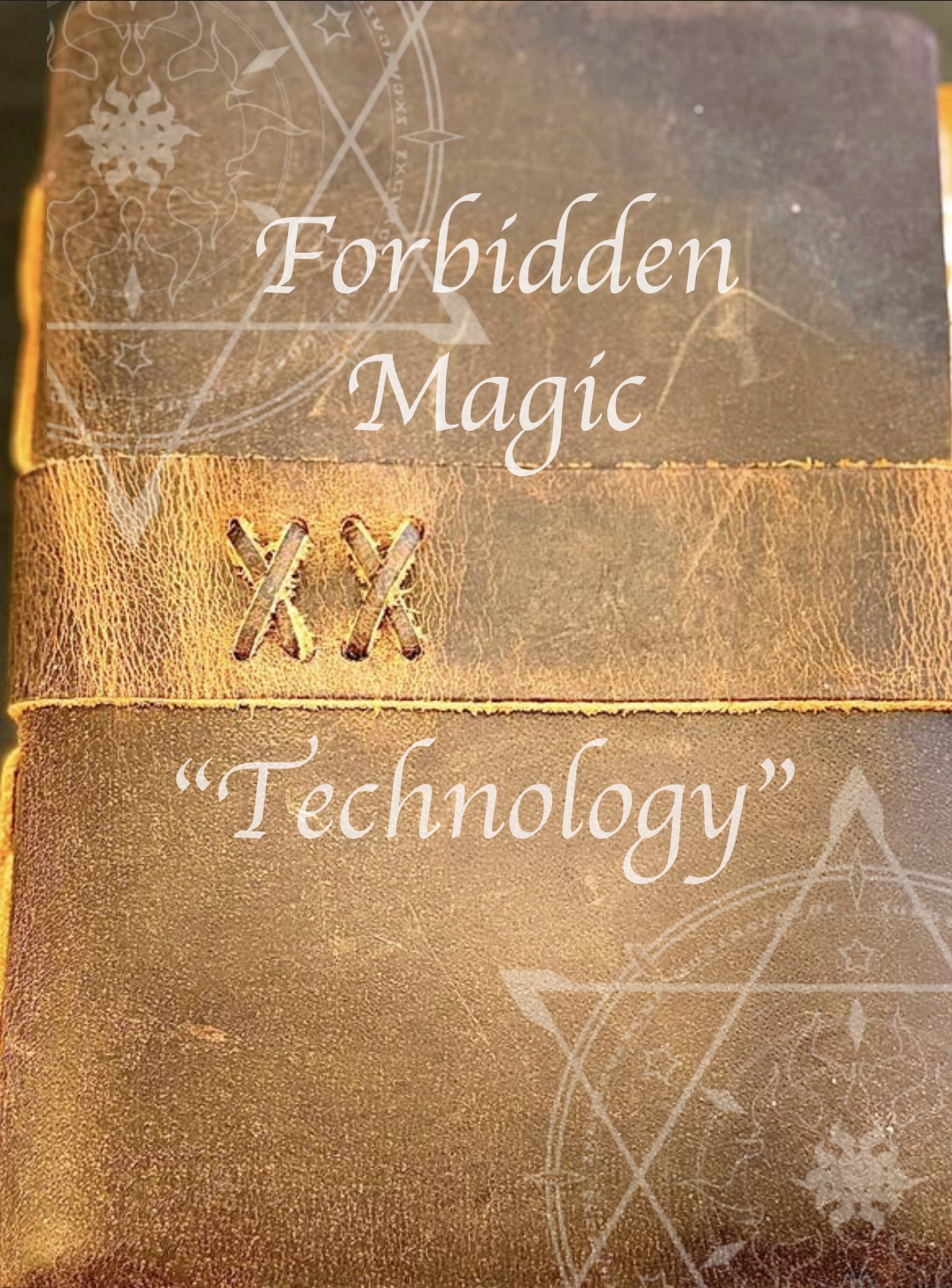
Handcrafted Leather Journal “Forbidden Magic: Technology” – Photograph of Physical Artifact
This image documents the my initial handcrafted leather journal, titled “Forbidden Magic: Technology.” The tactile roughness of the leather material directly inspired the project’s conceptual origin, drawing from Arthur C. Clarke’s Third Law: “Any sufficiently advanced technology is indistinguishable from magic.” The journal represents a physical attempt to bridge technological reasoning and magical perception. Although later abandoned as the primary medium, this artifact remains a critical conceptual seed for the entire project framework.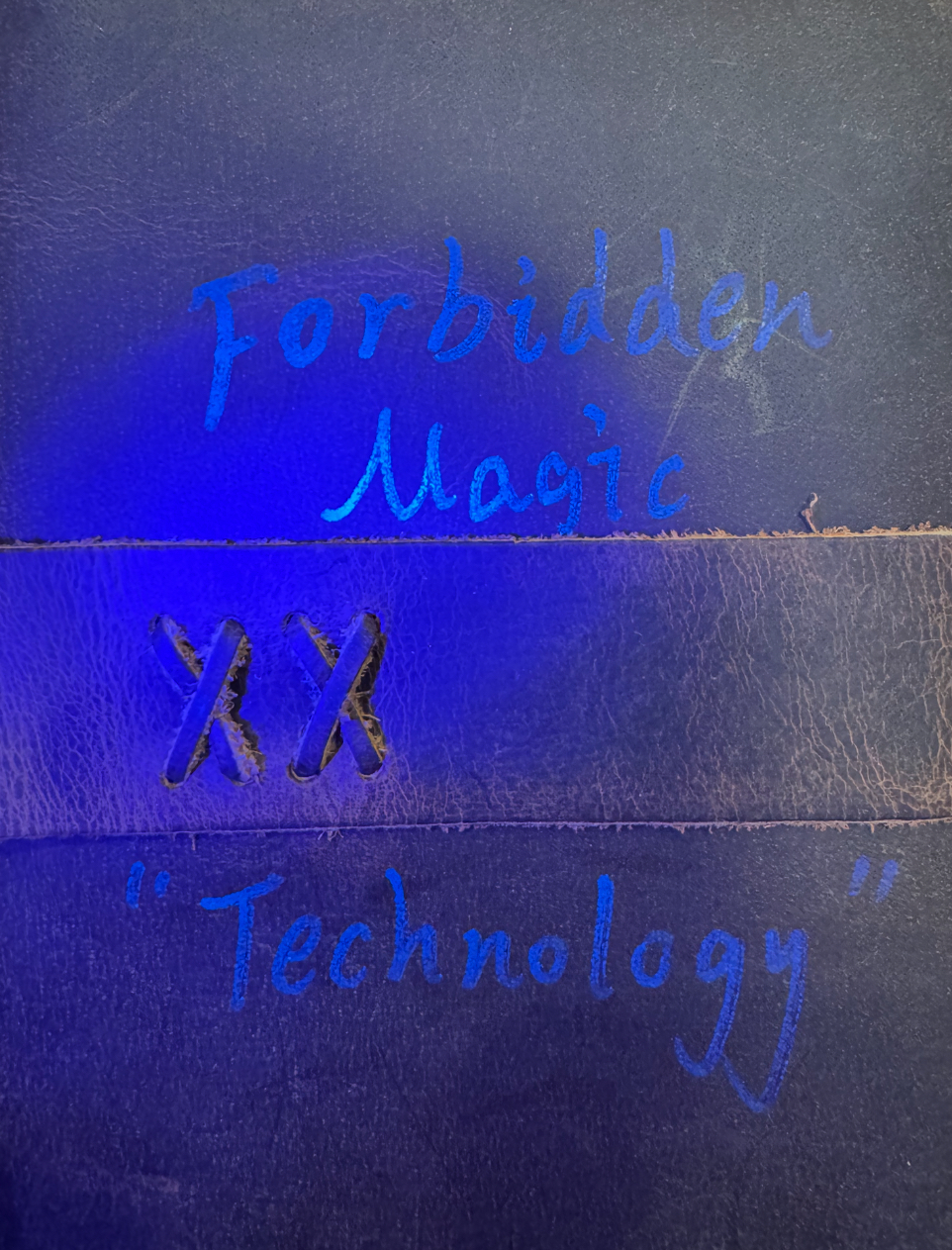
Invisible Ink Test on Blank Journal Pages – Ultraviolet Light Interaction Photograph
The image shows a journal with seemingly blank covers and meaningless interior pages under normal light. Under ultraviolet illumination, however, handwritten content becomes visible. I used invisible ink to write about technology-related topics while constructing two parallel worlds: the “magical” and the “technological.” This interaction was considered engaging but ultimately deemed too fragile and craft-like to support the thesis’s full conceptual ambition regarding the code-magic equivalence.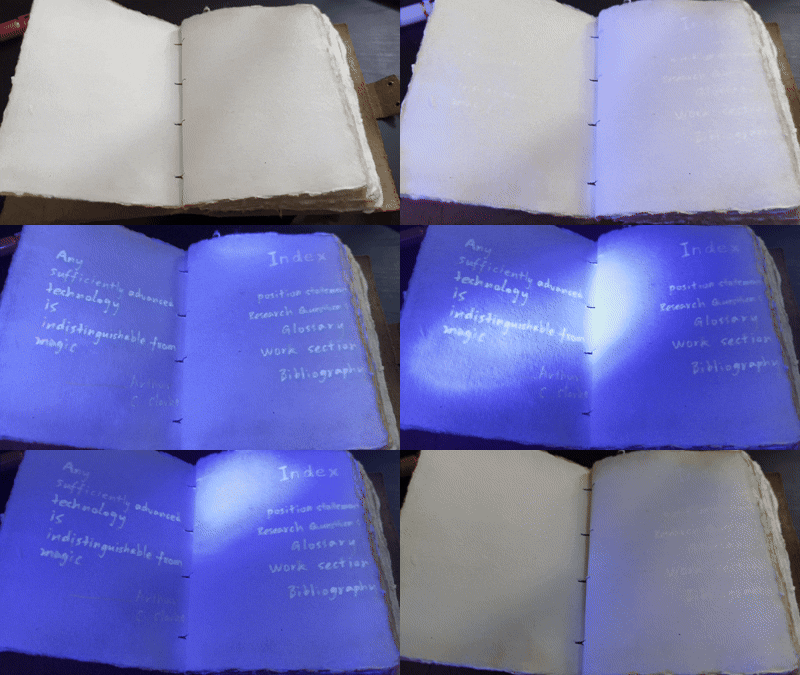
UV-Revealed Handwritten Manuscript – Video Still from Invisible Ink Experiment
This video still captures the actual output of the invisible ink experiment. Most content appears handwritten and becomes clearly legible only under ultraviolet light. I began to critically reflect whether this form could serve as the final thesis outcome. The handwritten texture was considered too rough, and the overall result risked being reduced to a creative craft project. While the written text explored technology-magic themes in depth, the invisible ink medium itself proved inadequate for conveying those ideas effectively.
Code Learning Webpage with Combinable Code Blocks – Website Screenshot
I shifted focus to a concrete technological domain: code. Drawing from personal beginner experiences, this webpage teaches fundamental programming concepts by allowing users to combine “code blocks” in the correct sequence. This direction emphasized practicality and audience resonance, moving away from invisible ink’s fragility. However, the researcher recognized that the webpage leaned heavily toward the technological side, lacking sufficient magical elements to maintain the intended duality.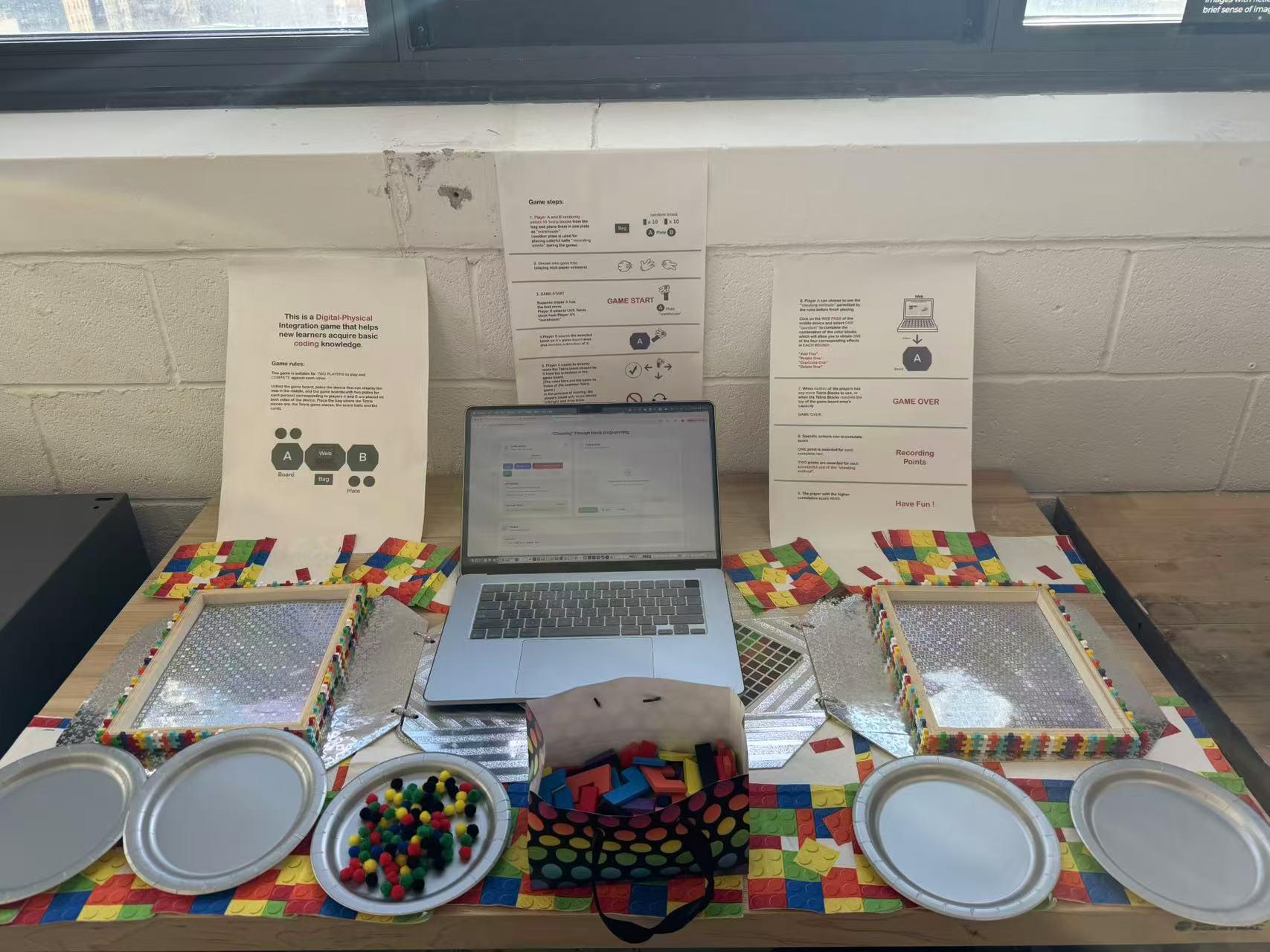
Tetris-Based Gamified Learning Installation – Physical and Digital Hybrid Documentation
To reintroduce magical aesthetics, I adopted Tetris as a gamification. The universally recognized game allows “code blocks” to appear as colorful geometric pieces, enabling a vibrant visual language. This marked the researcher’s first attempt at designing game mechanics and rules, constructing both online and physical game platforms, and inviting participants to engage. The combination of the webpage with a tangible Tetris installation created a hybrid experience bridging code learning and playful magic.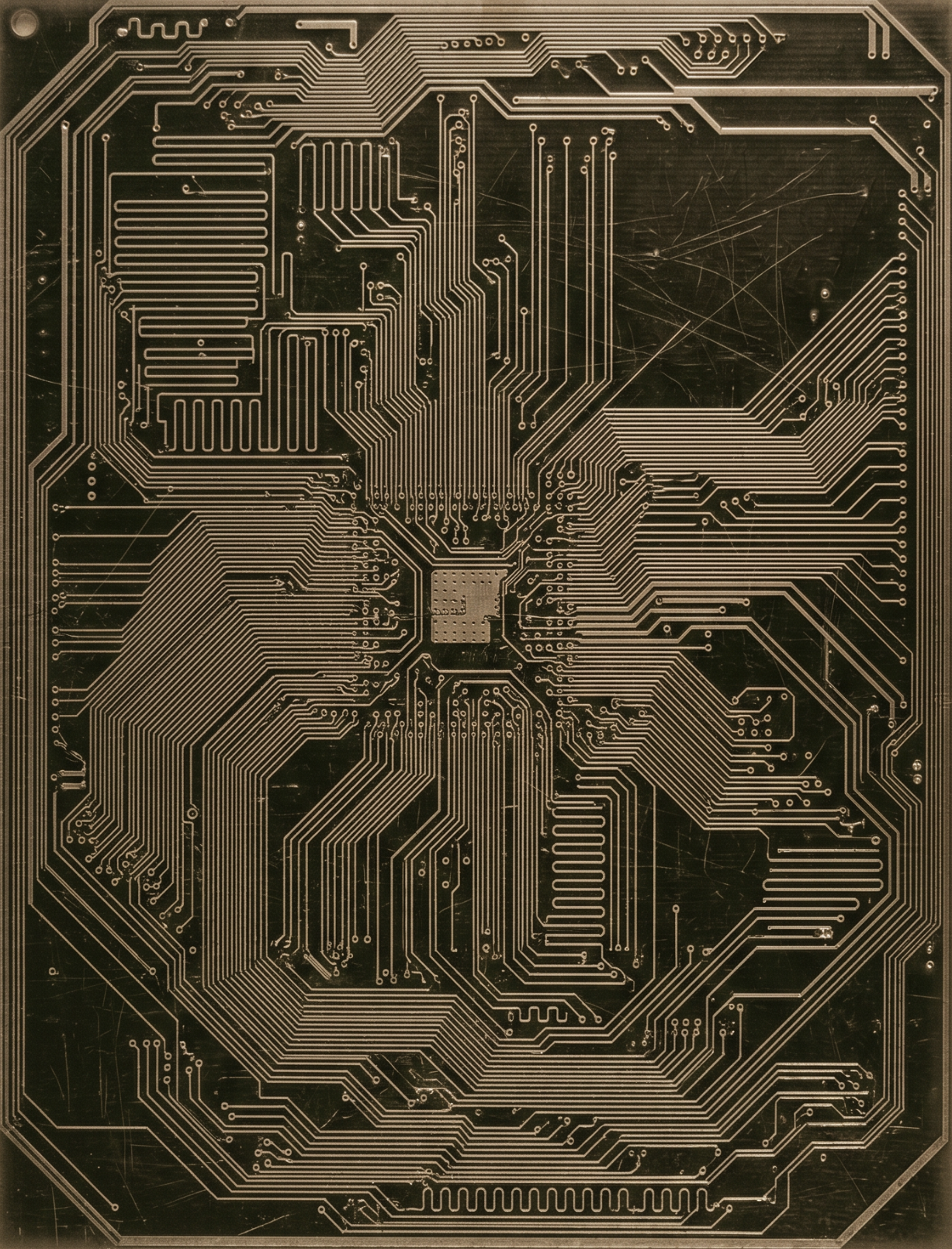
Photoshop Composite of PCB-Page Codex – Conceptual Visualisation for Thesis Book
This Photoshop composite represents a conceptual turning point. I abandoned the earlier leather journal and invisible ink approaches, adopting PCB (printed circuit board) as the book’s page material. The image visualizes how “code as magic” could be materially embodied through electronic substrates. PCB pages suggest an alternative reading experience where circuitry and spellcasting intertwine. This new medium better supports the fiction of an excavated otherworldly textbook, aligning with the anthropological exhibition framework.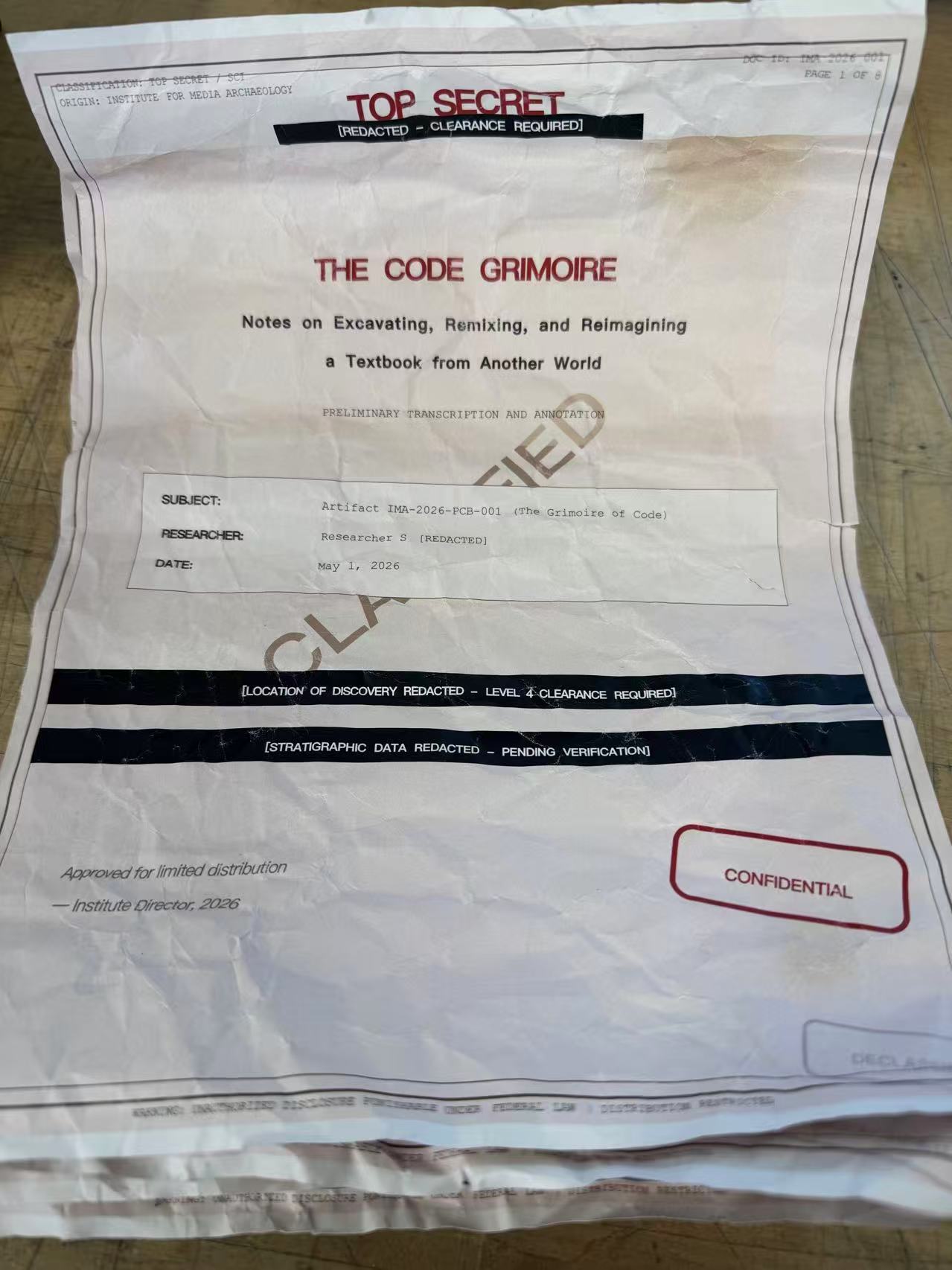
Artificially Aged Paper Documents – Fieldwork Records from Researcher S
The image shows deliberately aged paper documents created by the researcher to establish a new world-building framework. In this framework, Researcher S excavates an artifact presented through an anthropological exhibition framework rather than conventional reading. These documents represent the “technological world” recording the “magical world.” The aging process—staining, tearing, and weathering—serves to mimic authentic archaeological field notes, helping the audience intuitively grasp the fictional excavation context.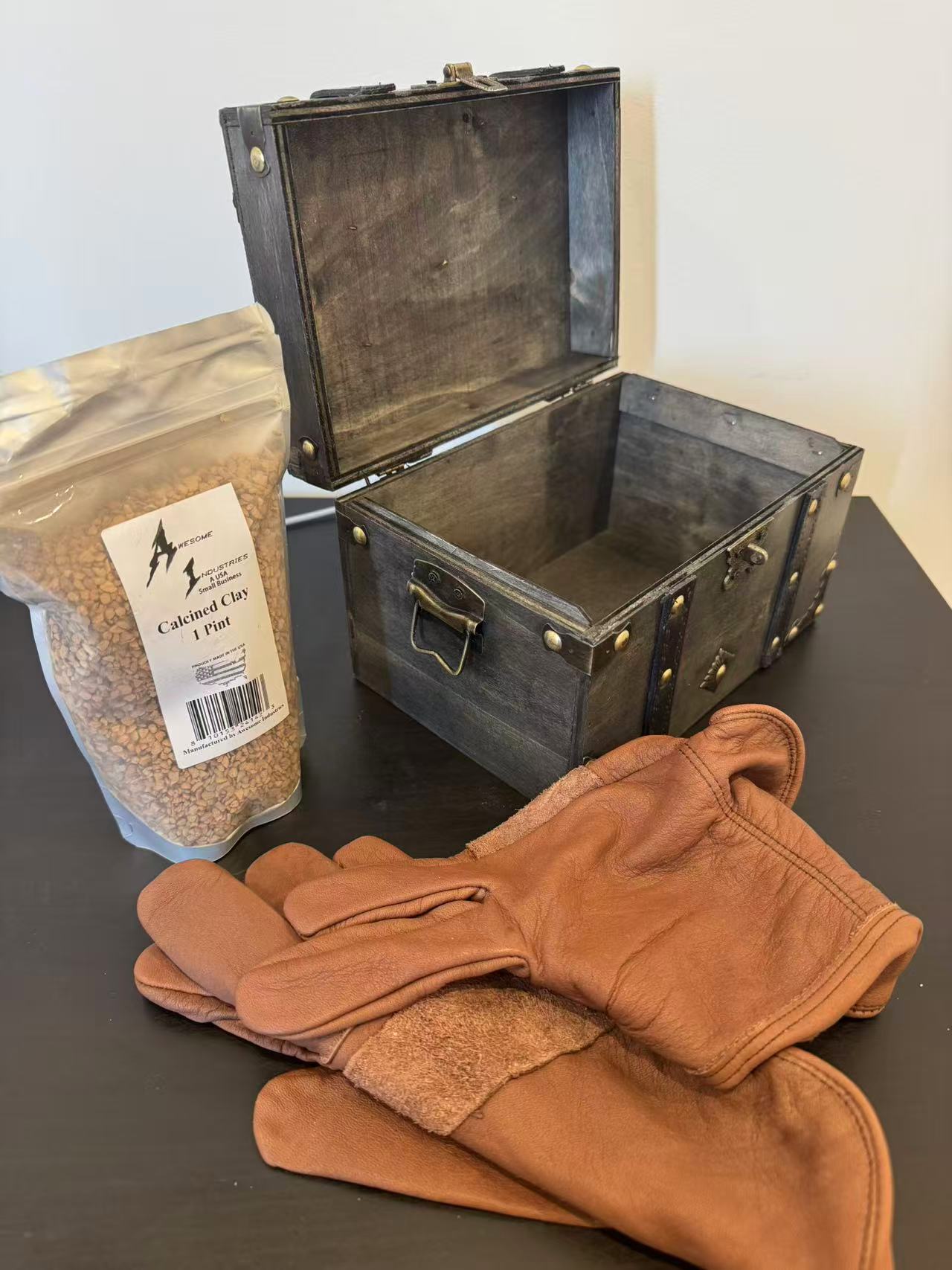
Buried Thesis Book in Soil-Filled Box with Gloves – Interactive Excavation Simulation Setup
The researcher provides annotated fieldwork content by embedding the thesis book inside a box filled with soil, inviting viewers to wear gloves and “excavate” the artifact. This image documents the material simulation of an archaeological site. The burial setup transforms passive reading into active, tactile discovery. By physically removing soil to reveal the PCB codex, participants reenact the researcher’s fictional excavation. This method reinforces the anthropological exhibition framework while maintaining the speculative archaeology tone.