Gradient: A Framework for Sensing, Translating, and Building Continuous States
Peixuan Li
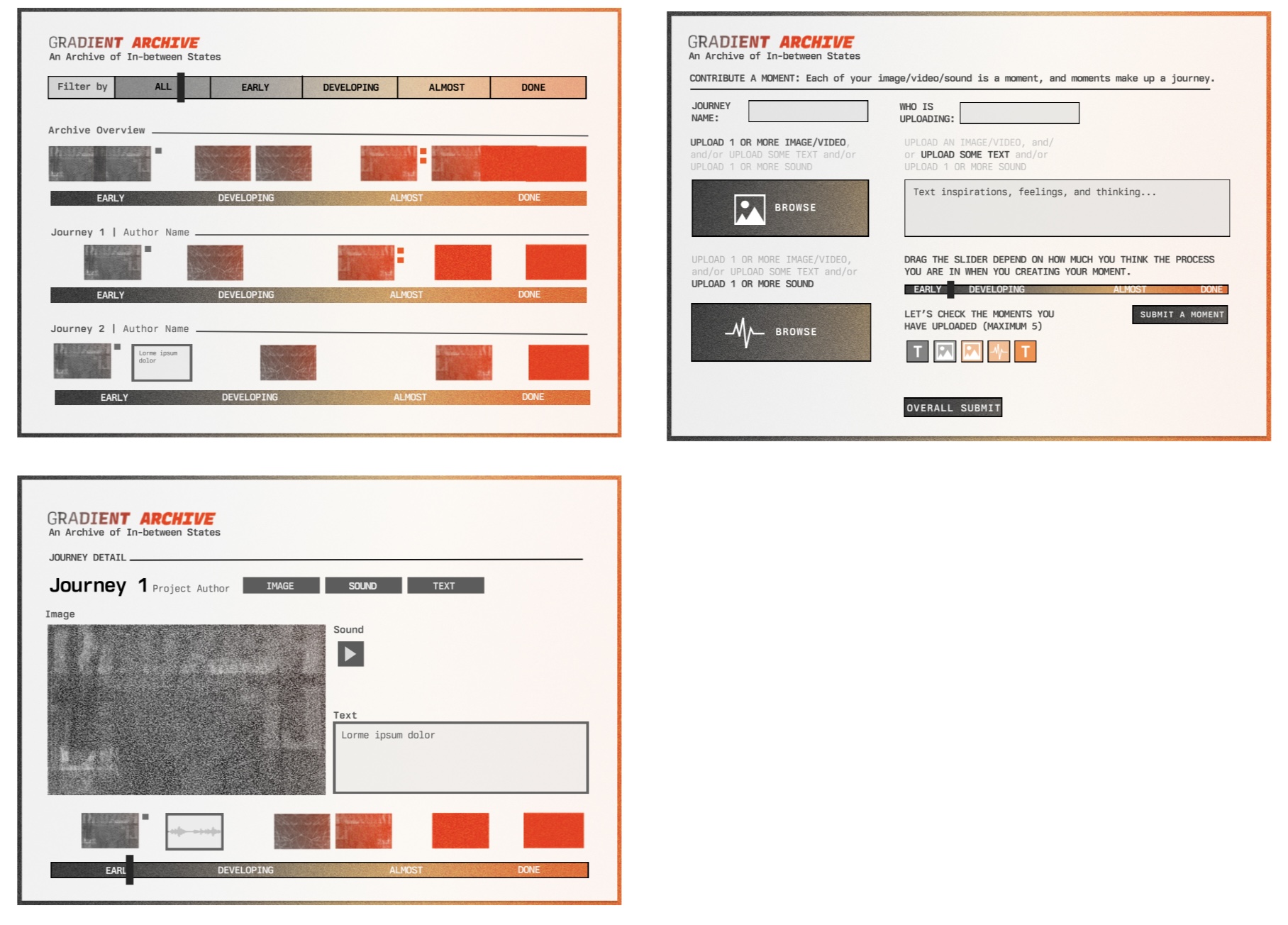
Gradient studies continuous states as a design framework across three research contexts: observation, experience, and mapping.
Through the community experience on the 7 train, the multi-sensory game concept, and the system building based on Gradient concept, the thesis explores how design can observe, translate, and organize ambiguous conditions without reducing them into fixed categories in the concept of“Gradient”.
Installation at the Pratt Show
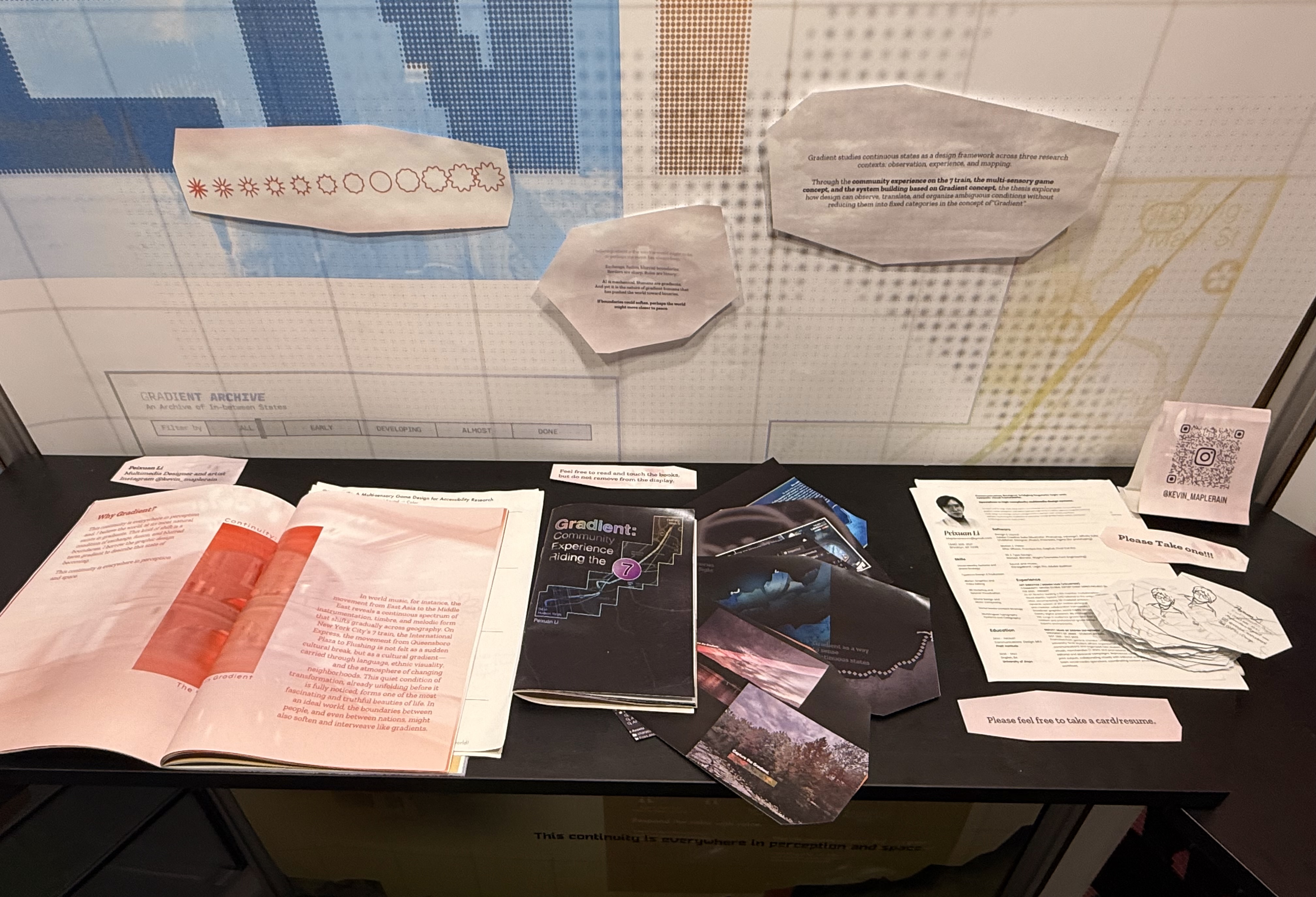
Installation view of GRADIENT at the Pratt Show, presenting the project as a framework for sensing and translating continuous states.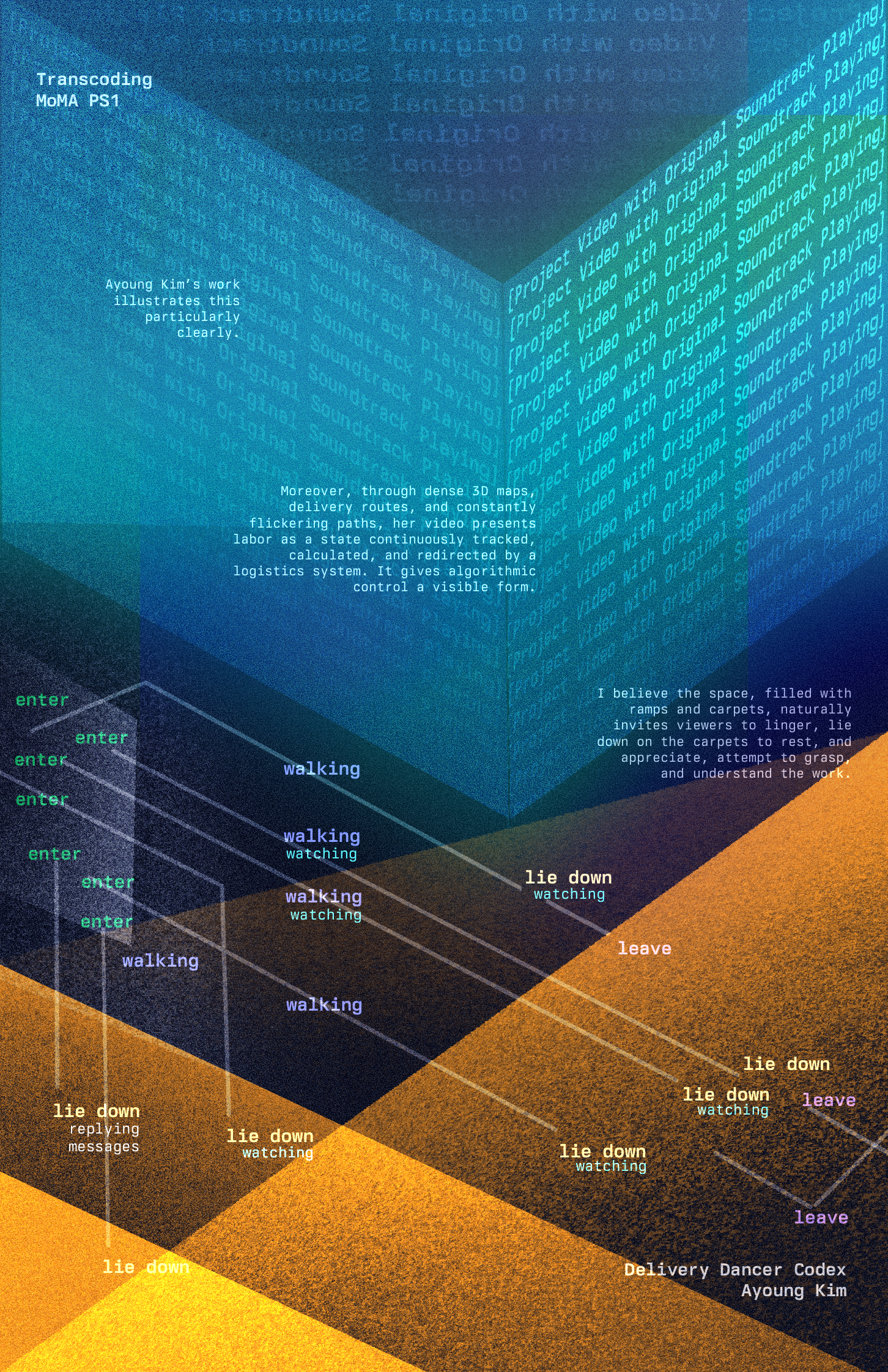
Transcoding: Visitor Flow in Ayoung Kim’s Exhibition
Mapping how viewers enter, orient, and remain within the exhibition venue of Ayoung Kim’s Delivery Dancer Codex.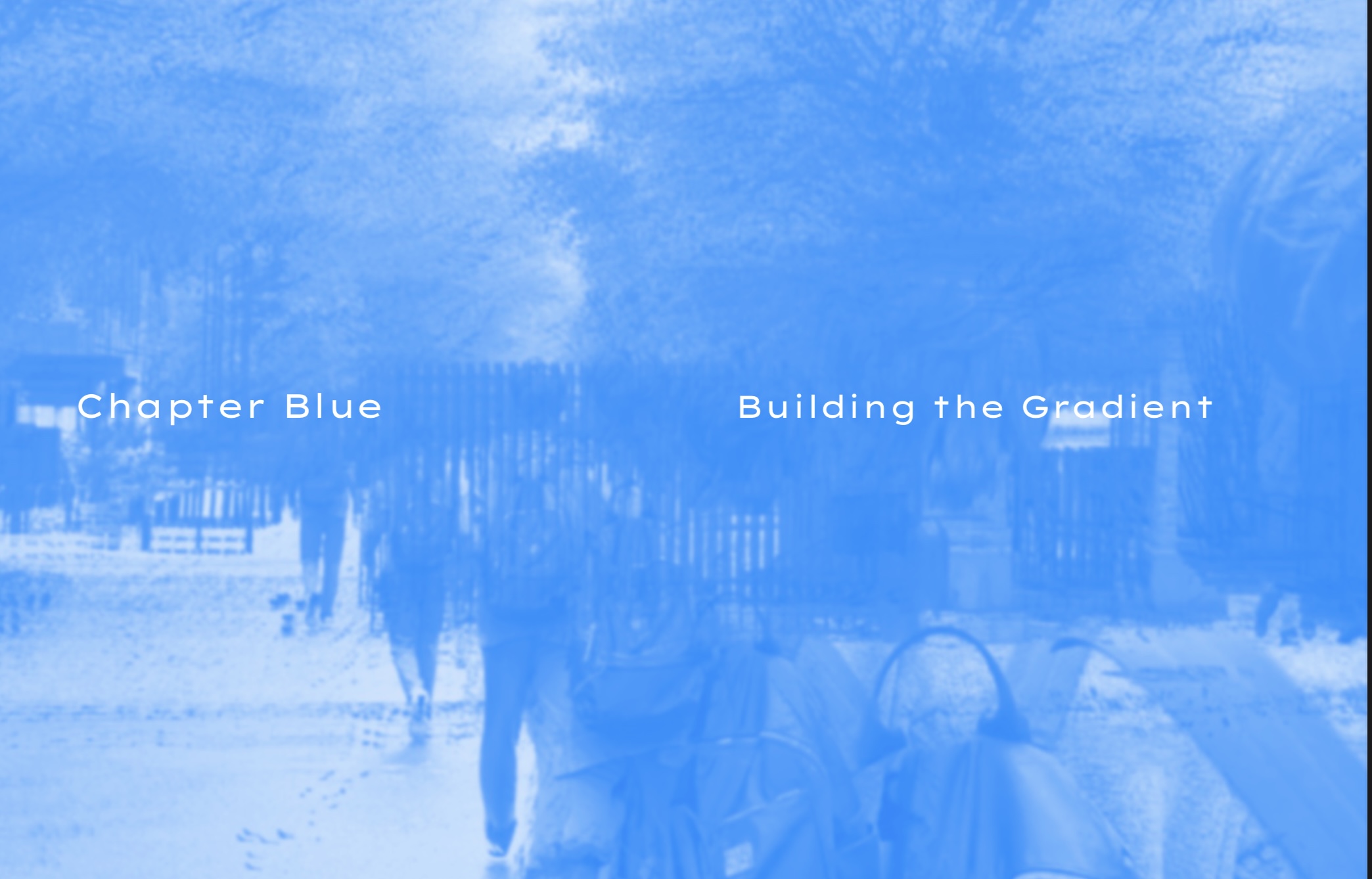
Chapter opening page: “Chapter Blue”
This is a visual experiment based on a video of myself walking into the Pratt campus entrance. By layering multiple frames, I explored my Gradient design methodology: a journey is not defined only by its beginning and end, but also by the anchors, turns, and in-between moments that shape the process.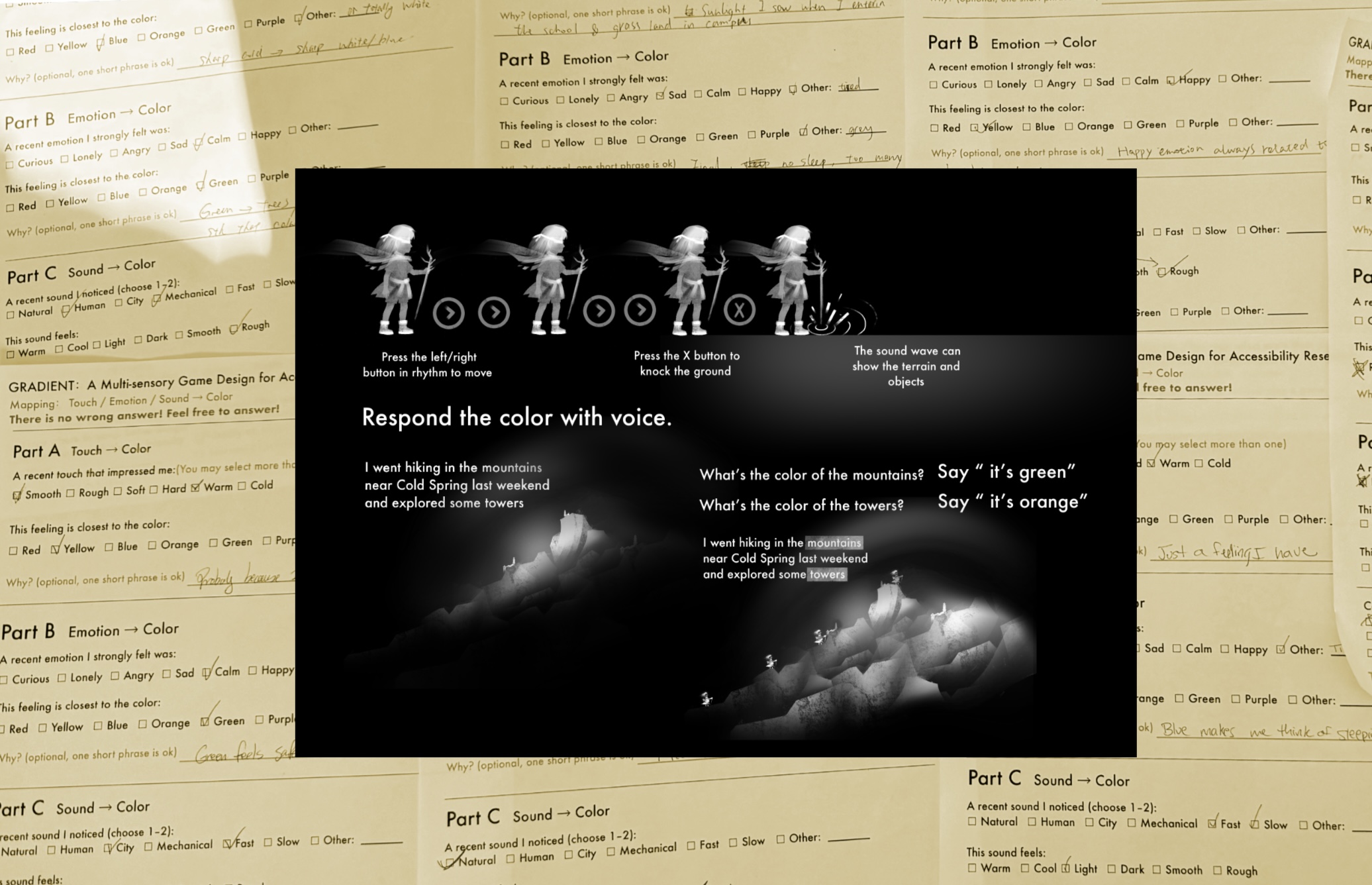
Concept of the Development of the Multi-sensory game concept.
This image includes a core gameplay diagram I created while exploring the game concept within my Gradient design methodology. The background texture is based on survey research conducted during the development of the game concept and its interaction system.