Visual Appetite: Why Do We Love Food We Can’t Eat?
Sam Nam
Food is no longer limited to physical consumption. It persists through images, memory, and repetition, and is consumed in various forms. We save, revisit, and repeatedly engage with food content such as miniature toys, illustrations, mukbang videos, and digital images. Why do we continue to consume food we cannot eat? Through the concept of “visual appetite” and desire, this project explores how we experience food through our eyes, and how desire persists by shifting forms, drawing us toward visually perfected images of food.
Visual Appetite Book
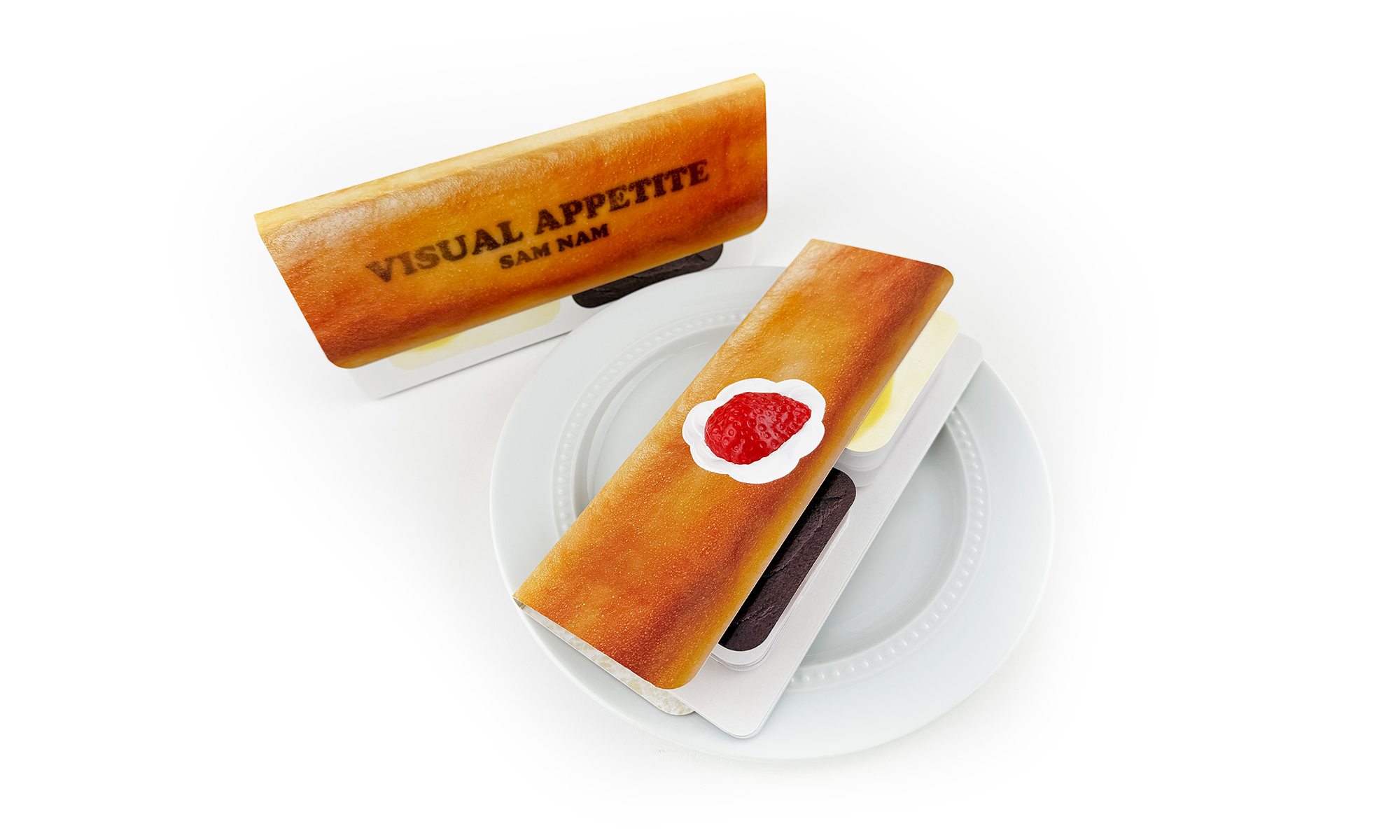
This book is designed to be experienced as food at first glance. Through forms and textures that evoke a sweet pastry, it aims to trigger a sensory response before reading even begins. Inspired by the Japanese “an-butter” bread (あんバターサンド), the project consists of three separate books representing cream, butter, and red bean paste, assembled as a single set that resembles one piece of bread. The content of the book begins with personal experiences and reflections on why people are drawn to food content and continue to consume it repeatedly. Through a light and playful tone in both writing and design, it invites readers to engage with the idea of “visual appetite” in an intuitive and accessible way. Beyond simply being read, the book proposes an experience that encourages readers to reflect on why they keep looking at, saving, and returning to images of food.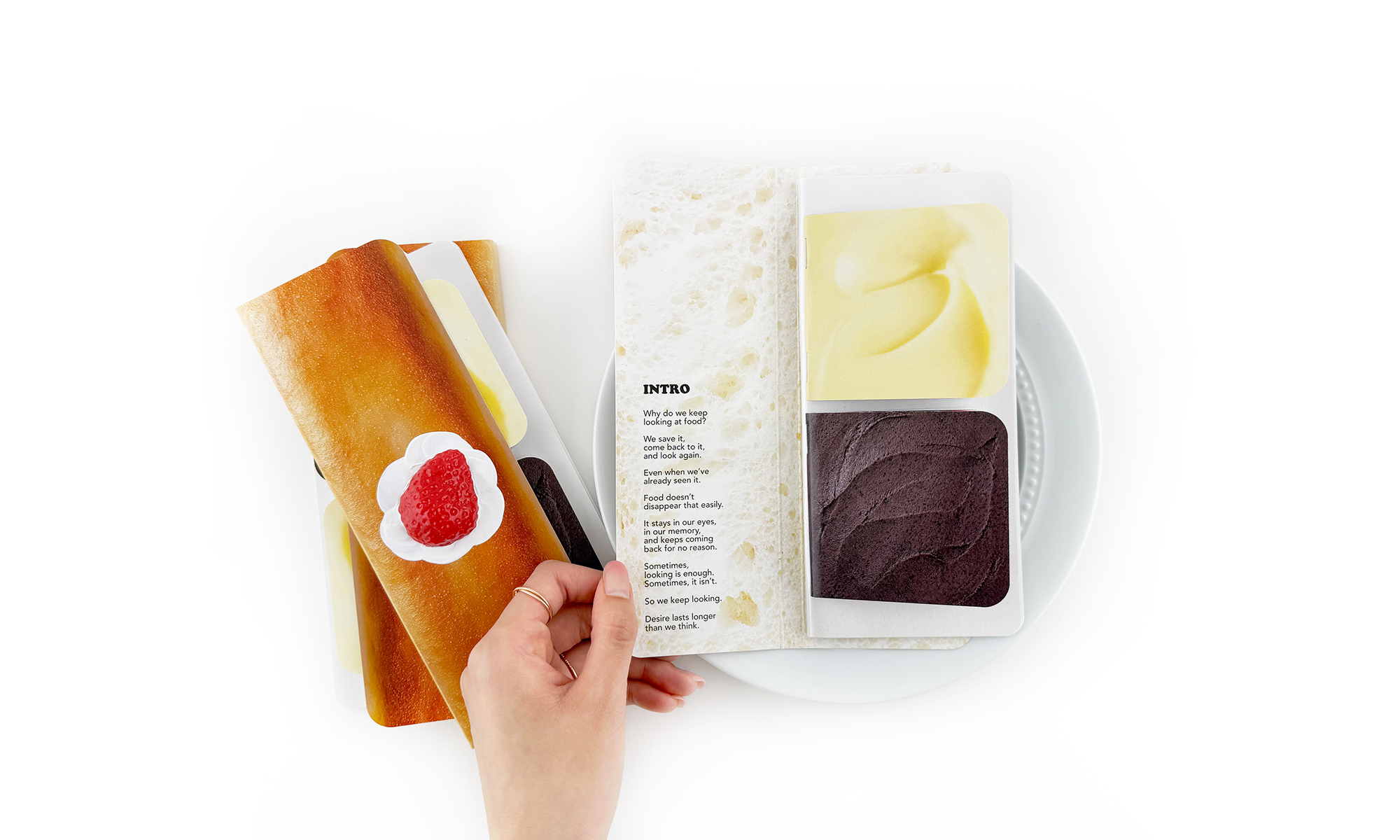
Visual Appetite Book
This book is designed to be experienced as food at first glance. Through forms and textures that evoke a sweet pastry, it aims to trigger a sensory response before reading even begins. Inspired by the Japanese “an-butter” bread (あんバターサンド), the project consists of three separate books representing cream, butter, and red bean paste, assembled as a single set that resembles one piece of bread. The content of the book begins with personal experiences and reflections on why people are drawn to food content and continue to consume it repeatedly. Through a light and playful tone in both writing and design, it invites readers to engage with the idea of “visual appetite” in an intuitive and accessible way. Beyond simply being read, the book proposes an experience that encourages readers to reflect on why they keep looking at, saving, and returning to images of food.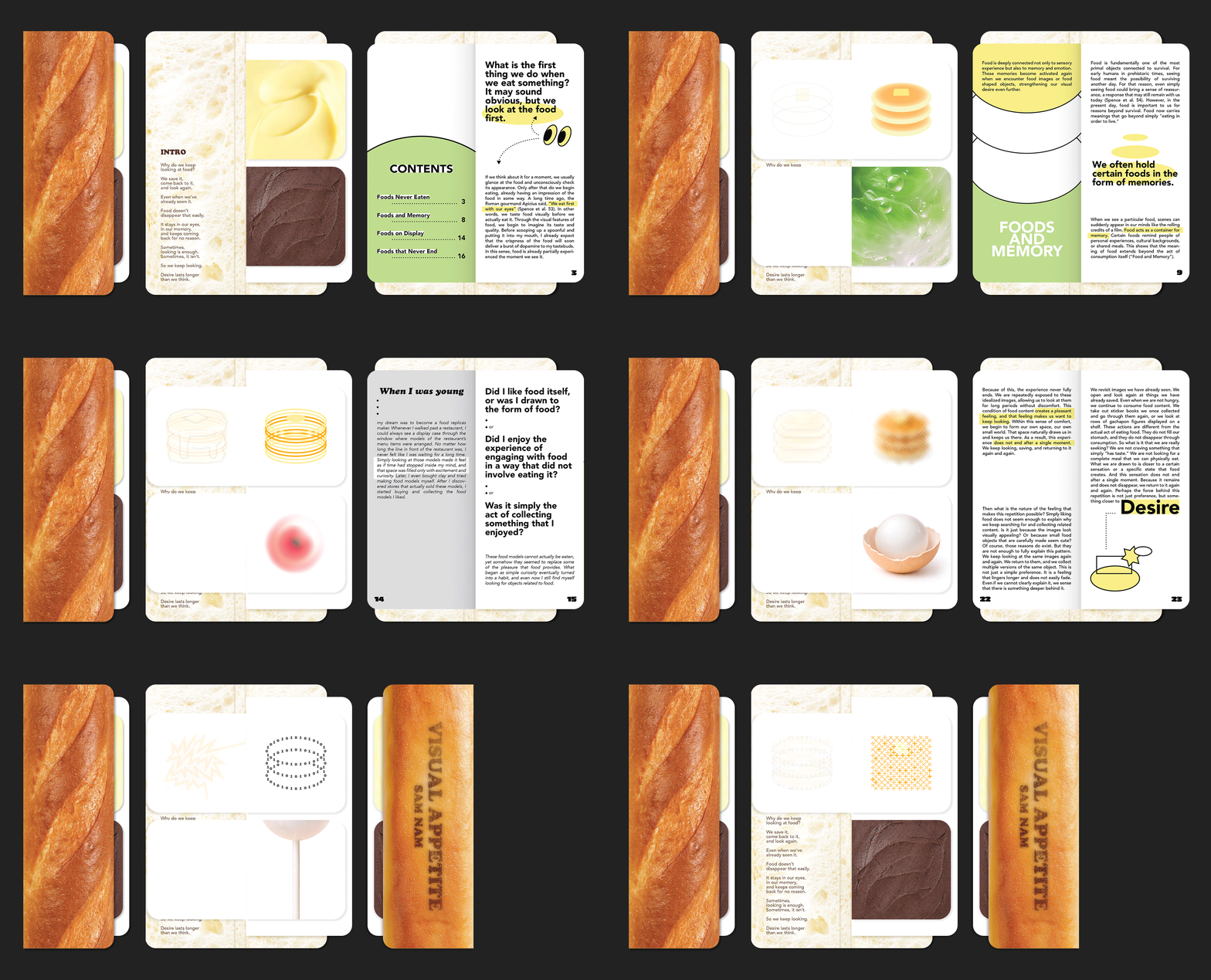
The Butter book explores how we recognize food even in blurred or incomplete images. Through memory and imagination, we are able to identify food and mentally complete the experience, even when the form is not fully clear.
The Red Bean book focuses on how we do not consume food itself, but rather its image and appearance. Images edited to resemble something delicious and edible may in fact be entirely different objects, yet we still perceive and respond to them as food.