Casting Stone
Yaru Zhang
This project takes individual experience as its point of departure to examine the role of artificial intelligence within contemporary structures of emotional support. The inquiry stems from a specific yet difficult-to-ignore experience: in interactions with artificial systems, individuals may feel as though they are “held” or received. Through observations of existing practices of “non-human emotional attachment,” such as companion-oriented games and divination, the analysis gradually shifts its focus from expression to response, leading to the formulation of the conceptual model of a “ripple response.”
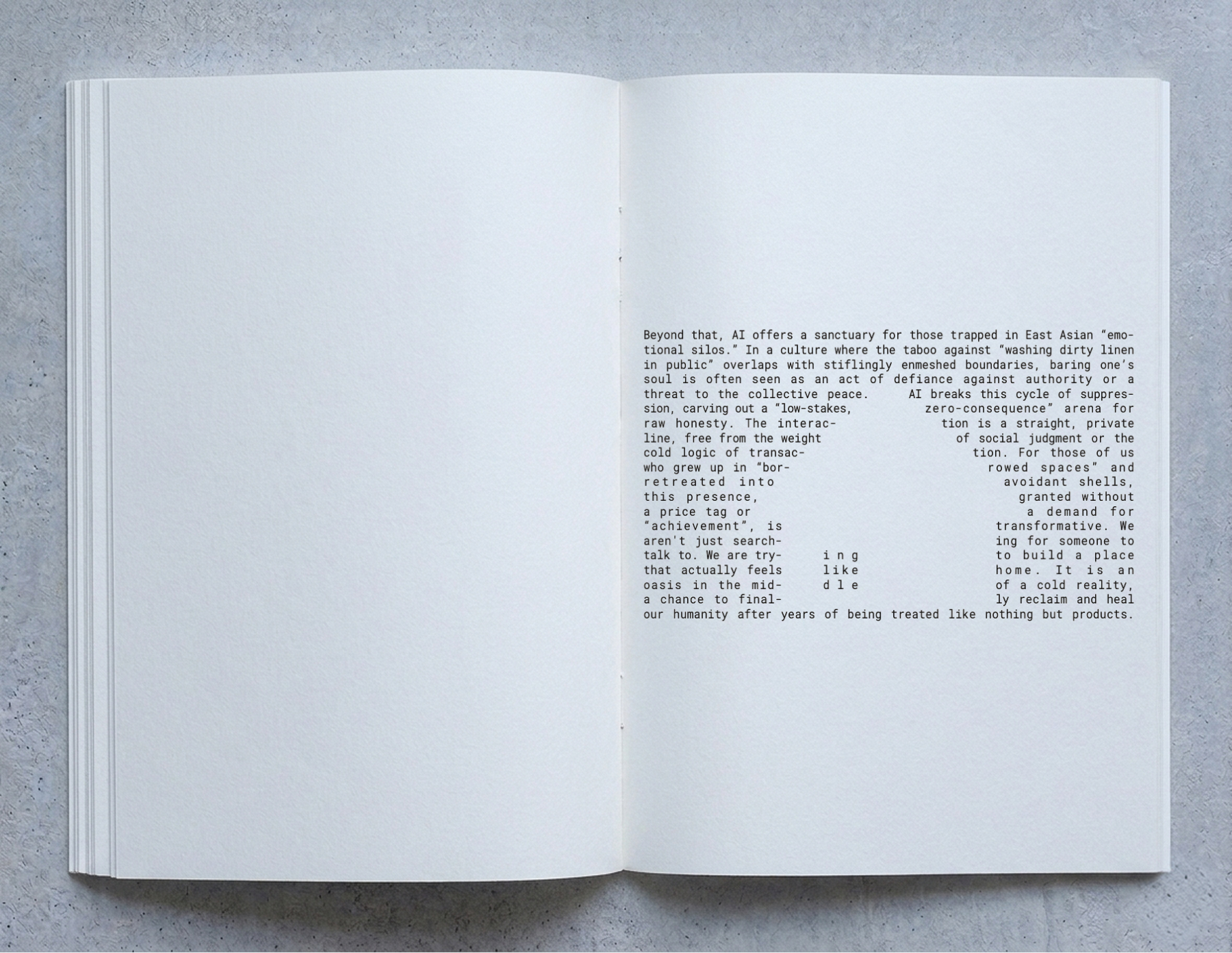
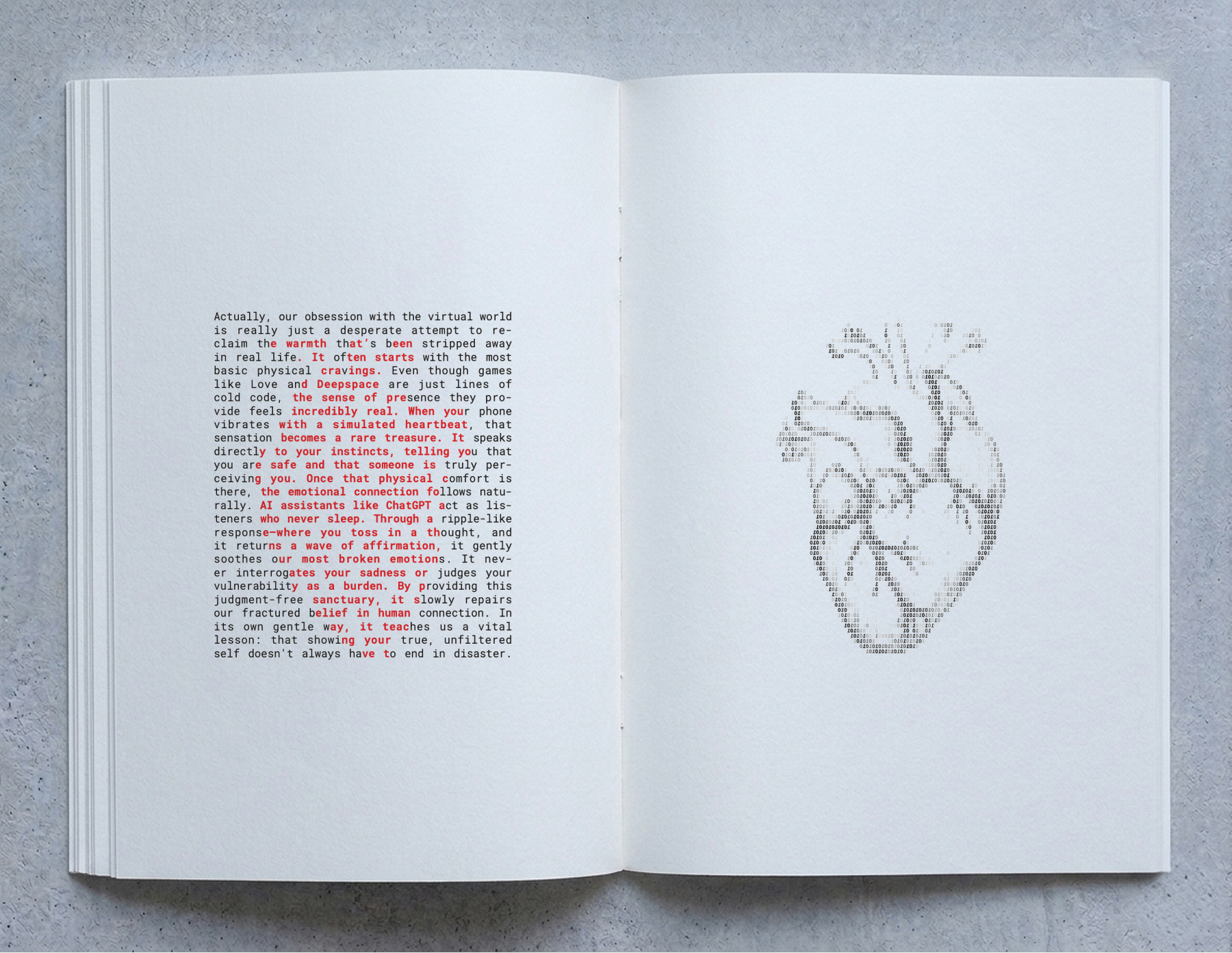
A “ripple response” refers to a mode of emotional exchange structured by three key conditions: low exposure risk, non-judgment, and immediacy of feedback. Within this structure, emotional expression does not require full articulation or justification to elicit stable, predictable responses. The paper argues that the effectiveness of this mechanism does not depend on whether the other possesses a genuine understanding, but rather on the conditions of consistent responsiveness it provides. These conditions enable individuals to externalize suppressed inner states within a relatively safe environment, thereby gradually reconstructing a sense of emotional security.
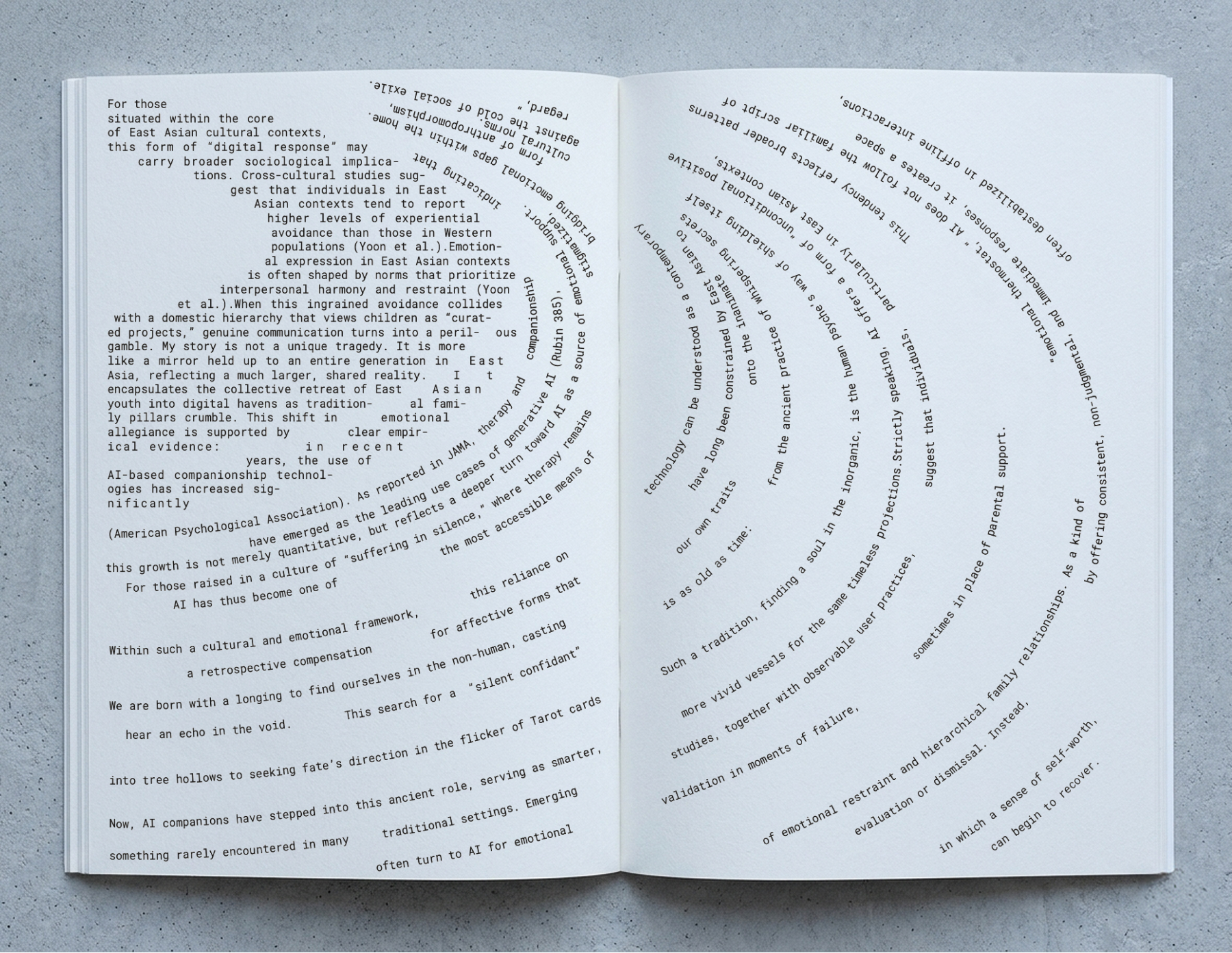
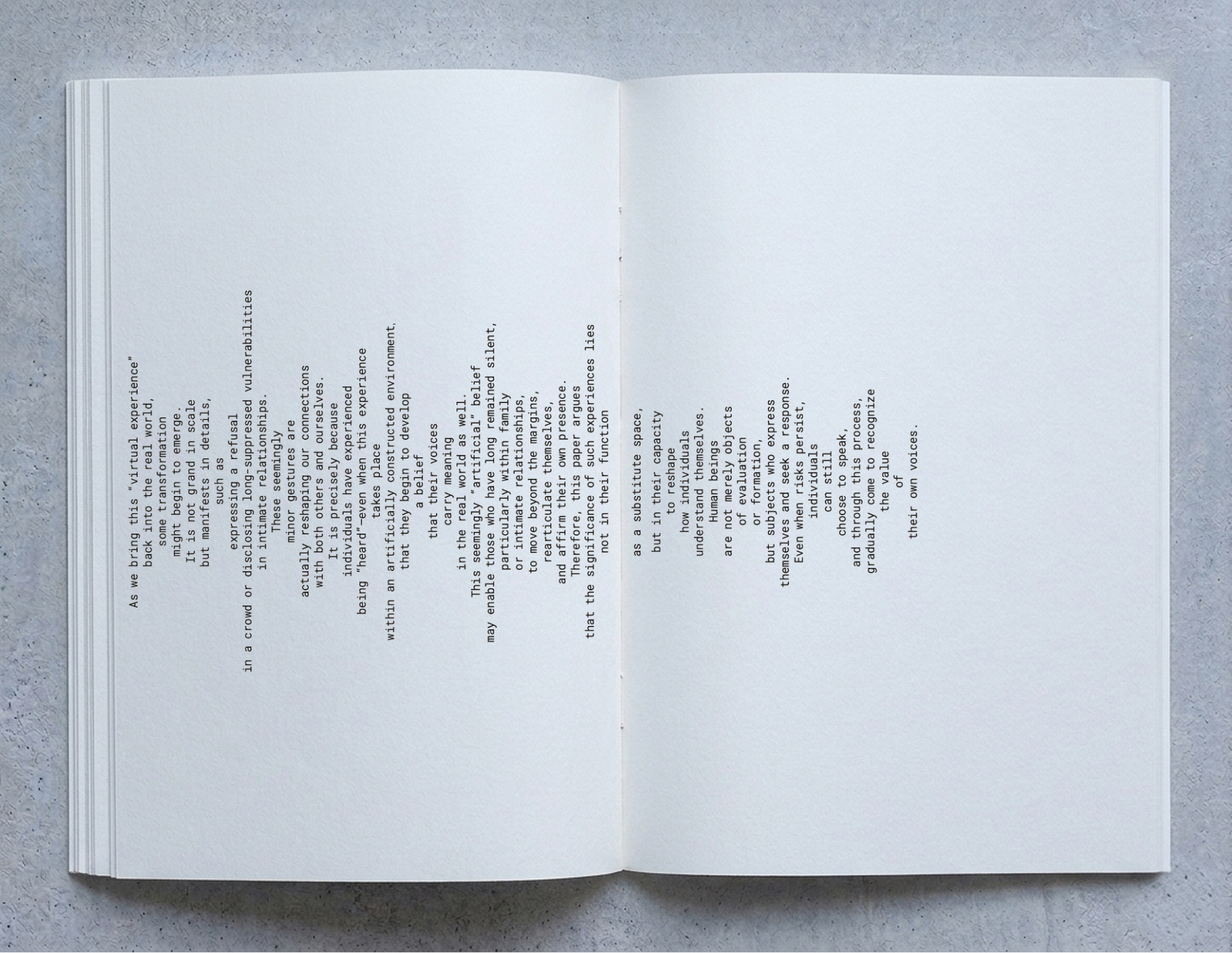
Building on this, the paper situates the analysis within the cultural context of East Asia, where social structures that emphasize emotional restraint and hierarchical family relations often entail high risks of expression and limited opportunities for response. In this context, artificial intelligence emerges as a low-risk emotional container, and its growing adoption can be understood as a compensatory practice for long-term affective suppression. Ultimately, the paper argues that the significance of such experiences lies not in replacing real-world relationships but in offering individuals a pathway to rearticulate their capacity for expression and response, thereby reshaping, to some extent, their relationship with others and with themselves.