How can everyday cooking become design method?
Yichi Zhang
This thesis explores how cooking can serve as a lens for rethinking design and as a form of guidance that brings design closer to everyday life. Rather than treating design as a professional practice separated from ordinary experience, this research considers design as something open, situated, imperfect, and shaped by personal judgment. Cooking becomes an important point of entry because it is familiar, accessible, and deeply connected to material conditions, bodily experience, care, improvisation, and daily survival.
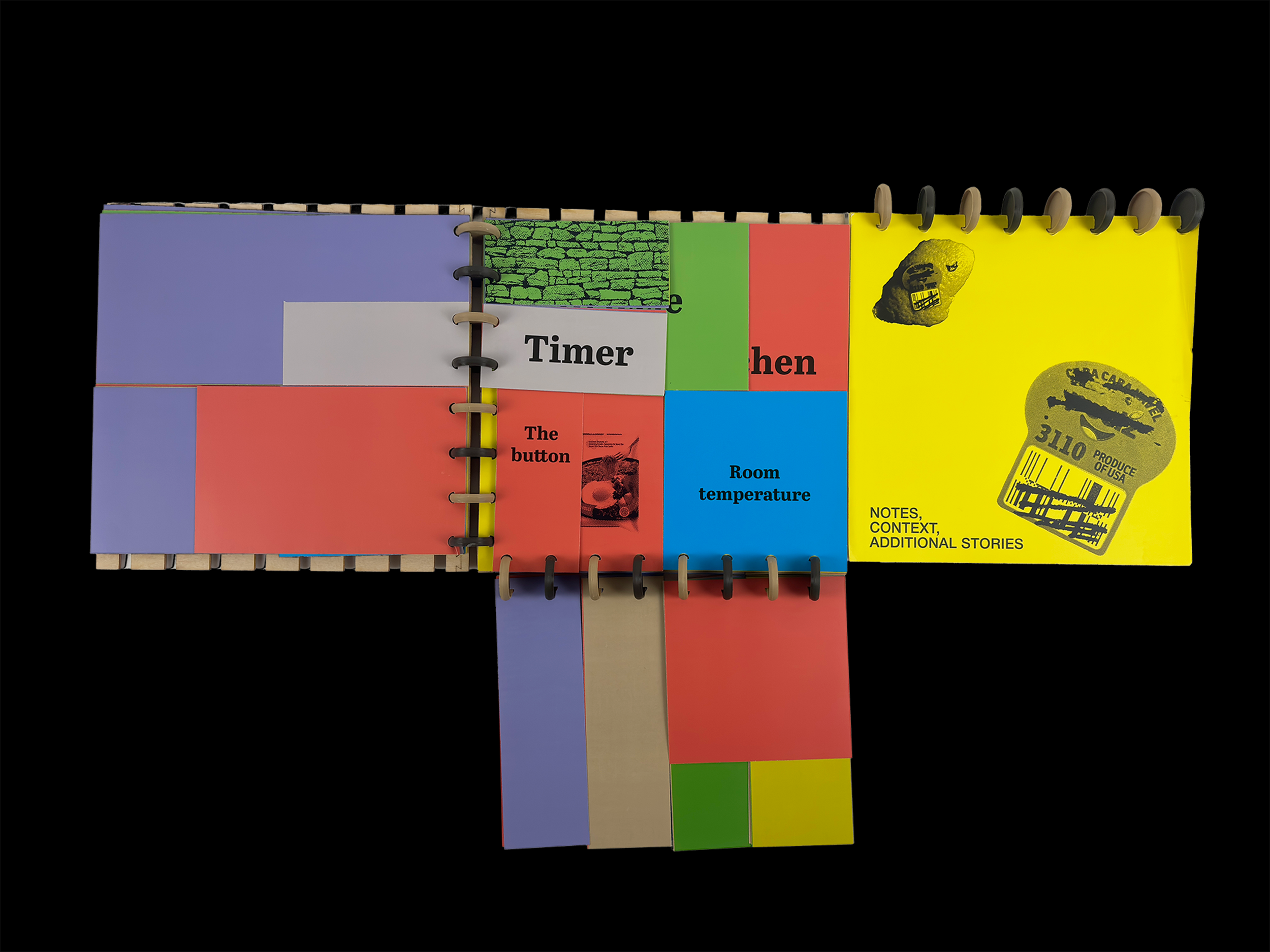
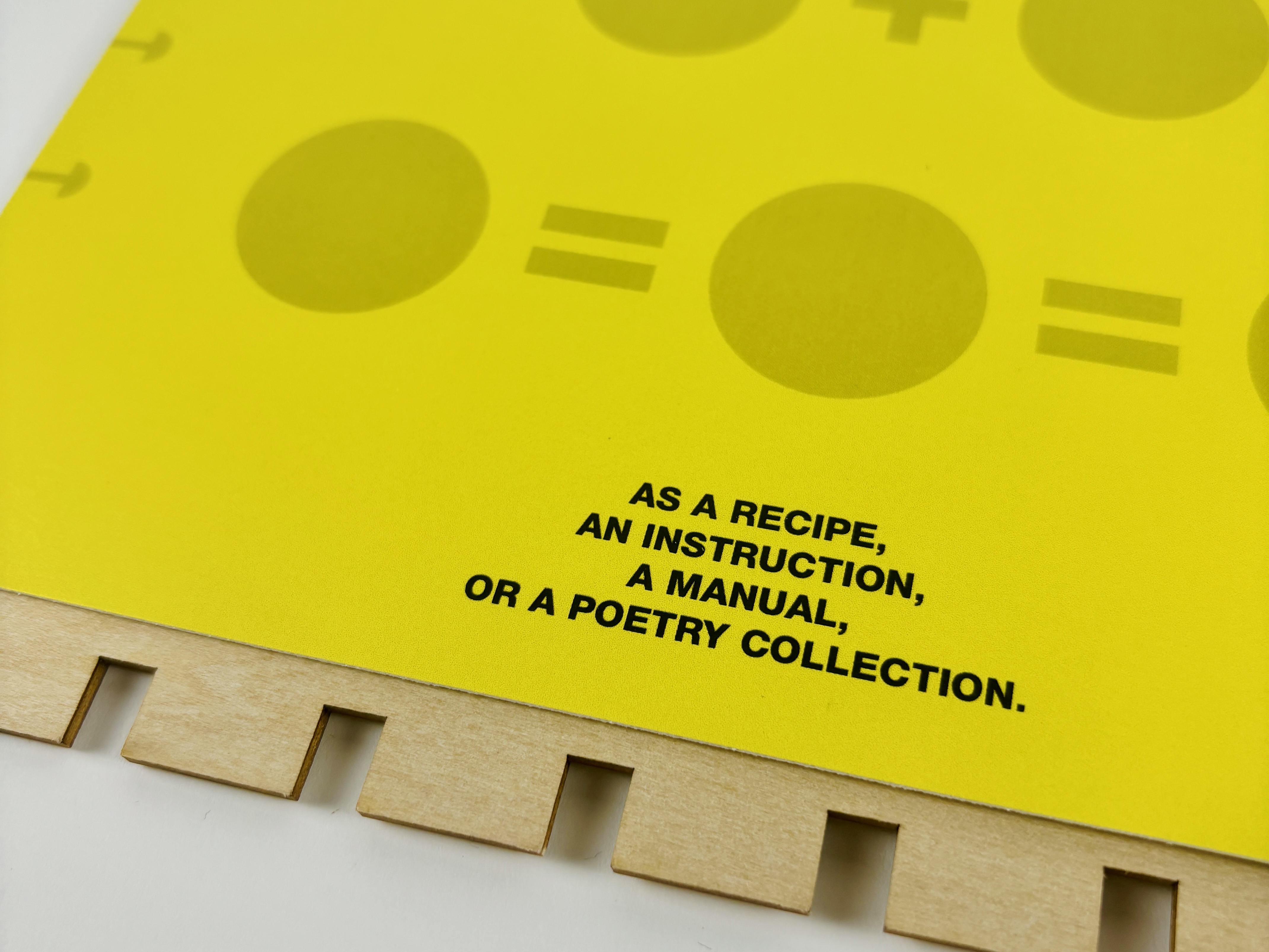
The final thesis book translates these ideas into an interactive and modular reading experience. Drawing from cookbooks, recipes, instructions, and manuals, the project extracts and recombines words into an abstract poetry collection. Through its discbound structure, movable pages, 3D printed components, laser cut basswood cover, and replaceable circular elements, the book invites readers to participate through touch, movement, and rearrangement. Reading becomes a process of making, and the book becomes a flexible structure that encourages different forms of interpretation.
Full Panel
Cooking appears here as an important path of exploration. For most people, even if they don’t know much about cooking, it still exists in their lives as a daily activity. So what if we could use cooking’s everyday status to draw design back into daily conversation, into a space where anyone can participate? As Joseph Beuys said: “Every human being is an artist, a freedom being, called to participate in transforming and reshaping the conditions, thinking and structures that shape and inform our lives.”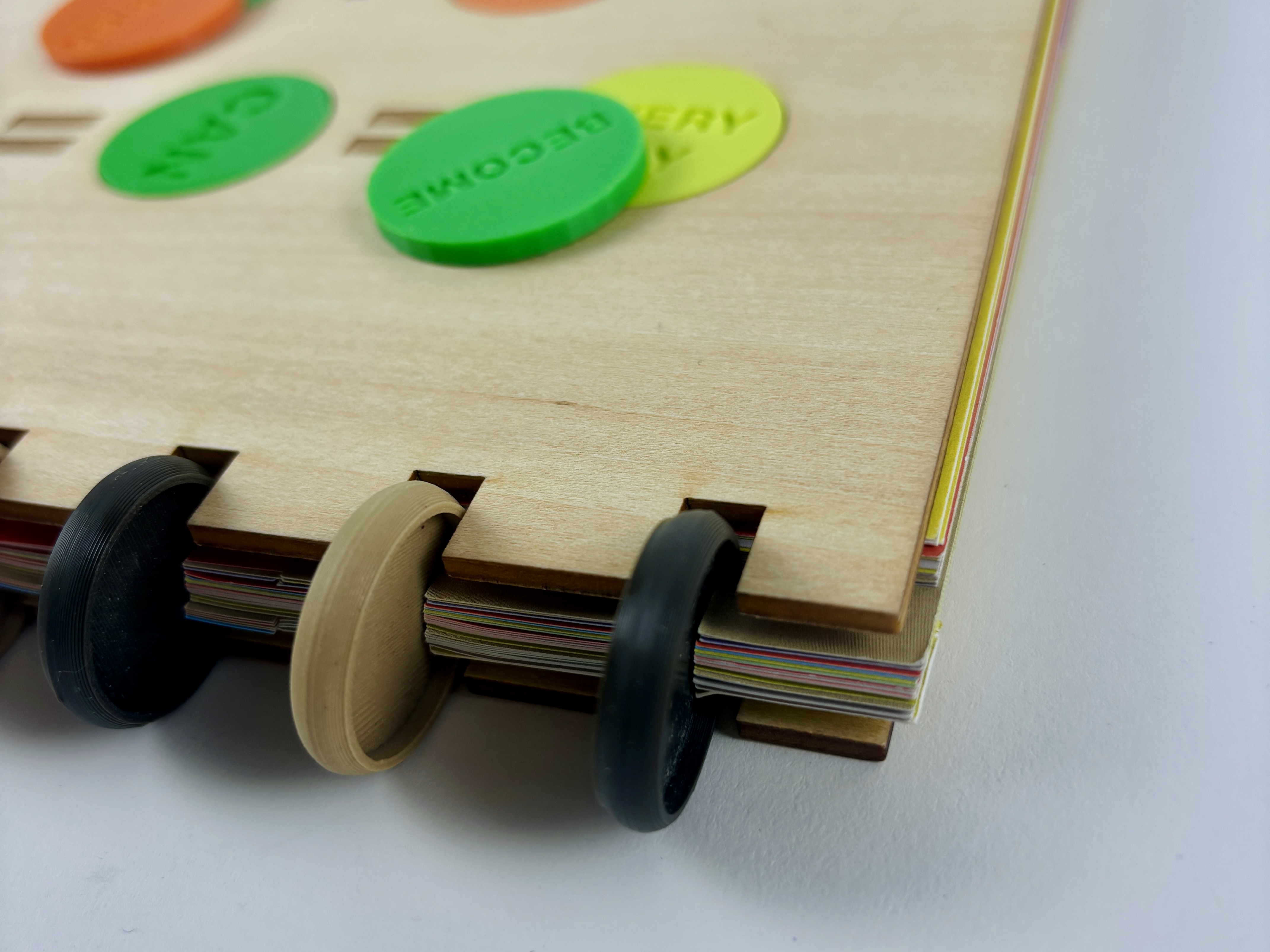
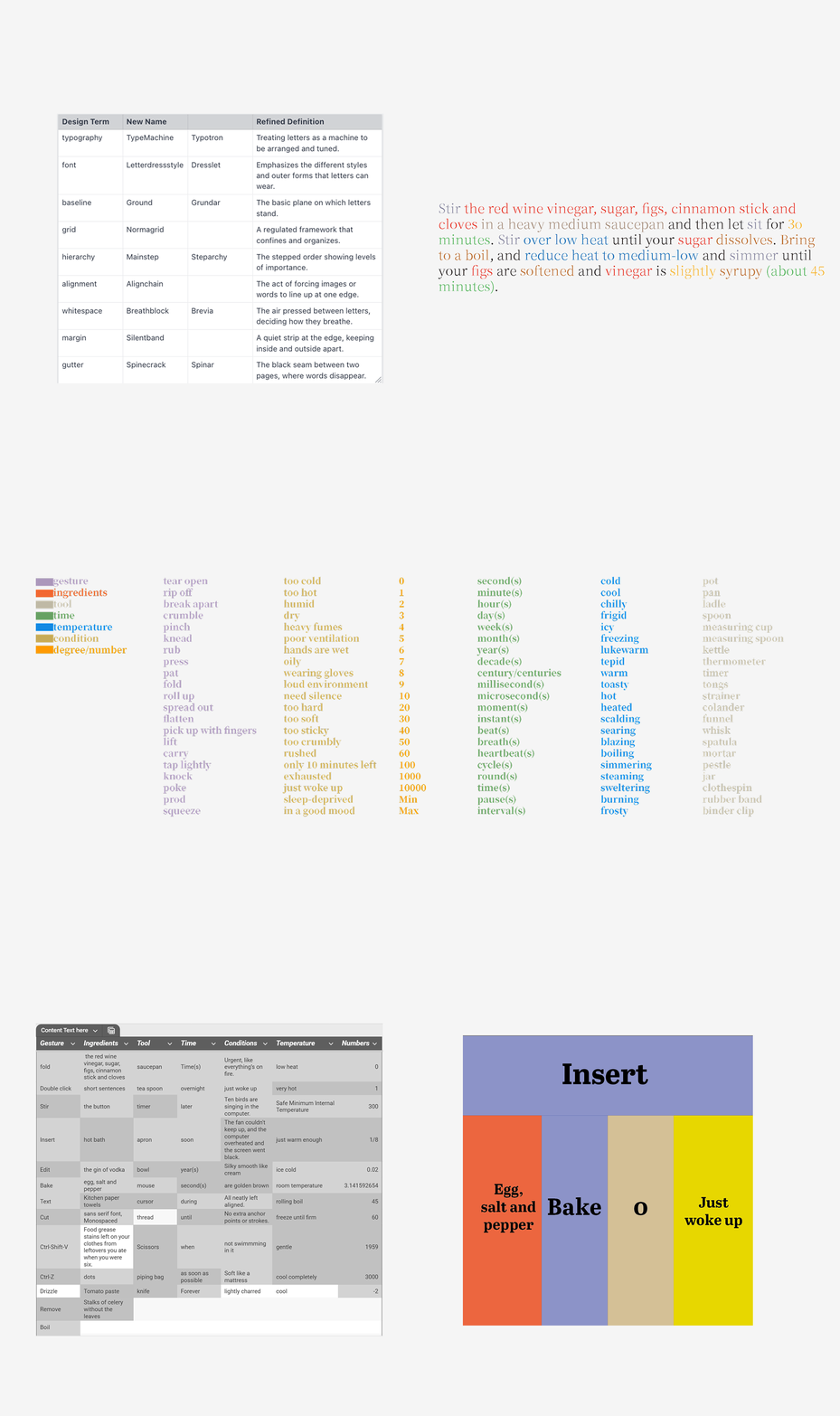
How Cooking Transforms into the Poetry of Words
Inspired by Futurist cookbooks and Yoko Ono’s Grapefruit, this section explores how recipes can become abstract poetry. I see vocabulary as a way of describing how people imagine things. A recipe is not only a practical instruction, but also a structure of actions, materials, time, temperature, and sensory changes. By extracting words and phrases from recipes and design language, I mix two systems of instruction together. Cooking words such as stir, simmer, soften, and dissolve meet design terms such as grid, margin, hierarchy, and alignment. The result is a collection of strange and sometimes unreadable sentences. Through flipping pages and recombining fragments, readers can create their own poems. The text becomes absurd, but it still gently guides imagination.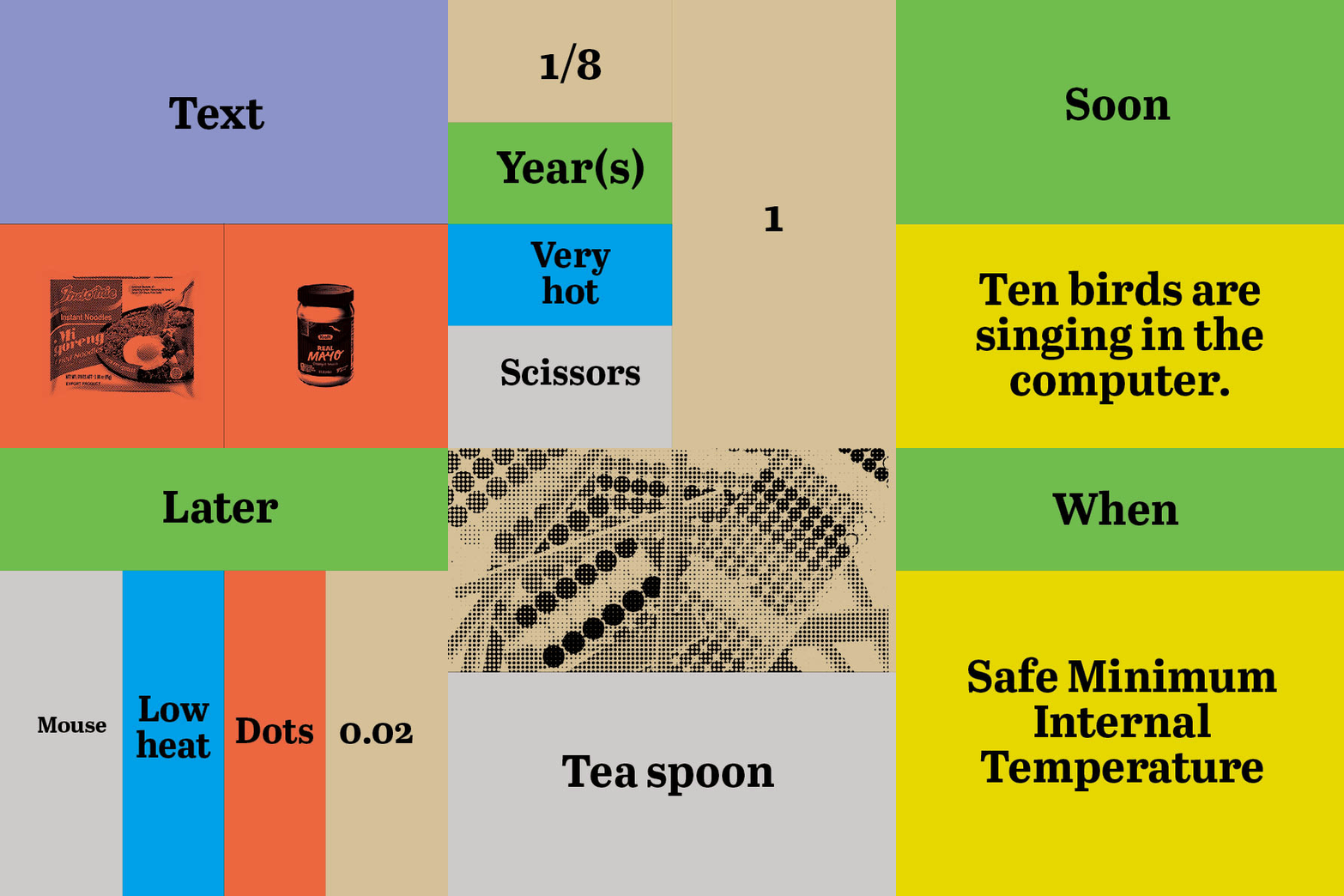
Recipe Poems / Instructions
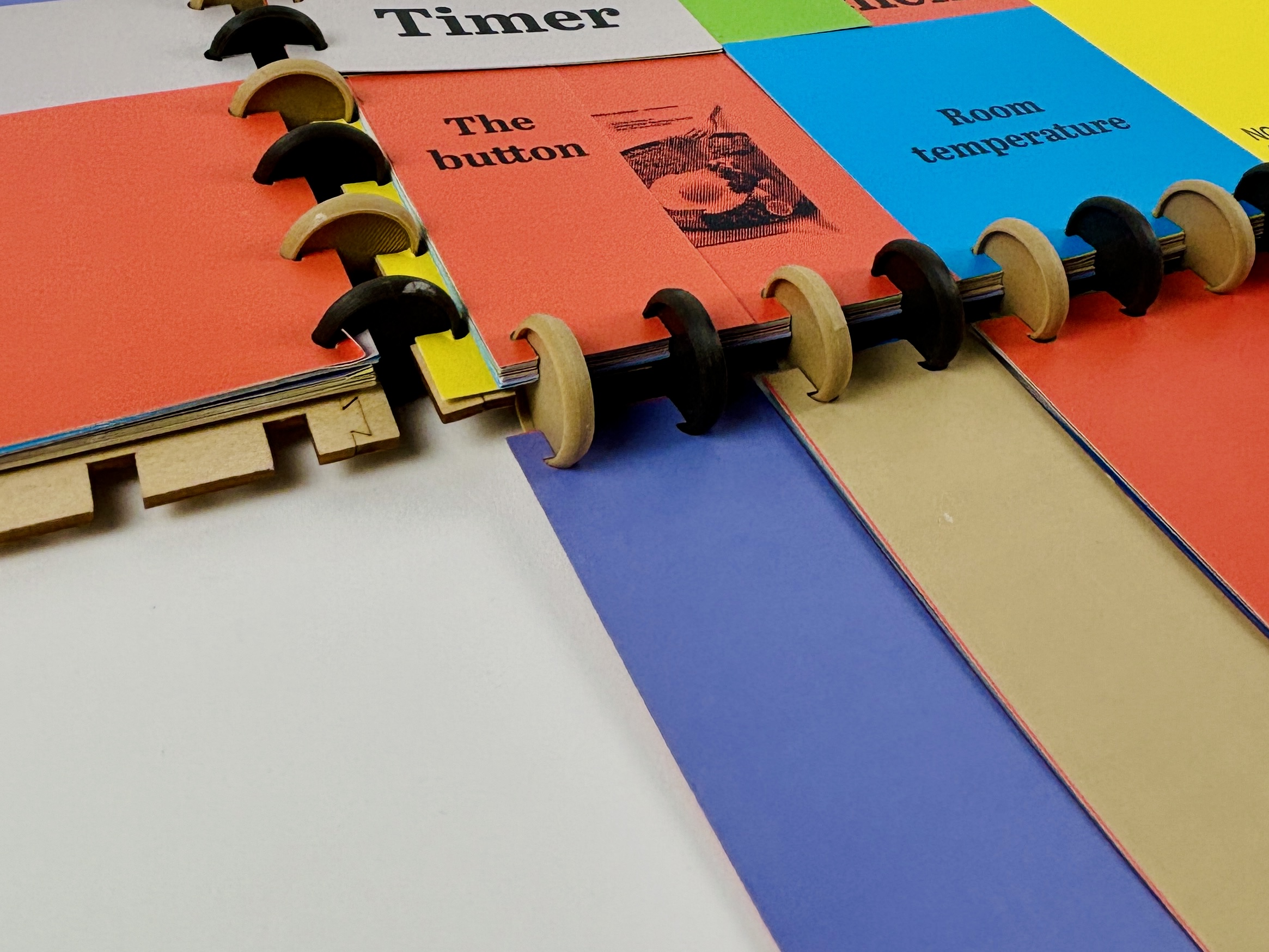
Disc Bound & 3D print
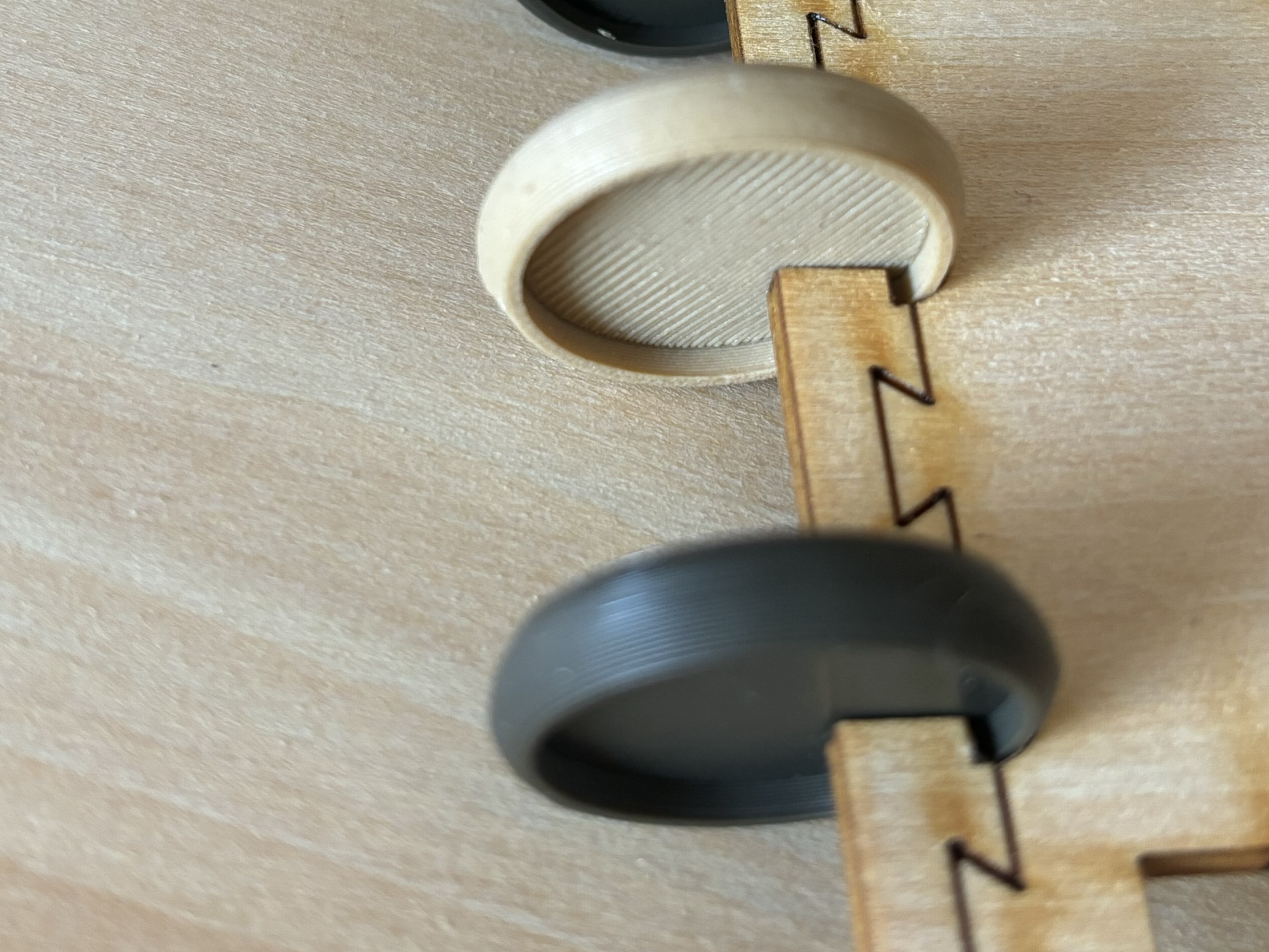
The disc-bound structure and the 3D-printed components also reveal a process of self-making, created through limited materials at hand. For me, 3D printing carries a sense of self-directed production, imperfection, and a toy-like gesture of handling and assembling. These qualities become part of the project’s physical language. At the same time, disc binding, which is often used in notebooks, makes the project feel more casual and flexible. The pages are no longer permanently fixed to the book. They can be removed, rearranged, and placed back without damage. The neatly repeated disc-bound rings also add a slightly unfamiliar and strange feeling to the object, making the book feel both functional and playful.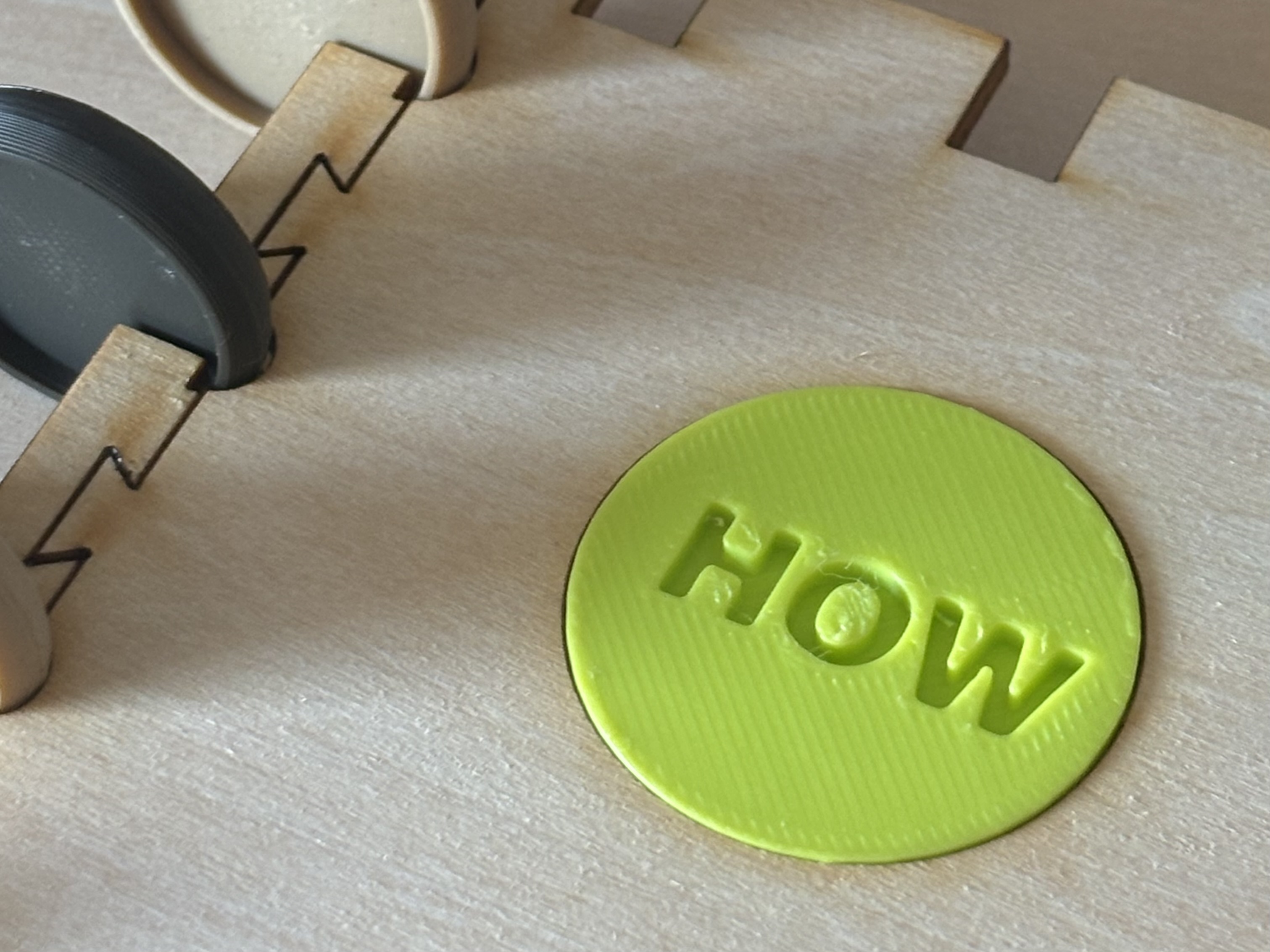
3D-printed Cover Components