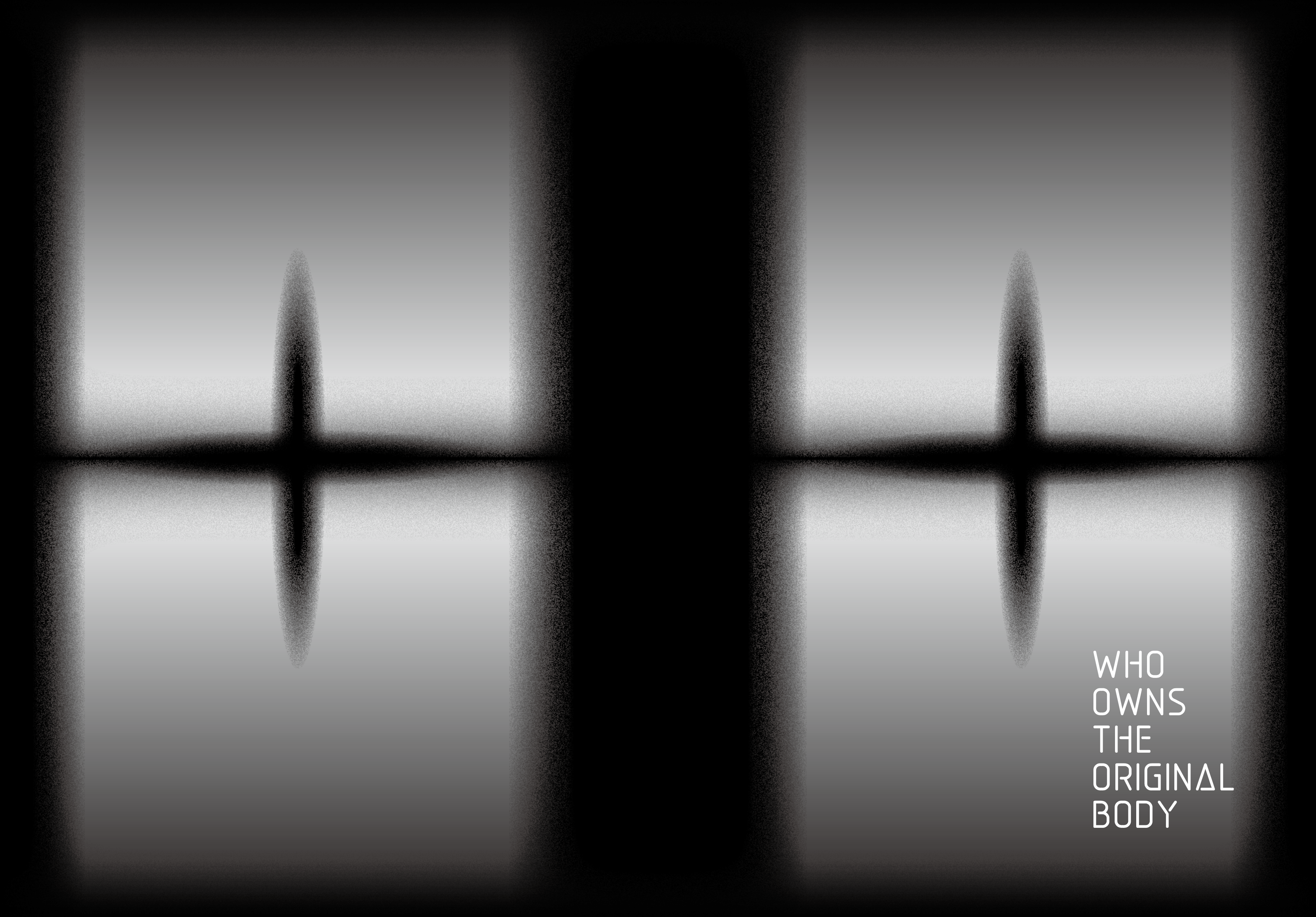
Who Owns the Original Body: A Speculative Archive on Human–Animal Relations, Animal Care, and the Forms of Life
Yijun Yu
Rather than treating animals as objects to be classified, protected, or symbolized, my thesis inquiry proposes a more relational understanding of existence. Life is not organized around a single center, but formed through interdependence, perception, vulnerability, and care. The boundary between human and animal is therefore not fixed, but continuously constructed, challenged, and reimagined.
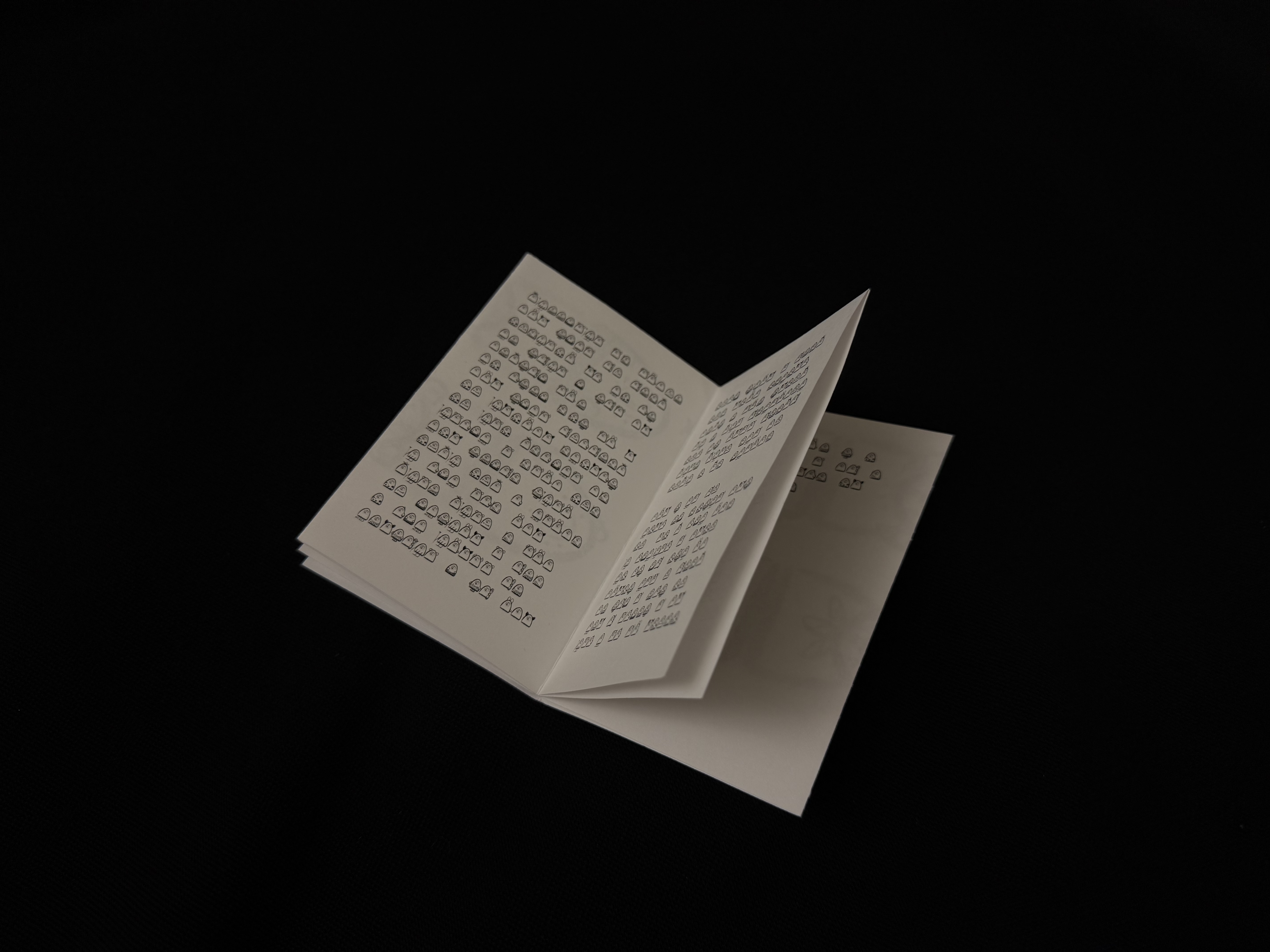
Language Beyond Human
Language and writing do not simply record life; they shape how humans classify, translate, and distance themselves from animals. Through a semi-readable system between text, symbol, and animal trace, this work reveals the limits of human-centered communication.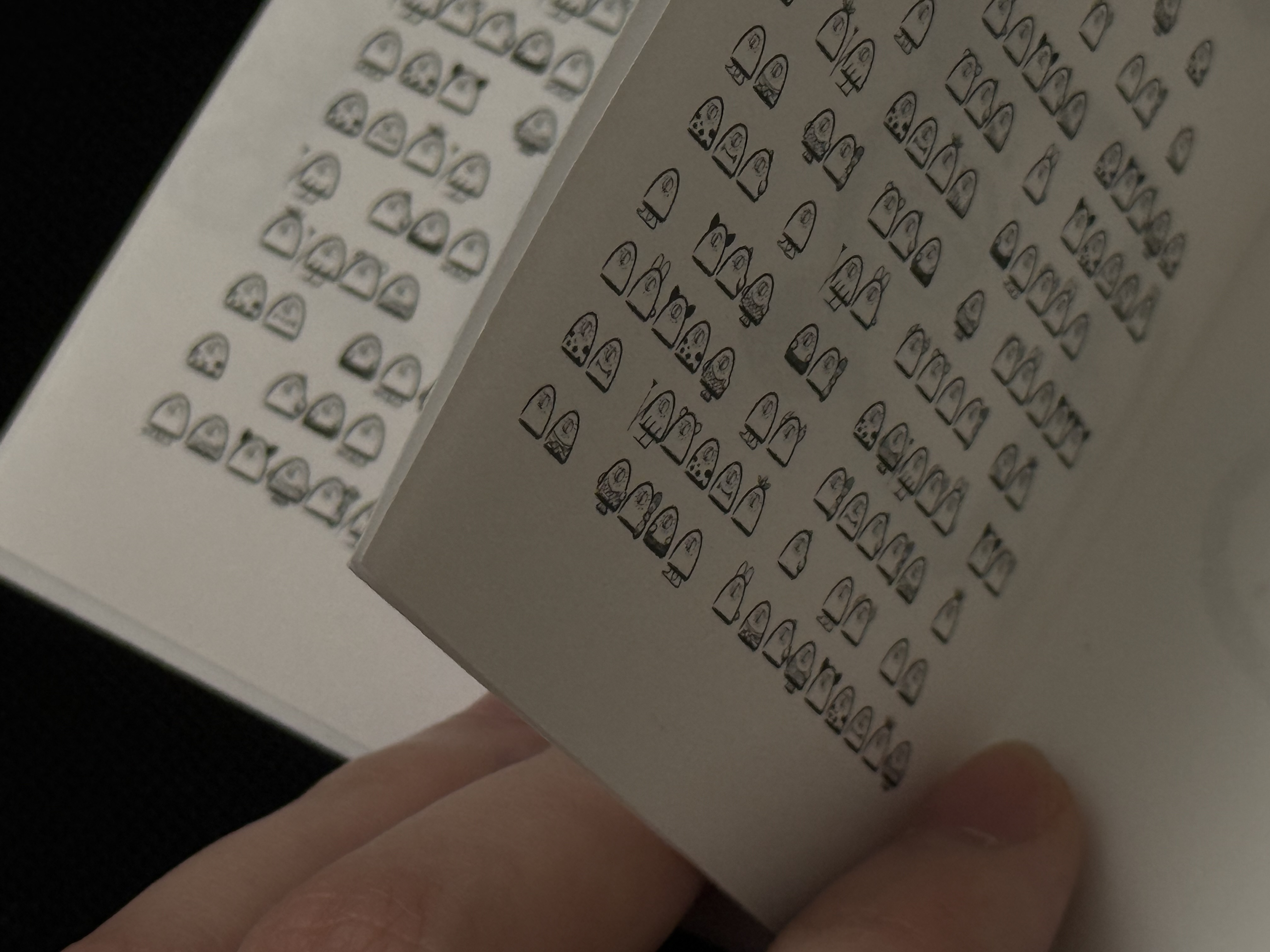
Language Beyond Human
Language and writing do not simply record life; they shape how humans classify, translate, and distance themselves from animals. Through a semi-readable system between text, symbol, and animal trace, this work reveals the limits of human-centered communication.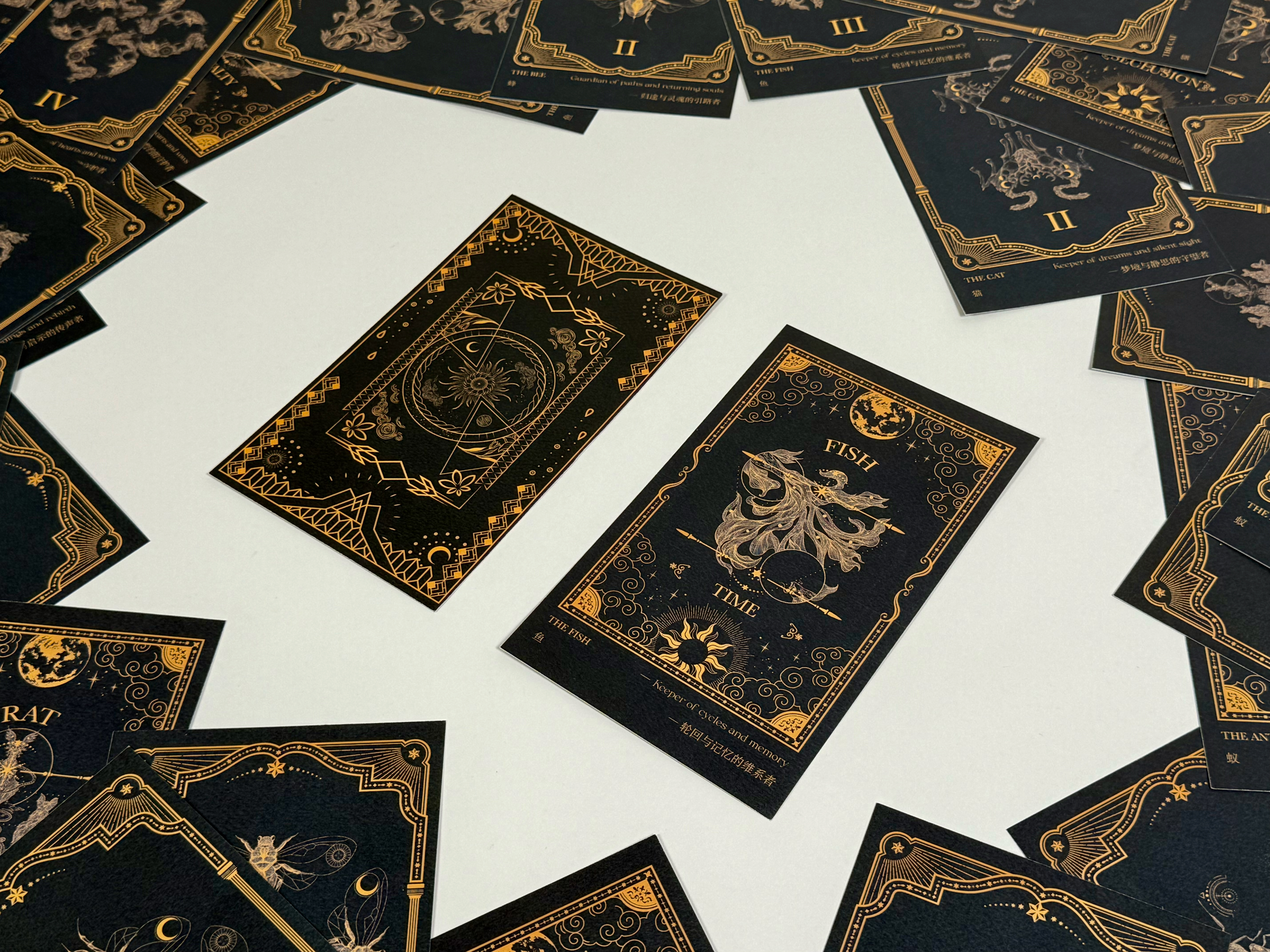
Animyth Arcana
Animals are not passive symbols, but carriers of memory, power, and alternative ways of seeing. By reimagining common urban species as divinatory cards, Animyth Arcana uses myth and ritual to challenge human-centered readings of animals and invite a more equal, imaginative relationship with nonhuman life.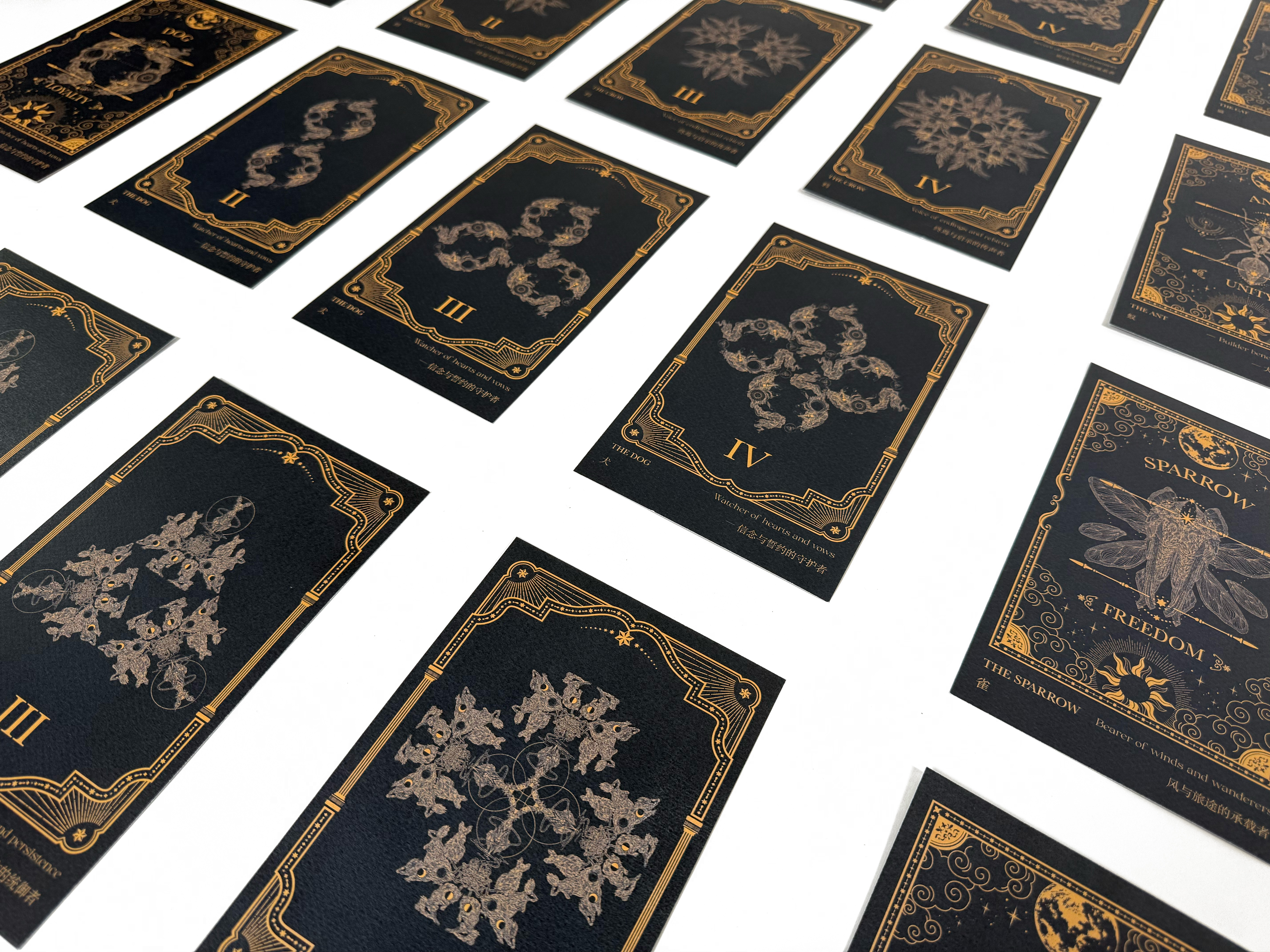
Animyth Arcana
Animals are not passive symbols, but carriers of memory, power, and alternative ways of seeing. By reimagining common urban species as divinatory cards, Animyth Arcana uses myth and ritual to challenge human-centered readings of animals and invite a more equal, imaginative relationship with nonhuman life.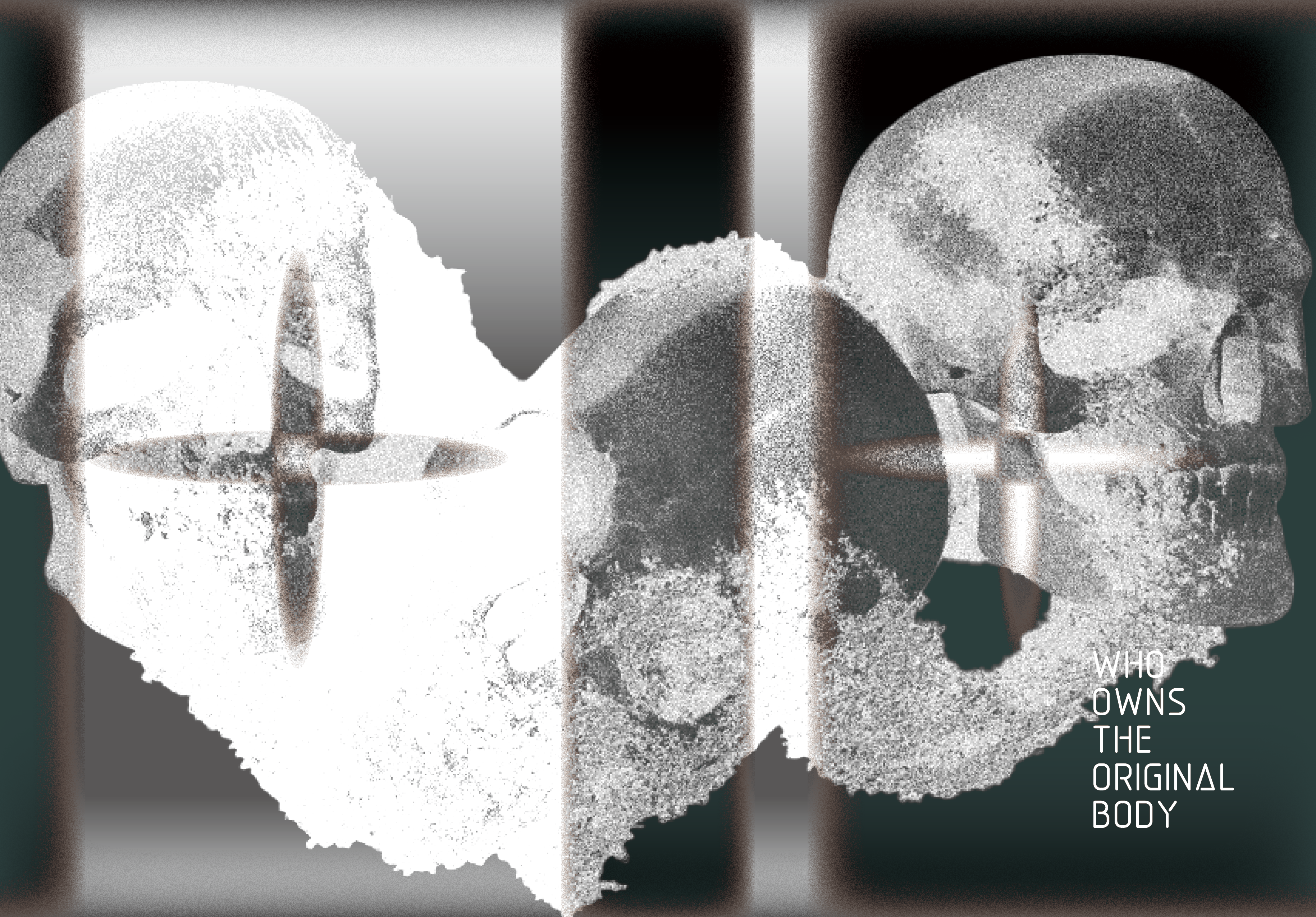
Who Owns the Original Body?
Human–animal relationships are not only ethical questions, but also questions of perception, power, and classification. This thesis book reconsiders how humans define animals, bodies, and life forms through language, myth, care, and speculative imagination.