Design as Metabolic Practice
Yura Kang
This thesis begins with hunger, a creative hunger that feels both necessary and exhausting. But it also begins with fullness, with the pressure that builds when what you have been fed does not sit right in your body. Design as Metabolic Practice: Rethinking Design Productivity Through Rhythms of Absorption and Release examines how design education and professional practice are shaped by institutional norms: conventions, standards, critique structures, and expectations that regulate how designers are trained, evaluated, and made legible. These norms organize what counts as valid work, how it should look, and how it should be understood. Here, institution refers not only to formal structures such as schools, studios, and professional systems, but also to the everyday practices and value systems through which design is recognized, validated, and circulated.
This thesis is grounded in metabolism as a conceptual and methodological framework, alongside queer theory as a critical position. Together, they offer a way to analyze how bodies move through institutional systems and how those systems are resisted. Metabolism operates as both a conceptual framework and a design methodology. By drawing from the Japanese Metabolism movement of the 1960s, which Rem Koolhaas and Hans Ulrich Obrist describe in Project Japan: Metabolism Talks… as imagining cities as living systems capable of growth and adaptation, this thesis shifts the metabolic model from buildings to bodies navigating institutional environments.
Institutional norms function as a digestive system, processing bodies through intake, pressure, normalization, and discharge. When work fails to resolve, or when the body cannot digest institutional demands, the result is often framed as personal failure.
This thesis argues otherwise. Failure to resolve or digest is not an individual inadequacy but a signal of structural limits. This lens reveals whose bodies are expected to digest more, who performs additional labor to translate their practice into institutional terms, and who absorbs pressure so that others can remain comfortable. In this reading, queer theory operates as a critical position toward these norms: However, queer does not primarily refer to identity, but to a relation to institutional expectations: misalignment, opacity, refusal of linear progress, and the persistence of what cannot be smoothed into clarity.
Drawing from Jack Halberstam’s The Queer Art of Failure, this thesis reframes what institutions mark as unsuccessful. Failure is not simply a lack of ability, but can signal a refusal to conform to systems that were never designed for certain bodies to survive within. Queer design practice emerges as work that resists being fully absorbed, normalized, or repurposed to serve institutional appetites.
Rather than separating writing from making, this thesis treats visual experiments as situated research. Diagrams, traces, and material tests operate as instruments that register where digestion breaks down, where refusal becomes necessary, and what remains as residue. These practices make visible what cannot be processed, the uneven distribution of pressure, and the knowledge carried by what the system expels. In this way, metabolism is not only a metaphor, but a method.
This thesis treats bodies that navigate institutional norms while carrying what cannot be metabolized. Bodies that move through spaces not designed for them, managing pressure from multiple directions. Bodies that perform legibility while maintaining necessary opacity, translating while protecting what translation would erase. It acknowledges this pressure while recognizing that survival, refusal, and indigestibility already constitute forms of knowledge.
Design as metabolic practice takes seriously the bloating, pressure, refusal, and residue that accompany institutional navigation. These states are not failures, but indicators of how systems operate. By attending to what we take in, how we process, what we refuse, and what we release, design becomes a practice of embodied survival. This thesis does not ask bodies to adapt to institutions, but uses the body to understand and expose the limits of the institution itself.
Wheat-pasting vs. Institution
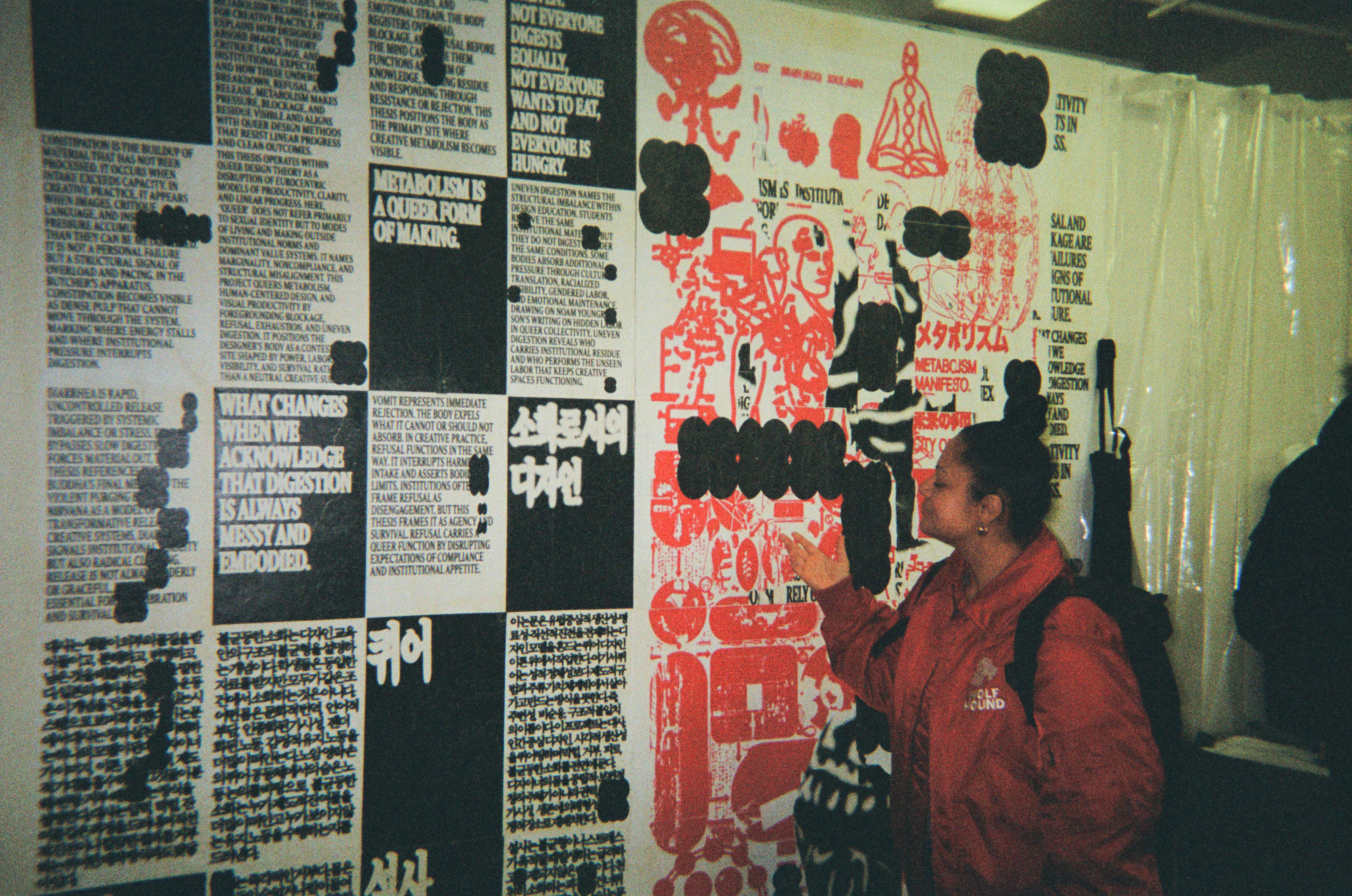
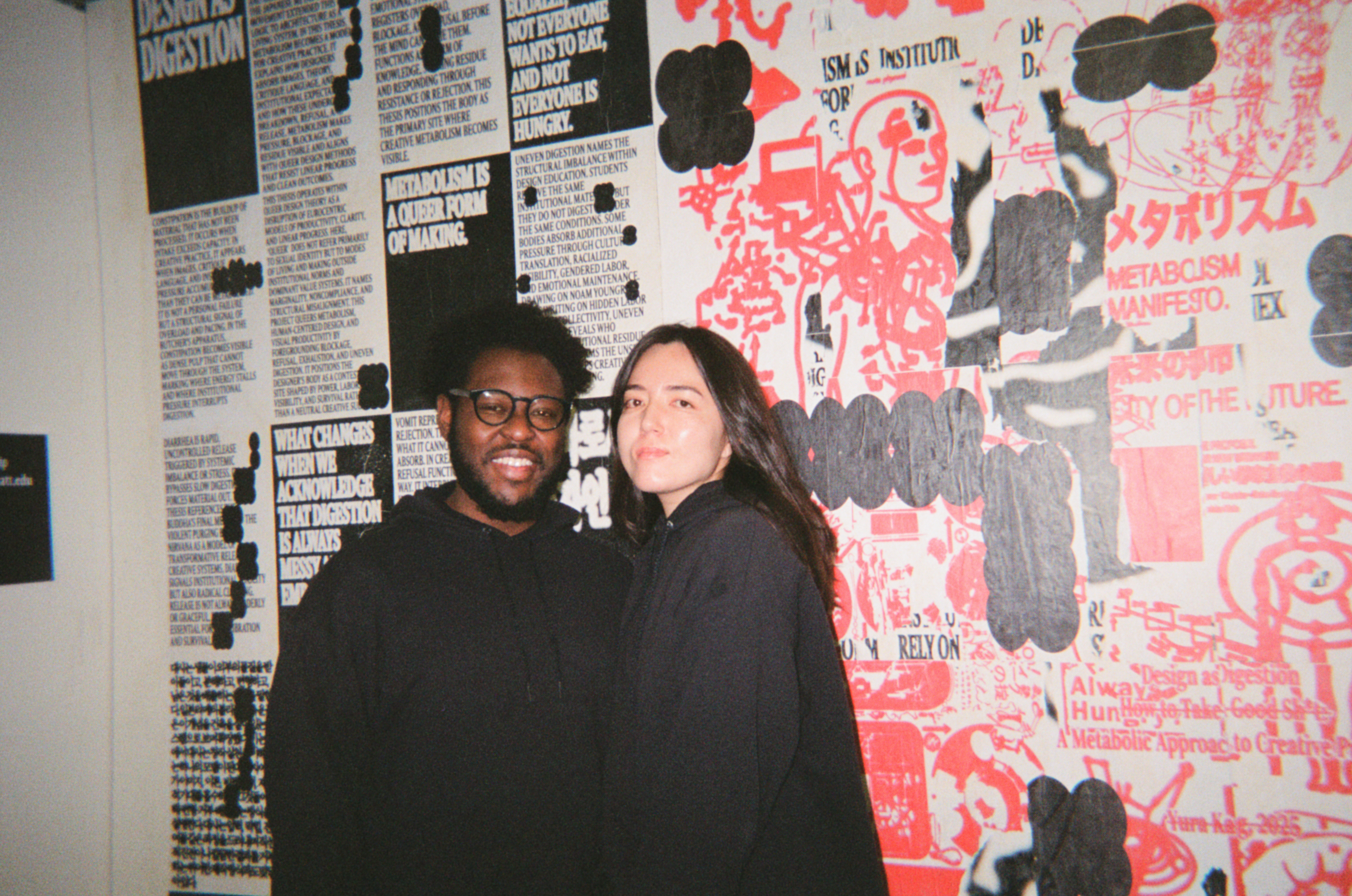
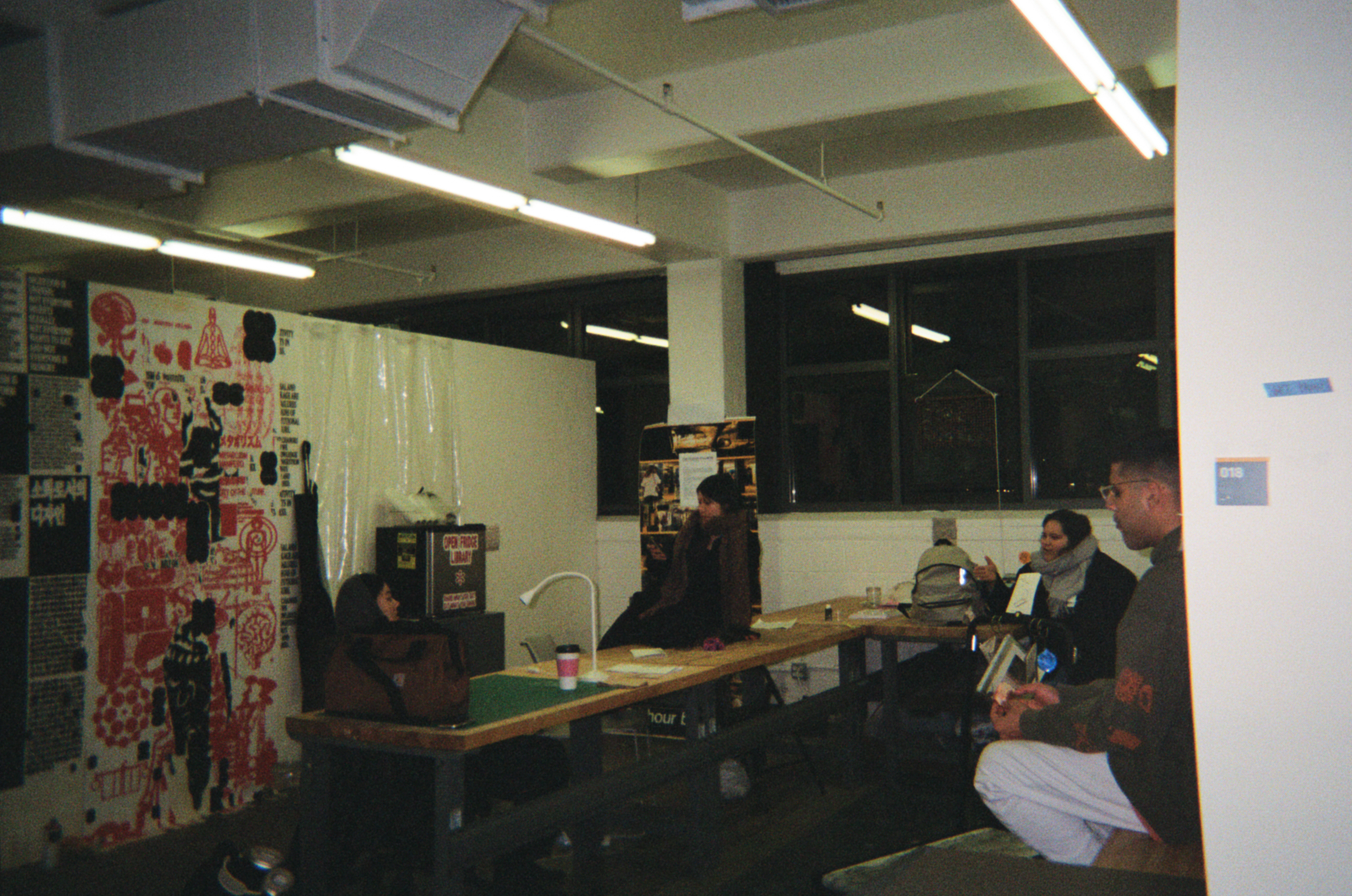
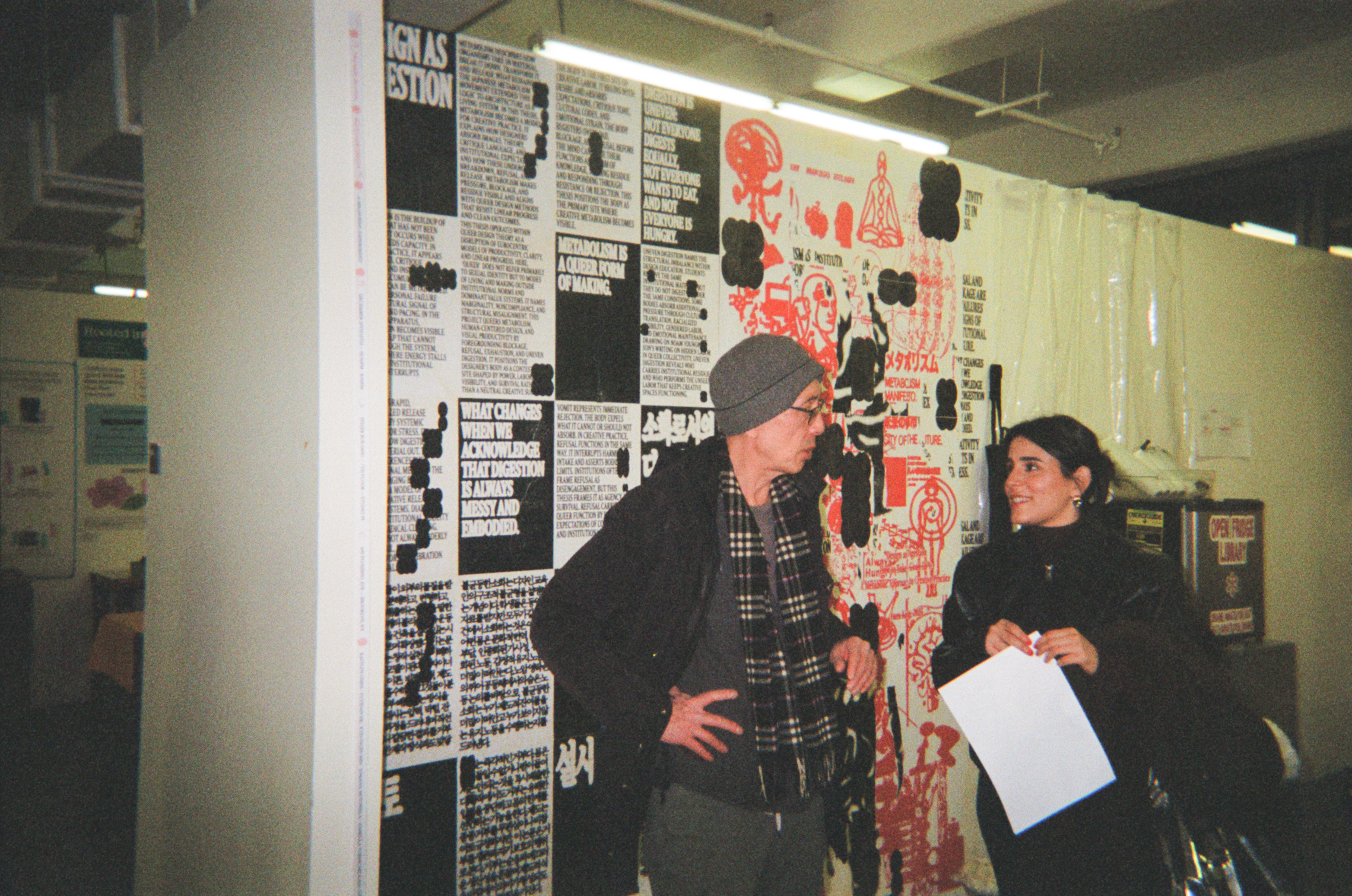
Wheat-pasting vs. Institution is a thesis project within Design as Digestion, where design is understood as a process of intake, breakdown, and transformation. Wheat-pasting is used as both a method and a structure. Through layering, repetition, tearing, and reapplication, it reflects how visual and cultural material is absorbed and processed over time. This project examines how raw material becomes formalized and how meaning shifts across contexts. Working across printed matter and spatial installation, the project positions design as an ongoing process. Residue, fragmentation, and excess are treated as visible evidence of thinking. The work was presented as an open studio, extending the project into a live, in-progress environment. Posters, fragments, and pulp accumulated across the space through layering and removal. Surfaces were continuously reworked, making the process visible rather than resolved. Visitors moved through the installation as part of the system, encountering material in transition.