Environmental Triggers for ADHD Minds in Higher Education: Sensory Load, Organizational Friction, and Neuroinclusive Design
Jiaqi An
Attention-Deficit/Hyperactivity Disorder (ADHD) is commonly framed as an individual “attention problem,” yet college students’ performance often hinges on environmental conditions: sensory input (sound, light, movement), organizational systems (platform overload, inconsistent formats), and social-cognitive pressures (interruption risk, rejection sensitivity). This paper investigates how graduate design students with ADHD navigate learning, daily tasks, and campus life; identifies which sensory, organizational, and cognitive challenges make academic work harder or easier; and examines existing solutions spanning built environments and digital tools. Using primary research (self-ethnography; two peer interviews; a caregiver interview) alongside secondary research (clinical definitions, prevalence, gender and cultural diagnosis disparities, comorbidity patterns, evidence on learning environments, and neuroinclusive design guidelines), this paper argues that ADHD-friendly higher education is less about “one perfect quiet room” and more about providing adjustable stimulation, predictable systems, visibility-based supports, and choice-rich micro-environments. Case studies (PAS guidance on neurodiversity in the built environment, the Clever Classrooms/HEAD research, and the Tiimo planning app) illustrate how design can reduce friction and improve follow-through. The paper concludes with optional solution directions: a campus “neurofit” navigation platform, a public awareness campaign, and a sensory-support product concept that prioritizes adjustability and low barrier adoption.
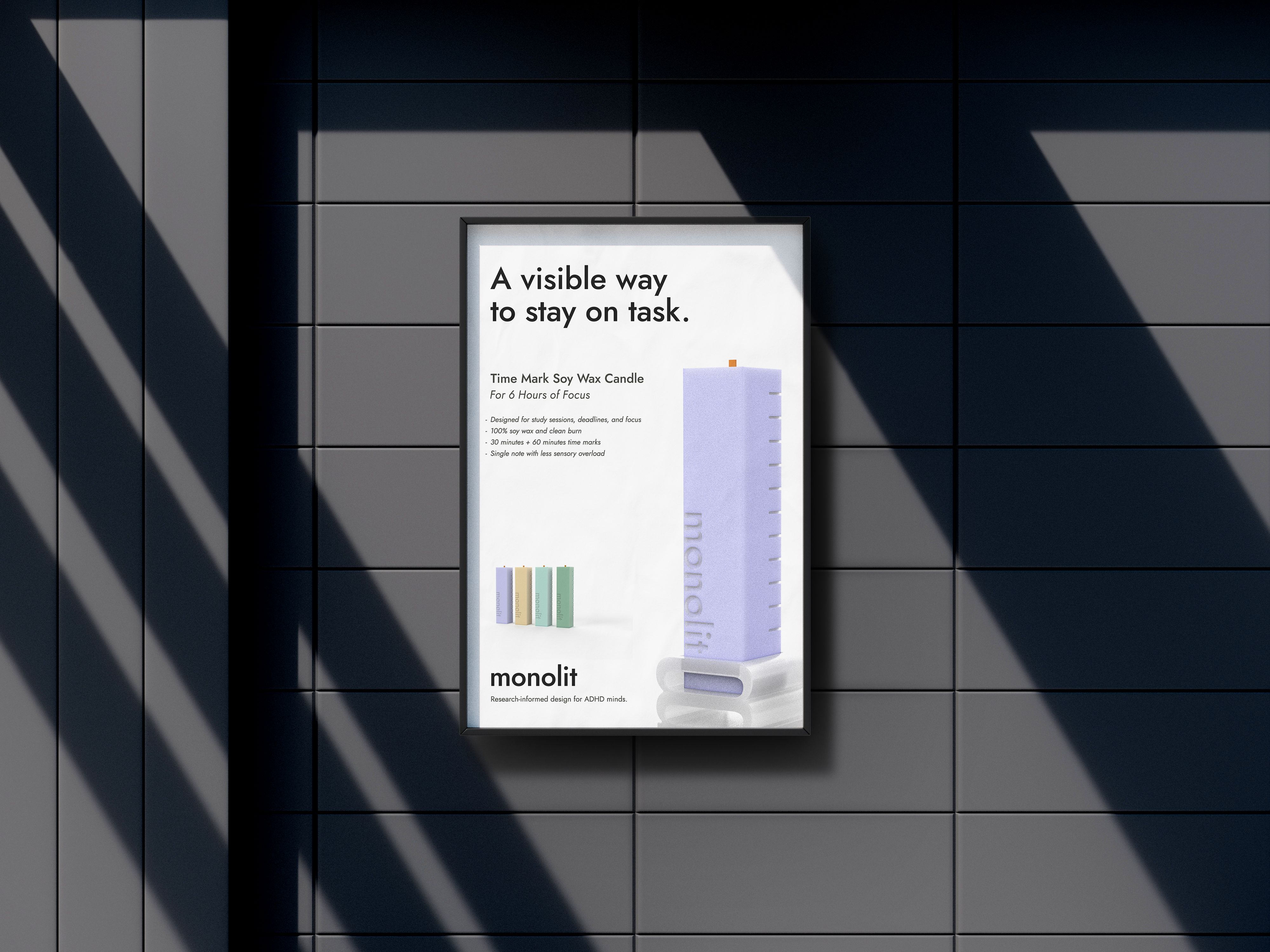
Poster