Navigating the Silent First Trimester
Jumana Motiwala
Pregnancy is a transformative time, yet many aspects of the early weeks remain overlooked. Although this stage includes some of the most critical stages of development, many women in the US are not seen by an OB/GYN until around 8 weeks. Social stigmas surrounding early pregnancy announcements can also leave women feeling incredibly isolated. As a result, many turn to googling, social media, and AI to fill gaps in knowledge and ease anxiety while waiting to be seen. This capstone project explores design as a tool to address the emotional uncertainties and anxieties associated with the silence of the first trimester.
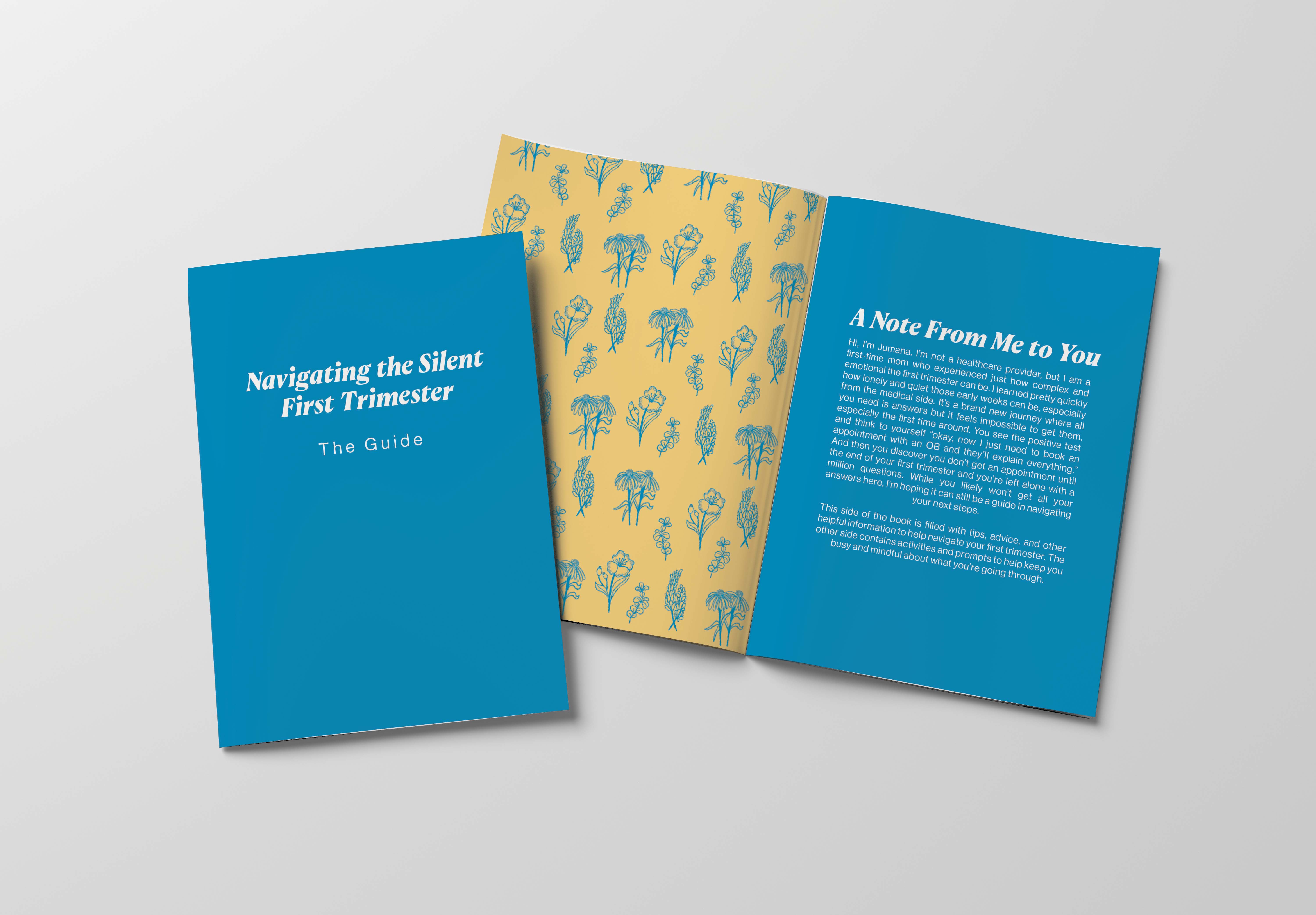
Side A: Guidebook
A guidebook filled with advice, tips, tools, and information needed to help survive the first trimester.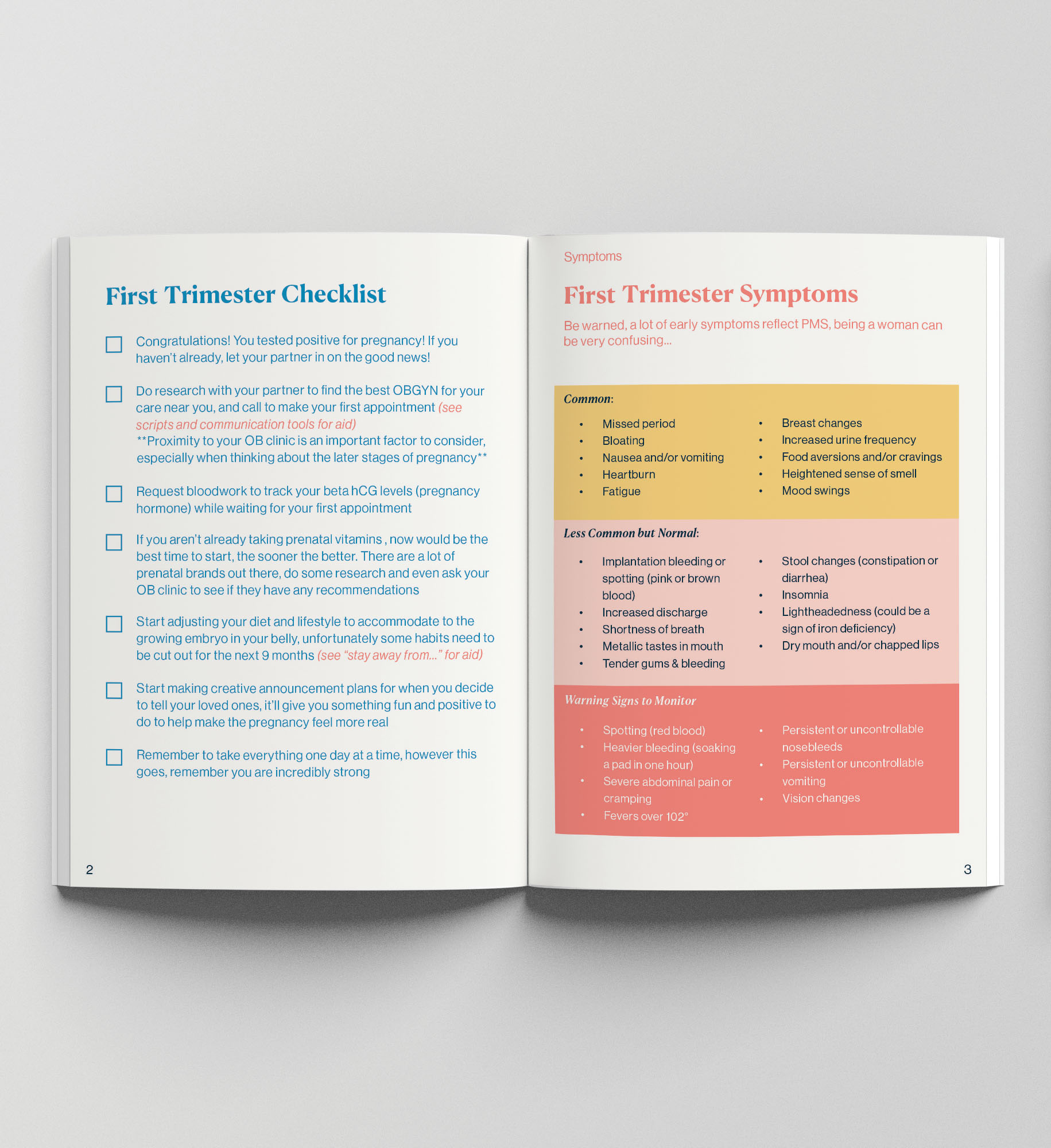
Guidebook: Sample Spread
As a first-time mom, it can be difficult to know what to do after seeing a positive test. The first trimester involves far more symptoms than just “morning sickness.” This spread highlights the type of information provided to help women better navigate the uncertainties of the early weeks.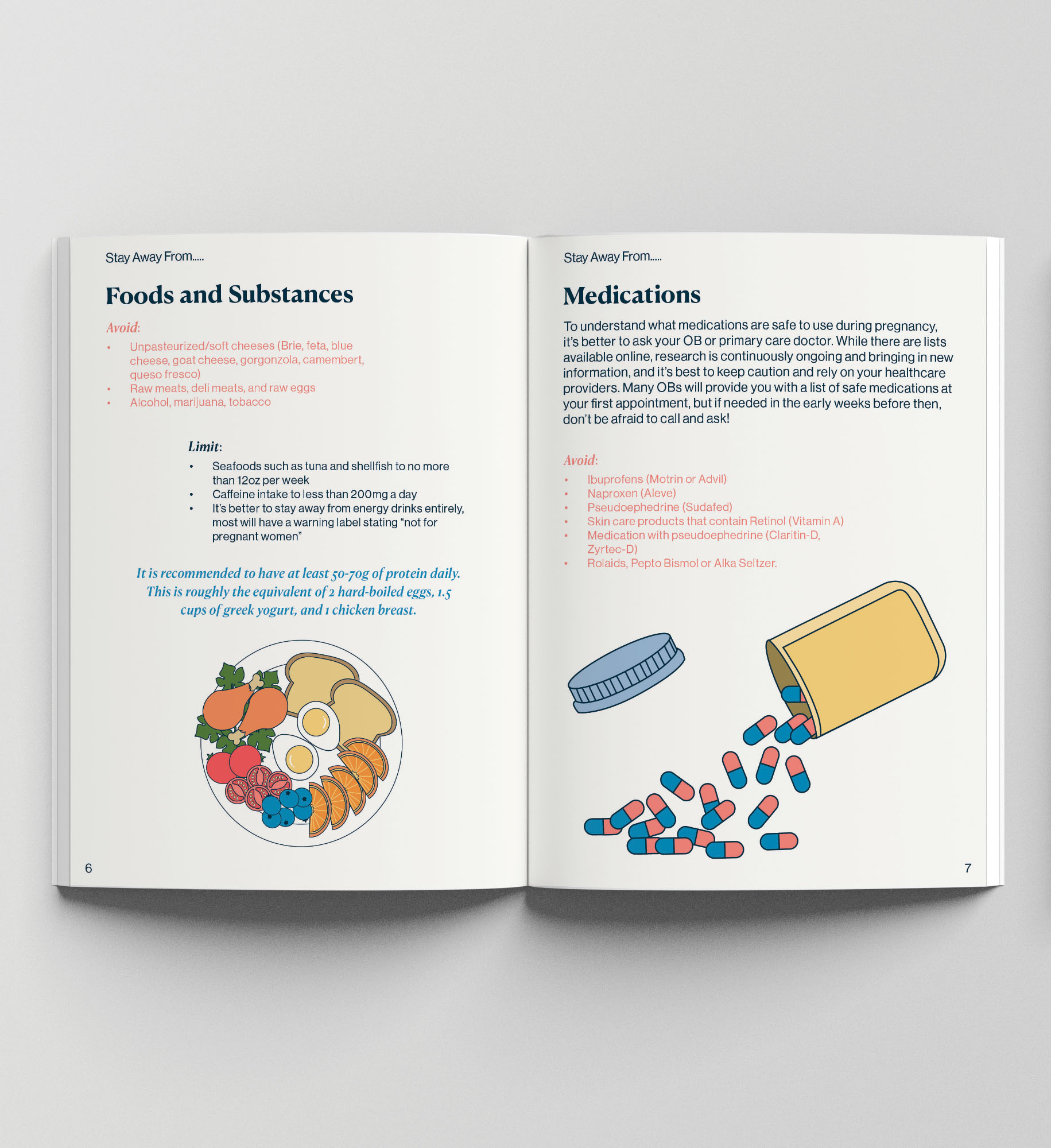
Guidebook: Sample Spread
When you’re pregnant, your entire lifestyle changes. From what foods you can eat, to knowing safe medications, to your daily activities, and most OB’s won’t provide you with this information until that first appointment, which is 2 months in….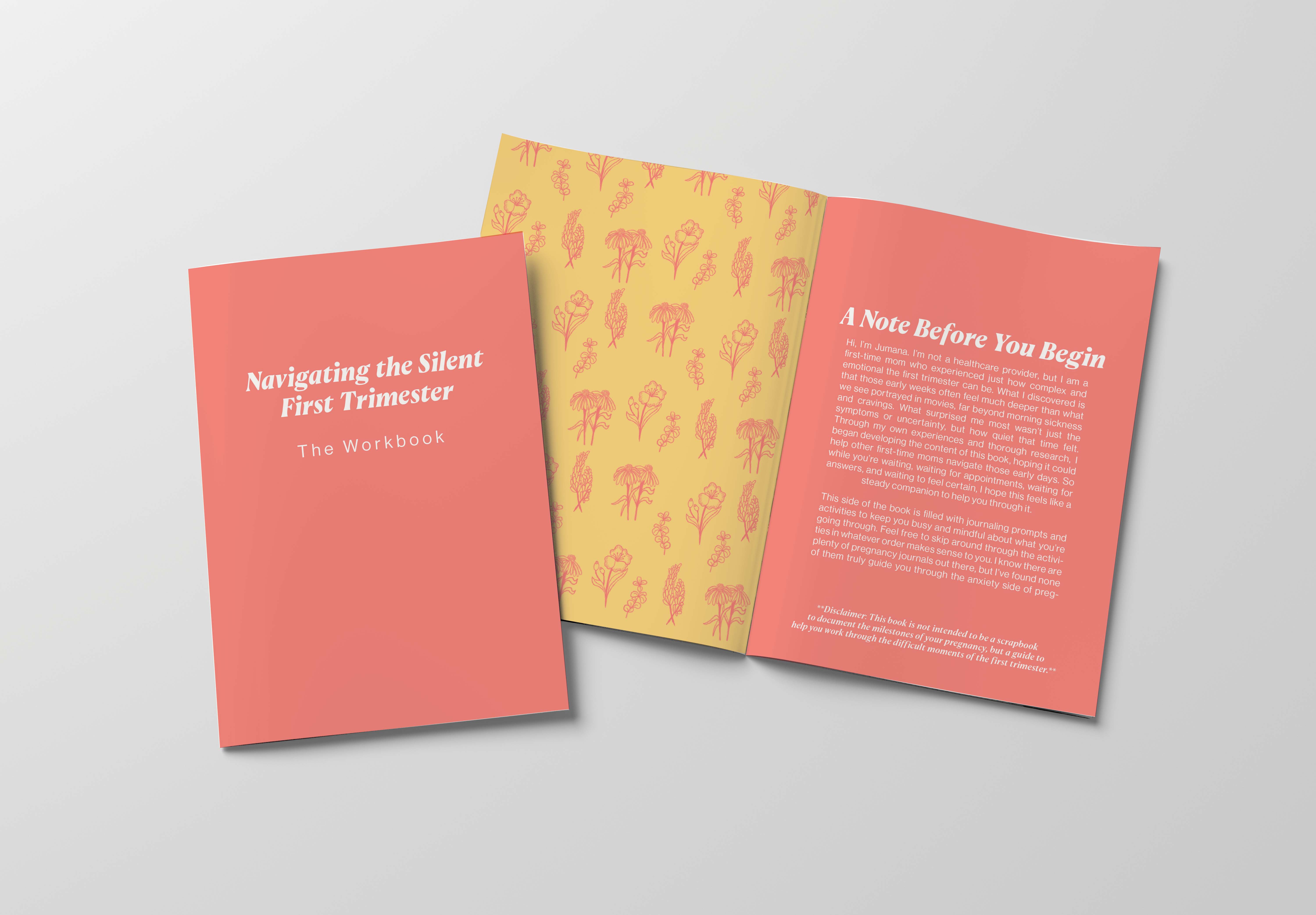
Side B: Workbook
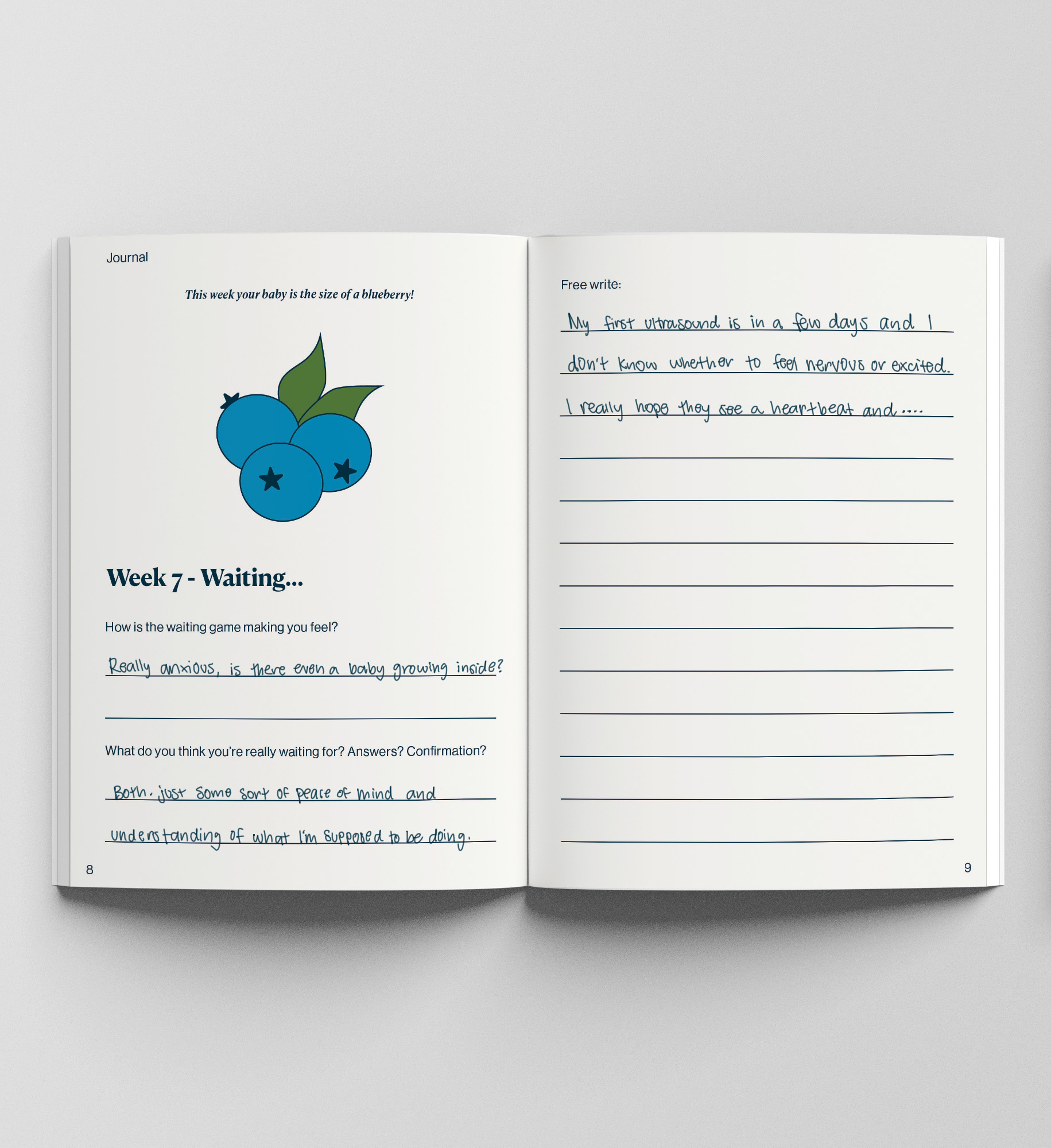
A workbook with journaling prompts, processing tools, and grounding activities to help deal with the daily anxieties of the first trimester.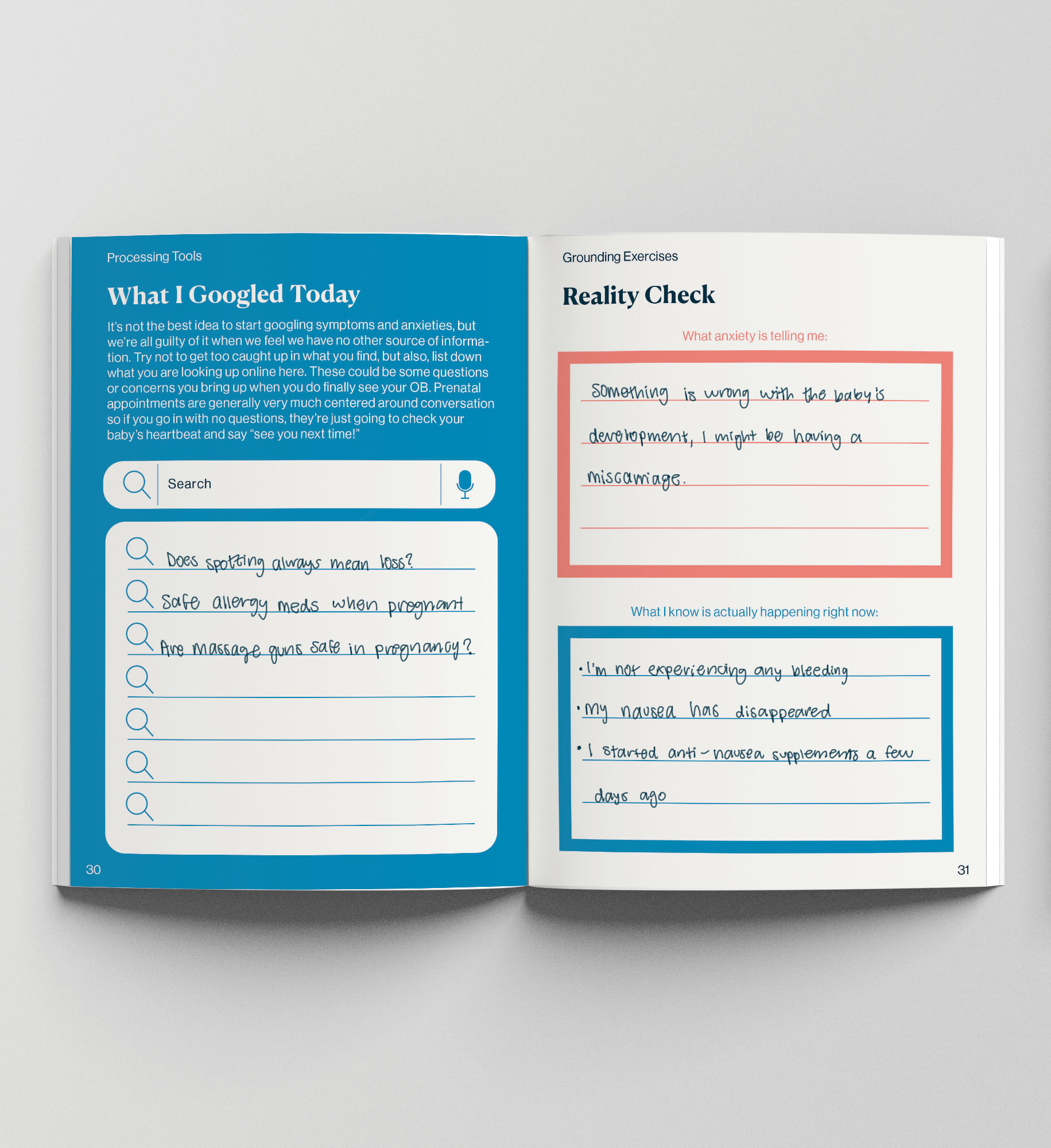
Workbook: Sample Spread
Although information is easy to google, it often leads to unwanted or unreliable answers. During the first trimester, anxiety can quickly take over, making grounding and reassurance especially important. This spread highlights two types of tools designed to help women better navigate the emotional uncertainties and anxieties of early pregnancy.